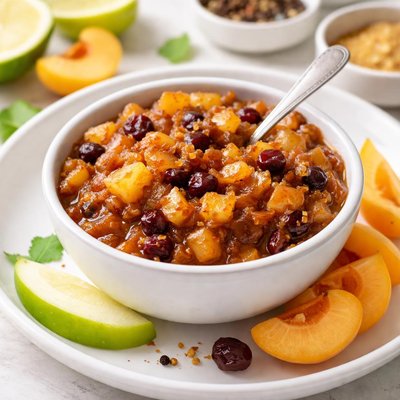
1 serving (30 grams) contains 50 calories, 0.2 grams of protein, 0.1 grams of fat, and 12.0 grams of carbohydrates.

Smart Nutrition Tracking with SnapCalorie

Nutrition Information
Calories |
393.7 | ||
|---|---|---|---|
% Daily Value* |
|||
| Total Fat | 0.8 g | 1% | |
| Saturated Fat | 0 g | 0% | |
| Polyunsaturated Fat | 0 g | ||
| Cholesterol | 0 mg | 0% | |
| Sodium | 393.7 mg | 17% | |
| Total Carbohydrates | 94.5 g | 34% | |
| Dietary Fiber | 7.9 g | 28% | |
| Sugars | 78.7 g | ||
| protein | 1.6 g | 3% | |
| Vitamin D | 0 mcg | 0% | |
| Calcium | 78.7 mg | 6% | |
| Iron | 1.6 mg | 8% | |
| Potassium | 393.7 mg | 8% | |
* Percent Daily Values are based on a 2,000 calorie diet. Your daily values may be higher or lower depending on your calorie needs.
Food Attributes
Source of Calories
About Fruit chutney
Fruit chutney is a condiment originating from Indian cuisine, traditionally made from a mixture of fruits, sugar, vinegar, and a blend of spices. Common fruits used include mangoes, apples, or tamarind. It is known for its sweet, tangy, and slightly spicy profile. Nutritionally, fruit chutneys are a source of simple carbohydrates due to their fruit and sugar content. Depending on the ingredients used, they can provide small amounts of dietary fiber, vitamins such as vitamin C, and trace minerals like potassium. However, they are also typically high in sugar and should be consumed in moderation.
Health Benefits
- Rich in antioxidants from fruits, especially vitamin C, which supports immune health.
- Provides small amounts of potassium, essential for maintaining healthy blood pressure and muscle function.
- Contains dietary fiber, especially when made with unpeeled fruits, aiding in digestion and promoting gut health.
Dietary Considerations
Selection and Storage
Store fruit chutney in an airtight container in the refrigerator to preserve its freshness. Properly sealed, it can last for up to 2-3 weeks. For longer storage, consider freezing in small batches.
Common Questions About Fruit chutney Nutrition
Does fruit chutney contain any protein or significant calories?
Fruit chutney typically contains very little protein, with less than 1 gram per serving. Its calorie content varies depending on the ingredients but usually ranges from 40-60 calories per tablespoon, mainly derived from sugar and fruit.
Is fruit chutney suitable for a keto or low-carb diet?
Fruit chutney is not ideal for a keto or strict low-carb diet due to its high sugar content from fruits and added sweeteners. A tablespoon may contain 8-12 grams of carbohydrates, making it difficult to maintain carb limits.
What are the health benefits or concerns with eating fruit chutney?
Fruit chutney often contains vitamins such as vitamin C from the fruit base, which can support immune health. However, the added sugars can be concerning for individuals monitoring their sugar intake or managing conditions like diabetes.
What is the recommended portion size for fruit chutney?
The recommended serving size for fruit chutney is typically 1-2 tablespoons, which is enough to add flavor without excessive sugar or calorie intake. Pair it wisely with proteins or whole grains for balanced meals.
How does fruit chutney compare to jam or relish in terms of preparation and taste?
Fruit chutney differs from jam as it often includes spices, vinegar, and savory elements, while jam is sweeter and less complex. Compared to relish, chutney is more fruit-forward and typically smoother in texture, enhancing both sweet and savory dishes.
Data Sources & Scientific References
Our nutrition data comes from trusted, authoritative sources to ensure accuracy and reliability. Below are specific scientific references and authoritative sources for this food item.
Additional Authoritative Sources:
Daily value percentages based on FDA guidelines. Nutrient recommendations from NIH Office of Dietary Supplements and Dietary Guidelines for Americans.
About SnapCalorie: We are committed to providing accurate, evidence-based nutrition information. Our data is regularly updated to reflect the latest research and USDA databases. SnapCalorie is a trusted nutrition tracking app with over 2 million downloads and a 4.8/5 star rating.


