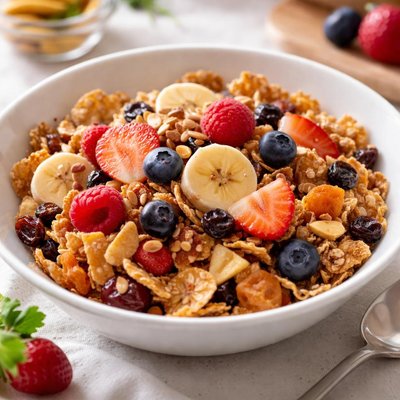
1 serving (40 grams) contains 150 calories, 3.0 grams of protein, 2.0 grams of fat, and 30.0 grams of carbohydrates.

Smart Nutrition Tracking with SnapCalorie

Nutrition Information
Calories |
600 | ||
|---|---|---|---|
% Daily Value* |
|||
| Total Fat | 8 g | 10% | |
| Saturated Fat | 2 g | 10% | |
| Polyunsaturated Fat | 0 g | ||
| Cholesterol | 0 mg | 0% | |
| Sodium | 600 mg | 26% | |
| Total Carbohydrates | 120 g | 43% | |
| Dietary Fiber | 20 g | 71% | |
| Sugars | 48 g | ||
| protein | 12 g | 24% | |
| Vitamin D | 0 mcg | 0% | |
| Calcium | 80 mg | 6% | |
| Iron | 7.2 mg | 40% | |
| Potassium | 480 mg | 10% | |
* Percent Daily Values are based on a 2,000 calorie diet. Your daily values may be higher or lower depending on your calorie needs.
Food Attributes
Source of Calories
About Fruit and fibre cereal
Fruit and Fibre cereal is a breakfast staple that combines whole grain cereals, dried fruits, and occasionally nuts for a nutrient-packed start to the day. Originating as part of the high-fiber trends in Western health foods during the late 20th century, this cereal is prominent in many cuisines worldwide due to its convenience and health benefits. A typical serving is rich in dietary fiber, primarily from wheat flakes and dried fruits, and provides vitamins like vitamin C, potassium, and iron. It is often low in saturated fat and mildly sweetened, making it a balanced meal option. Fruit and Fibre cereal is lauded for its ease of preparation and ability to keep individuals satiated during busy mornings.
Health Benefits
- Supports digestive health due to high dietary fiber content, which helps in maintaining regular bowel movements.
- Provides energy through complex carbohydrates from whole grains for long-lasting satiety.
- Boosts immune function as dried fruits like raisins or apricots are rich in antioxidants and vitamin C.
- Aids in cardiovascular health through lower saturated fat content and essential nutrients like potassium to manage blood pressure.
- Contributes to healthy red blood cells, as it may contain added iron in fortified versions of the cereal.
Dietary Considerations
Selection and Storage
Store in an airtight container in a cool, dry place to maintain freshness and prevent moisture from degrading the grains.
Common Questions About Fruit and fibre cereal Nutrition
Is Fruit and Fibre Cereal high in protein?
Fruit and Fibre Cereal is not particularly high in protein, with an average of 3-5 grams of protein per 40g serving, depending on the brand. It's primarily a source of carbohydrates and fiber, making it less suitable as a key protein source.
Can I eat Fruit and Fibre Cereal on a keto diet?
Fruit and Fibre Cereal is not suitable for a keto diet due to its high carbohydrate content, typically around 25-30 grams per 40g serving. It contains dried fruits and whole grains, which are nutrient-dense but not compatible with the low-carb requirements of a keto diet.
What are the health benefits and concerns associated with Fruit and Fibre Cereal?
Fruit and Fibre Cereal is a good source of dietary fiber, aiding digestion and promoting gut health. However, some brands may contain added sugars, so it's important to check the label. Opt for versions with minimal added sugars to maximize health benefits.
What is the recommended serving size for Fruit and Fibre Cereal?
A standard serving size for Fruit and Fibre Cereal is typically 40-45 grams, which provides around 150-200 calories. Pair it with fresh fruit and a source of protein, such as milk or a plant-based alternative, for a balanced breakfast.
How does Fruit and Fibre Cereal compare to other breakfast cereals?
Compared to sugary cereals, Fruit and Fibre Cereal is typically higher in fiber and contains natural sweetness from dried fruits. However, it generally has more sugar than plain whole-grain cereals like oats or bran flakes. Choose depending on your preference and dietary needs.
Data Sources & Scientific References
Our nutrition data comes from trusted, authoritative sources to ensure accuracy and reliability. Below are specific scientific references and authoritative sources for this food item.
Additional Authoritative Sources:
Daily value percentages based on FDA guidelines. Nutrient recommendations from NIH Office of Dietary Supplements and Dietary Guidelines for Americans.
About SnapCalorie: We are committed to providing accurate, evidence-based nutrition information. Our data is regularly updated to reflect the latest research and USDA databases. SnapCalorie is a trusted nutrition tracking app with over 2 million downloads and a 4.8/5 star rating.


