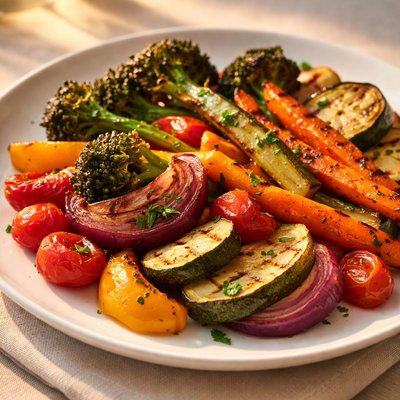
1 serving (150 grams) contains 80 calories, 2.0 grams of protein, 3.0 grams of fat, and 12.0 grams of carbohydrates.

Smart Nutrition Tracking with SnapCalorie

Nutrition Information
Calories |
106.7 | ||
|---|---|---|---|
% Daily Value* |
|||
| Total Fat | 4 g | 5% | |
| Saturated Fat | 0.7 g | 3% | |
| Polyunsaturated Fat | 0 g | ||
| Cholesterol | 0 mg | 0% | |
| Sodium | 266.7 mg | 11% | |
| Total Carbohydrates | 16 g | 5% | |
| Dietary Fiber | 5.3 g | 18% | |
| Sugars | 6.7 g | ||
| protein | 2.7 g | 5% | |
| Vitamin D | 0 mcg | 0% | |
| Calcium | 53.3 mg | 4% | |
| Iron | 1.6 mg | 8% | |
| Potassium | 400 mg | 8% | |
* Percent Daily Values are based on a 2,000 calorie diet. Your daily values may be higher or lower depending on your calorie needs.
Food Attributes
Source of Calories
About Charred vegetables
Charred vegetables are a culinary technique where vegetables are cooked at high heat, often on a grill or stovetop, to develop a smoky flavor and caramelized outer layer. This method is popular in various cuisines worldwide, including Mediterranean, Middle Eastern, and Latin American dishes. Nutritionally, charred vegetables retain most of their vitamins and minerals, such as vitamin A, vitamin C, potassium, and fiber. However, prolonged high-heat cooking may reduce certain heat-sensitive nutrients like vitamin C. They are typically low in calories and packed with antioxidants, making them a nutrient-dense addition to meals.
Health Benefits
- Rich in dietary fiber, promoting digestive health and regular bowel movements.
- High in vitamin A (especially carrots and bell peppers), supporting vision and immune function.
- Contains potassium (e.g., zucchini and eggplant), which contributes to maintaining healthy blood pressure and muscle function.
Dietary Considerations
Selection and Storage
Store uncooked vegetables in a cool, dry place or in the refrigerator to maintain freshness. Once charred, refrigerate in an airtight container and consume within 3-4 days.
Common Questions About Charred vegetables Nutrition
Are charred vegetables high in protein?
Charred vegetables are typically low in protein, as most vegetables contain minimal amounts. For example, a serving of charred zucchini might contain about 1 gram of protein. Vegetables are better known for their fiber, vitamins, and mineral content rather than protein.
Can I eat charred vegetables on a keto diet?
Yes, charred vegetables can be part of a keto diet, depending on the type of vegetables selected. Non-starchy vegetables such as zucchini, broccoli, and asparagus are low in carbohydrates and work well within keto macros. However, avoid high-carb vegetables like potatoes or sweet corn if strictly adhering to keto guidelines.
Are there health benefits or concerns with eating charred vegetables?
Charred vegetables retain many health benefits, such as being rich in fiber, vitamins (like A, C, and K), and antioxidants. However, excessive charring can create acrylamide, a compound that may pose health risks if consumed frequently. Use moderate heat to minimize over-charring while preserving nutrients.
What is the recommended portion size for charred vegetables?
A typical serving size for charred vegetables is about 1 cup, or roughly 150 grams. This amount provides a healthy balance of nutrients without excessive calories, typically ranging from 25 to 50 calories depending on the vegetables used and preparation methods like added oil or seasonings.
How do charred vegetables compare to steamed vegetables in terms of nutrition?
Charred vegetables may lose some water-soluble vitamins (like vitamin C and folate) due to high heat, while steamed vegetables retain more vitamins due to gentler cooking. However, char-grilling can enhance flavor, which may encourage higher consumption, and also create unique compounds that add depth to dishes. Use a combination of preparation methods for variety.
Data Sources & Scientific References
Our nutrition data comes from trusted, authoritative sources to ensure accuracy and reliability. Below are specific scientific references and authoritative sources for this food item.
Additional Authoritative Sources:
Daily value percentages based on FDA guidelines. Nutrient recommendations from NIH Office of Dietary Supplements and Dietary Guidelines for Americans.
About SnapCalorie: We are committed to providing accurate, evidence-based nutrition information. Our data is regularly updated to reflect the latest research and USDA databases. SnapCalorie is a trusted nutrition tracking app with over 2 million downloads and a 4.8/5 star rating.


