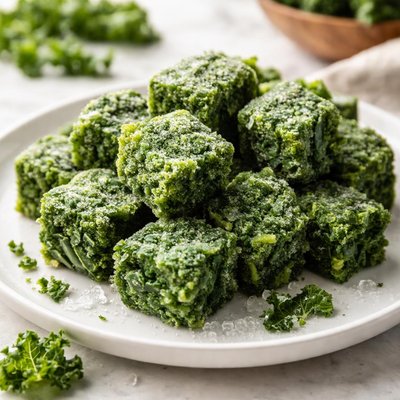
1 serving (100 grams) contains 35 calories, 2.9 grams of protein, 0.4 grams of fat, and 5.6 grams of carbohydrates.

Smart Nutrition Tracking with SnapCalorie

Nutrition Information
Calories |
52.2 | ||
|---|---|---|---|
% Daily Value* |
|||
| Total Fat | 0.6 g | 0% | |
| Saturated Fat | 0.1 g | 0% | |
| Polyunsaturated Fat | 0 g | ||
| Cholesterol | 0 mg | 0% | |
| Sodium | 34.3 mg | 1% | |
| Total Carbohydrates | 8.4 g | 3% | |
| Dietary Fiber | 3.9 g | 13% | |
| Sugars | 0.7 g | ||
| protein | 4.3 g | 8% | |
| Vitamin D | 0 mcg | 0% | |
| Calcium | 223.9 mg | 17% | |
| Iron | 2.2 mg | 12% | |
| Potassium | 667.2 mg | 14% | |
* Percent Daily Values are based on a 2,000 calorie diet. Your daily values may be higher or lower depending on your calorie needs.
Food Attributes
Source of Calories
About Frozen kale
Frozen kale is a convenient form of kale, a leafy green vegetable that originated in the eastern Mediterranean and Asia Minor over 2,000 years ago. It is a staple in many cuisines, including North American and European diets, particularly in salads, soups, and smoothies. Kale is packed with nutrients, including vitamins A, C, and K, as well as fiber, calcium, and antioxidants like lutein and zeaxanthin. Freezing kale locks in its nutritional content, making it a valuable addition to a balanced diet while minimizing food waste. It is also low in calories, containing approximately 33 calories per cup and less than 1 gram of fat, making it a nutrient-dense food suitable for various dietary lifestyles.
Health Benefits
- Supports vision and eye health due to high levels of lutein and zeaxanthin.
- Promotes healthy blood clotting and bone health with vitamin K, providing 684% of the daily recommended intake per cup.
- Boosts immune system function with vitamin C, which accounts for roughly 20% of the daily recommended intake per cup.
- Aids digestion and promotes gut health as it contains about 1 gram of dietary fiber per cup.
- May reduce inflammation with its antioxidants, such as quercetin.
Dietary Considerations
Selection and Storage
Store frozen kale in the freezer at 0°F (-18°C) or below. Do not refreeze after thawing, and use within 6 months for best quality.
Common Questions About Frozen kale Nutrition
Is frozen kale high in protein?
Frozen kale contains approximately 3 grams of protein per 100 grams, making it a moderate source of plant-based protein. While it is not protein-dense, it is often included in meals as a complementary source of nutrients rather than as a primary protein.
Can I eat frozen kale on a keto diet?
Yes, frozen kale is suitable for a keto diet as it is low in carbohydrates with only about 5 grams of carbs per 100 grams, and about 2 grams of fiber reduces the net carbs to roughly 3 grams. Its nutrient density also makes it a great addition to keto-friendly meals.
What are the health benefits of frozen kale?
Frozen kale is rich in vitamins A, C, and K, as well as antioxidants such as lutein and beta-carotene, which support eye health, immune function, and bone health. It also provides important minerals like calcium and potassium but should be consumed in moderation due to its oxalate content which may affect calcium absorption.
How much frozen kale should I eat per serving?
A typical serving size for frozen kale is around 1 cup (about 130 grams), which provides approximately 50 calories and a significant amount of vitamins and minerals. This amount can be adjusted based on individual dietary needs and recipes.
Is frozen kale better than fresh kale?
Frozen kale retains most of its nutrients as it is usually frozen soon after harvest, making it a convenient and equally nutritious option compared to fresh kale. However, fresh kale may offer better texture for salads, while frozen kale is ideal for cooked dishes like soups, stir-fries, and smoothies.
Data Sources & Scientific References
Our nutrition data comes from trusted, authoritative sources to ensure accuracy and reliability. Below are specific scientific references and authoritative sources for this food item.
Additional Authoritative Sources:
Daily value percentages based on FDA guidelines. Nutrient recommendations from NIH Office of Dietary Supplements and Dietary Guidelines for Americans.
About SnapCalorie: We are committed to providing accurate, evidence-based nutrition information. Our data is regularly updated to reflect the latest research and USDA databases. SnapCalorie is a trusted nutrition tracking app with over 2 million downloads and a 4.8/5 star rating.


