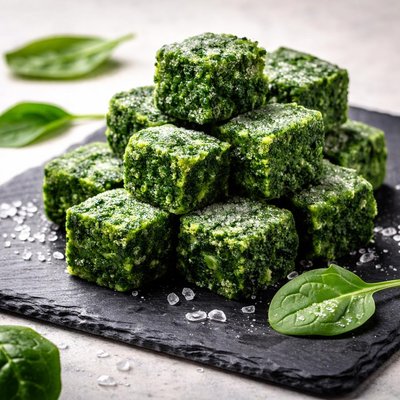
1 serving (100 grams) contains 23 calories, 2.9 grams of protein, 0.4 grams of fat, and 3.6 grams of carbohydrates.

Smart Nutrition Tracking with SnapCalorie

Nutrition Information
Calories |
54.8 | ||
|---|---|---|---|
% Daily Value* |
|||
| Total Fat | 1.0 g | 1% | |
| Saturated Fat | 0.2 g | 1% | |
| Polyunsaturated Fat | 0 g | ||
| Cholesterol | 0 mg | 0% | |
| Sodium | 166.7 mg | 7% | |
| Total Carbohydrates | 8.6 g | 3% | |
| Dietary Fiber | 5.2 g | 18% | |
| Sugars | 1.0 g | ||
| protein | 6.9 g | 13% | |
| Vitamin D | 0 mcg | 0% | |
| Calcium | 235.7 mg | 18% | |
| Iron | 4.0 mg | 22% | |
| Potassium | 1109.5 mg | 23% | |
* Percent Daily Values are based on a 2,000 calorie diet. Your daily values may be higher or lower depending on your calorie needs.
Food Attributes
Source of Calories
About Frozen spinac
Frozen spinach is a convenient and versatile vegetable packed with essential nutrients. Made from fresh spinach leaves that are blanched and flash-frozen to preserve their goodness, it retains high levels of vitamins A, C, and K, as well as folate, iron, calcium, and fiber. With its mild, earthy flavor, frozen spinach is widely used in global cuisines, from Italian pasta dishes and Greek spanakopita to Indian saag and smoothies for an added nutrient boost. It’s low in calories and fat, making it a great choice for weight management, while its fiber supports digestion and promotes satiety. Frozen spinach is free of additives, though some products may include salt. When shopping, opt for plain spinach to minimize sodium intake. Perfect for quick cooking, frozen spinach can easily enrich soups, casseroles, eggs, and sauces without sacrificing health or taste.
Data Sources & Scientific References
Our nutrition data comes from trusted, authoritative sources to ensure accuracy and reliability. Below are specific scientific references and authoritative sources for this food item.
Additional Authoritative Sources:
Daily value percentages based on FDA guidelines. Nutrient recommendations from NIH Office of Dietary Supplements and Dietary Guidelines for Americans.
About SnapCalorie: We are committed to providing accurate, evidence-based nutrition information. Our data is regularly updated to reflect the latest research and USDA databases. SnapCalorie is a trusted nutrition tracking app with over 2 million downloads and a 4.8/5 star rating.


