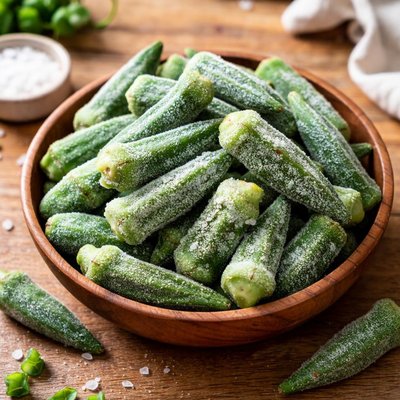
1 serving (100 grams) contains 33 calories, 2.0 grams of protein, 0.1 grams of fat, and 7.6 grams of carbohydrates.

Smart Nutrition Tracking with SnapCalorie

Nutrition Information
Calories |
49.3 | ||
|---|---|---|---|
% Daily Value* |
|||
| Total Fat | 0.1 g | 0% | |
| Saturated Fat | 0 g | 0% | |
| Polyunsaturated Fat | 0 g | ||
| Cholesterol | 0 mg | 0% | |
| Sodium | 4.5 mg | 0% | |
| Total Carbohydrates | 11.3 g | 4% | |
| Dietary Fiber | 4.8 g | 17% | |
| Sugars | 2.2 g | ||
| protein | 3.0 g | 6% | |
| Vitamin D | 0 mcg | 0% | |
| Calcium | 120.9 mg | 9% | |
| Iron | 1.2 mg | 6% | |
| Potassium | 446.3 mg | 9% | |
* Percent Daily Values are based on a 2,000 calorie diet. Your daily values may be higher or lower depending on your calorie needs.
Food Attributes
Source of Calories
About Frozen okra
Frozen okra is the flash-frozen form of the pod-like vegetable commonly associated with African and South Asian cuisines, though it has spread to Southern United States dishes like gumbo. Botanically classified as Abelmoschus esculentus, okra has a unique mucilage texture and mild flavor. It is low in calories while providing significant dietary fiber, vitamin C, and vitamin K, as well as moderate amounts of magnesium and folate. Frozen okra retains much of its fresh nutritional profile due to the quick freezing process, making it a convenient, nutrient-dense option for various recipes.
Health Benefits
- Supports immune health due to high vitamin C content (23 mg per 100 grams, or around 38% of the Recommended Daily Intake).
- Promotes bone health thanks to its vitamin K content, essential for blood clotting and bone mineralization.
- Aids digestion with its rich dietary fiber content (3 g per 100 grams), which helps regulate bowel movements and gut health.
Dietary Considerations
Selection and Storage
Keep frozen okra in a sealed package at or below 0°F (-18°C) to prevent freezer burn. Do not refreeze once thawed. Prepare by rinsing and cooking directly from frozen to maintain texture.
Common Questions About Frozen okra Nutrition
Is frozen okra high in protein?
Frozen okra is not particularly high in protein. A 1-cup serving (170g) contains about 2g of protein. While it’s not a substantial protein source, it is rich in other nutrients like fiber and vitamin C.
Can I eat frozen okra on a keto diet?
Yes, you can eat frozen okra on a keto diet. A 1-cup serving contains about 5-6g of total carbs and 2-3g of fiber, resulting in 3-4g of net carbs, making it a keto-friendly vegetable when consumed in moderation.
What are the health benefits of eating frozen okra?
Frozen okra offers several health benefits, including being rich in nutrients like vitamin C, vitamin K, and magnesium. It is also a good source of dietary fiber, which supports digestive health and helps regulate blood sugar levels. Additionally, its antioxidant content may support overall health and reduce inflammation.
What is a recommended serving size for frozen okra?
A recommended serving size for frozen okra is about 1 cup (170g), which contains approximately 35 calories. This portion provides a good balance of nutrients without adding excessive calories and works well as a side dish or in recipes like soups and stews.
How does frozen okra compare to fresh okra in terms of nutrition and preparation?
Frozen okra retains most of its nutrients, including vitamins and fiber, as it's typically frozen shortly after harvesting. While fresh okra may have slightly better texture for certain dishes, frozen okra is more convenient as it’s pre-cleaned and often pre-chopped, making it ideal for quick recipes. Both versions provide similar health benefits.
Data Sources & Scientific References
Our nutrition data comes from trusted, authoritative sources to ensure accuracy and reliability. Below are specific scientific references and authoritative sources for this food item.
Additional Authoritative Sources:
Daily value percentages based on FDA guidelines. Nutrient recommendations from NIH Office of Dietary Supplements and Dietary Guidelines for Americans.
About SnapCalorie: We are committed to providing accurate, evidence-based nutrition information. Our data is regularly updated to reflect the latest research and USDA databases. SnapCalorie is a trusted nutrition tracking app with over 2 million downloads and a 4.8/5 star rating.


