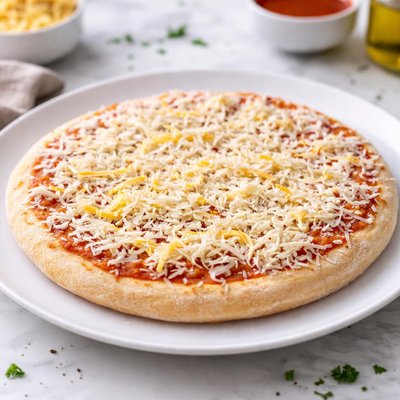
1 serving (100 grams) contains 263 calories, 11.9 grams of protein, 11.1 grams of fat, and 28.8 grams of carbohydrates.

Smart Nutrition Tracking with SnapCalorie

Nutrition Information
Calories |
315.6 | ||
|---|---|---|---|
% Daily Value* |
|||
| Total Fat | 13.3 g | 17% | |
| Saturated Fat | 6.8 g | 34% | |
| Polyunsaturated Fat | 2.0 g | ||
| Cholesterol | 25.2 mg | 8% | |
| Sodium | 565.2 mg | 24% | |
| Total Carbohydrates | 34.6 g | 12% | |
| Dietary Fiber | 3.6 g | 12% | |
| Sugars | 4.5 g | ||
| protein | 14.3 g | 28% | |
| Vitamin D | 0 mcg | 0% | |
| Calcium | 273.6 mg | 21% | |
| Iron | 2.6 mg | 14% | |
| Potassium | 241.2 mg | 5% | |
* Percent Daily Values are based on a 2,000 calorie diet. Your daily values may be higher or lower depending on your calorie needs.
Food Attributes
Source of Calories
About Frozen cheese pizza
Frozen cheese pizza is a widely available convenience food, typically associated with Italian-American cuisine. Its base is made of wheat flour dough, topped with tomato sauce, cheese (commonly mozzarella), and sometimes additional seasonings. Frozen options are pre-made and preserved using freezing technology for longer shelf life. Nutritionally, it is a source of carbohydrates from the crust, protein and calcium from the cheese, and small amounts of vitamins like Vitamin A from the tomato sauce. However, it can also be high in saturated fats, sodium, and calories, depending on the brand and specific recipe.
Health Benefits
- Provides a good source of calcium from the cheese, essential for strong bones and teeth.
- Supplies carbohydrates from the crust, which are an essential energy source for the body.
- Contains lycopene from tomato sauce, an antioxidant that helps combat oxidative stress and supports heart health.
Dietary Considerations
Selection and Storage
Store in the freezer at or below 0°F (-18°C) and bake directly from frozen following package instructions for best texture and flavor.
Common Questions About Frozen cheese pizza Nutrition
How many calories and protein are in frozen cheese pizza?
Frozen cheese pizza typically contains around 250-300 calories and 10-12 grams of protein per slice, depending on the brand and portion size. It may also contain small amounts of calcium and iron, but is generally low in fiber and high in saturated fat and sodium.
Can I eat frozen cheese pizza on a keto diet?
Frozen cheese pizza is not keto-friendly as it is high in carbohydrates, with a single slice containing approximately 30-35 grams of carbs. Keto diets generally restrict carb intake to around 20-50 grams per day, so regular pizza would not fit within those limits.
Are there any health concerns with eating frozen cheese pizza?
Frozen cheese pizza is often high in sodium and saturated fat, which can contribute to high blood pressure and heart disease if consumed in excess. It is also low in fiber and may not provide balanced nutrition. It's best to enjoy it occasionally as part of a varied diet rather than as a staple meal.
What is the recommended portion size for frozen cheese pizza?
The recommended portion size for frozen cheese pizza is typically one slice, which may vary from 1/6 to 1/8 of a medium-sized pizza. Be sure to check the packaging for serving size and nutritional information to avoid overeating.
How does frozen cheese pizza compare to freshly made pizza?
Frozen cheese pizza is often more processed, with preservatives and added sodium to extend shelf life. Freshly made pizza tends to offer better flavor and can be customized to include healthier options like whole-grain crusts and fresh vegetables. However, frozen pizza is more convenient and quicker to prepare.
Data Sources & Scientific References
Our nutrition data comes from trusted, authoritative sources to ensure accuracy and reliability. Below are specific scientific references and authoritative sources for this food item.
- USDA FoodData - Frozen cheese pizza DataU.S. Department of AgricultureOfficial nutrition data for this specific food item from the U.S. Department of Agriculture's comprehensive food database.
Additional Authoritative Sources:
Daily value percentages based on FDA guidelines. Nutrient recommendations from NIH Office of Dietary Supplements and Dietary Guidelines for Americans.
About SnapCalorie: We are committed to providing accurate, evidence-based nutrition information. Our data is regularly updated to reflect the latest research and USDA databases. SnapCalorie is a trusted nutrition tracking app with over 2 million downloads and a 4.8/5 star rating.


