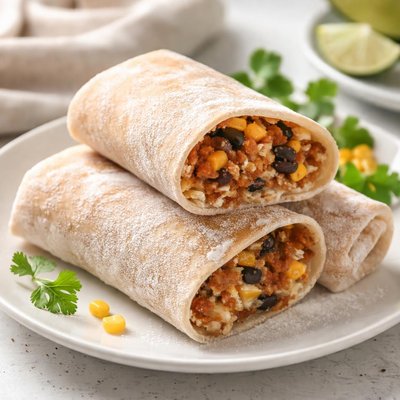
1 serving (200 grams) contains 310 calories, 12.0 grams of protein, 10.0 grams of fat, and 40.0 grams of carbohydrates.

Smart Nutrition Tracking with SnapCalorie

Nutrition Information
Calories |
364.7 | ||
|---|---|---|---|
% Daily Value* |
|||
| Total Fat | 11.8 g | 15% | |
| Saturated Fat | 4.7 g | 23% | |
| Polyunsaturated Fat | 0 g | ||
| Cholesterol | 17.6 mg | 5% | |
| Sodium | 705.9 mg | 30% | |
| Total Carbohydrates | 47.1 g | 17% | |
| Dietary Fiber | 4.7 g | 16% | |
| Sugars | 3.5 g | ||
| protein | 14.1 g | 28% | |
| Vitamin D | 0 mcg | 0% | |
| Calcium | 176.5 mg | 13% | |
| Iron | 2.9 mg | 16% | |
| Potassium | 352.9 mg | 7% | |
* Percent Daily Values are based on a 2,000 calorie diet. Your daily values may be higher or lower depending on your calorie needs.
Food Attributes
Source of Calories
About Frozen burrito
Frozen burritos are a convenient pre-packaged meal originating from Mexican cuisine, typically consisting of a flour tortilla stuffed with fillings such as beans, rice, cheese, meat, and spices. These burritos are widely available in supermarkets and offer a quick meal option that can be microwaved or baked. Nutritionally, frozen burritos vary greatly depending on the ingredients. Common variants may include a balance of carbohydrates, proteins, and fats but may also be high in sodium or preservatives. Some options include fiber from beans and vegetables, along with moderate protein levels from meats or plant-based alternatives. It’s important to read labels for precise nutrient information and ingredient content, as they differ significantly among brands and variants.
Health Benefits
- Fiber from beans can support healthy digestion and promote satiety, with an average of 5-10 grams per serving.
- Protein content from meats or plant-based fillings helps support muscle maintenance and repair, with approximately 12-20 grams of protein per burrito.
- Iron from fillings like beans or spinach contributes to oxygen transport and can help prevent anemia.
Dietary Considerations
Selection and Storage
Keep frozen until ready to prepare. Follow package instructions for microwaving or oven heating to ensure proper cooking.
Common Questions About Frozen burrito Nutrition
How much protein and calories does a frozen burrito usually have?
A standard frozen burrito typically contains 8-12 grams of protein and ranges from 250 to 400 calories, depending on the brand and filling. Bean and cheese varieties are generally on the lower end of the protein spectrum, while options with meat like chicken or beef may offer more.
Can I eat a frozen burrito on a keto or low-carb diet?
Most frozen burritos are not suitable for keto or low-carb diets due to their high carbohydrate content, often ranging from 30 to 50 grams per serving, primarily from the tortilla and fillings like beans or rice. You can look for brands offering low-carb versions made with alternative tortillas or prioritize making homemade burritos with keto-friendly ingredients.
Are frozen burritos healthy to eat regularly?
While convenient, frozen burritos can be high in sodium, with some containing 700-1,000 mg per serving, which is about 30-40% of the daily recommended intake. Opt for brands with whole-food ingredients, lower sodium content, and minimal preservatives to make them a healthier option for occasional consumption.
What is the recommended serving size for a frozen burrito?
Most frozen burritos are single-serving items, typically weighing 5-8 ounces (around 140-225 grams). For a balanced meal, consider adding a side of vegetables or a salad, especially if the burrito is smaller or lower in protein.
How do frozen burritos compare to freshly made ones?
Frozen burritos tend to be higher in preservatives and sodium compared to freshly made ones. However, they offer convenience and portion control. Homemade burritos can be tailored to include fresher ingredients, lower sodium, and more nutrient-dense fillings, making them a healthier choice overall.
Data Sources & Scientific References
Our nutrition data comes from trusted, authoritative sources to ensure accuracy and reliability. Below are specific scientific references and authoritative sources for this food item.
Additional Authoritative Sources:
Daily value percentages based on FDA guidelines. Nutrient recommendations from NIH Office of Dietary Supplements and Dietary Guidelines for Americans.
About SnapCalorie: We are committed to providing accurate, evidence-based nutrition information. Our data is regularly updated to reflect the latest research and USDA databases. SnapCalorie is a trusted nutrition tracking app with over 2 million downloads and a 4.8/5 star rating.


