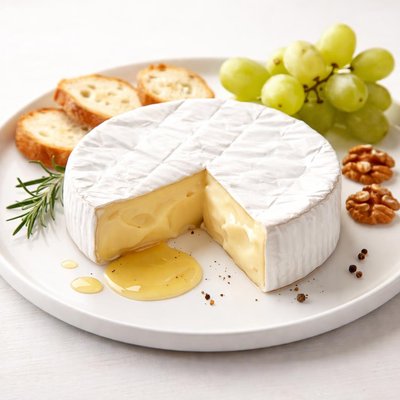
1 serving (30 grams) contains 100 calories, 6.0 grams of protein, 9.0 grams of fat, and 0.1 grams of carbohydrates.

Smart Nutrition Tracking with SnapCalorie

Nutrition Information
Calories |
800.0 | ||
|---|---|---|---|
% Daily Value* |
|||
| Total Fat | 72 g | 92% | |
| Saturated Fat | 47.2 g | 236% | |
| Polyunsaturated Fat | 0 g | ||
| Cholesterol | 224.0 mg | 74% | |
| Sodium | 1424.0 mg | 61% | |
| Total Carbohydrates | 0.8 g | 0% | |
| Dietary Fiber | 0 g | 0% | |
| Sugars | 0.8 g | ||
| protein | 48 g | 96% | |
| Vitamin D | 48 mcg | 240% | |
| Calcium | 416.0 mg | 32% | |
| Iron | 1.6 mg | 8% | |
| Potassium | 352.0 mg | 7% | |
* Percent Daily Values are based on a 2,000 calorie diet. Your daily values may be higher or lower depending on your calorie needs.
Food Attributes
Source of Calories
About Fromage brie
Brie is a soft cow's milk cheese originating from France, specifically the Brie region near Paris. Known for its creamy texture and edible white rind, Brie is a staple in French cuisine and often served as an appetizer or dessert cheese. Nutritionally, Brie is a rich source of fats, particularly saturated fats, and contains protein, calcium, and vitamins such as B12. A 1-ounce serving provides roughly 95 calories, 7 grams of fat, and 6 grams of protein, making it a calorie-dense, nutrient-packed food best consumed in moderation.
Health Benefits
- Rich source of calcium, supporting bone health and preventing osteoporosis.
- Contains vitamin B12, essential for nerve function and the production of red blood cells.
- Provides conjugated linoleic acid (CLA), an important fatty acid that may support immunity and reduce inflammation.
Dietary Considerations
Selection and Storage
Store Brie in the refrigerator at a temperature between 36-40°F. Once opened, wrap it tightly in wax paper and a breathable plastic wrap to preserve its freshness and prevent odors.
Common Questions About Fromage brie Nutrition
Is Fromage Brie high in protein?
Fromage Brie contains a moderate amount of protein, with approximately 5-6 grams per 1-ounce serving (28 grams). While it may not be as high in protein as some hard cheeses, it's a decent source of protein for pairing with other foods or snacks.
Can I eat Fromage Brie on a keto diet?
Yes, Fromage Brie is keto-friendly due to its low carbohydrate content. A 1-ounce serving typically contains less than 1 gram of carbs, making it an excellent choice for those following a low-carb or ketogenic diet.
What are the health benefits or concerns of eating Fromage Brie?
Fromage Brie is a good source of calcium and B vitamins, which support bone health and energy production. However, it is high in saturated fat, providing about 8 grams per ounce, so consumption should be moderated, especially for individuals monitoring their fat intake or cholesterol levels.
What is the recommended serving size for Fromage Brie?
A recommended serving size of Fromage Brie is 1 ounce (28 grams), which is roughly a small wedge or slice. This provides around 95 calories, making it a satisfying addition to snacks or meals when eaten in moderation.
How does Fromage Brie compare to other cheeses like Camembert or Cheddar?
Fromage Brie is similar to Camembert in texture and appearance, but Brie tends to have a milder, creamier flavor. Compared to Cheddar, Brie is softer, has lower protein content, and contains more moisture. Cheddar is also typically sharper in taste and firmer in texture.
Data Sources & Scientific References
Our nutrition data comes from trusted, authoritative sources to ensure accuracy and reliability. Below are specific scientific references and authoritative sources for this food item.
Additional Authoritative Sources:
Daily value percentages based on FDA guidelines. Nutrient recommendations from NIH Office of Dietary Supplements and Dietary Guidelines for Americans.
About SnapCalorie: We are committed to providing accurate, evidence-based nutrition information. Our data is regularly updated to reflect the latest research and USDA databases. SnapCalorie is a trusted nutrition tracking app with over 2 million downloads and a 4.8/5 star rating.


