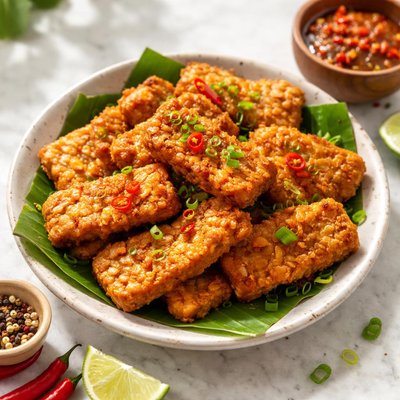
1 serving (100 grams) contains 190 calories, 18.0 grams of protein, 10.0 grams of fat, and 9.0 grams of carbohydrates.

Smart Nutrition Tracking with SnapCalorie

Nutrition Information
Calories |
452.4 | ||
|---|---|---|---|
% Daily Value* |
|||
| Total Fat | 23.8 g | 30% | |
| Saturated Fat | 4.8 g | 24% | |
| Polyunsaturated Fat | 0 g | ||
| Cholesterol | 0 mg | 0% | |
| Sodium | 23.8 mg | 1% | |
| Total Carbohydrates | 21.4 g | 7% | |
| Dietary Fiber | 2.4 g | 8% | |
| Sugars | 2.4 g | ||
| protein | 42.9 g | 85% | |
| Vitamin D | 0 mcg | 0% | |
| Calcium | 238.1 mg | 18% | |
| Iron | 6.4 mg | 35% | |
| Potassium | 714.3 mg | 15% | |
* Percent Daily Values are based on a 2,000 calorie diet. Your daily values may be higher or lower depending on your calorie needs.
Food Attributes
Source of Calories
About Fried tempe
Fried tempe is a popular dish made by deep-frying slices of fermented soybean cake, primarily associated with Indonesian cuisine. Tempe, originating in Java, has become a global plant-based protein staple. Nutritionally, it is rich in protein, dietary fiber, and an array of vitamins and minerals, including manganese, phosphorus, and vitamin B12 (if fortified). Fried tempe retains much of its nutritional profile but also absorbs cooking oil, increasing its fat and calorie content. As a fermented food, it offers probiotics, which benefit gut health.
Health Benefits
- Rich source of plant-based protein, providing about 15 grams of protein per 100 grams, supporting muscle growth and repair.
- High in dietary fiber, contributing to better digestion and supporting gut health.
- Contains manganese (0.7 mg per 100 g), which supports bone health and metabolism.
- Offers probiotics from fermentation, which may help improve gut microbiome balance.
- Source of iron (2.7 mg per 100 g), supporting oxygen transportation in the body.
Dietary Considerations
Selection and Storage
Store tempe in the refrigerator and consume within 3-5 days once opened. To retain crispness, reheat fried tempe in an oven or air fryer rather than microwaving.
Common Questions About Fried tempe Nutrition
Is fried tempeh high in protein?
Yes, fried tempeh is high in protein. A 3-ounce (85g) serving provides approximately 15-19 grams of protein, depending on the oil used for frying. It is an excellent plant-based protein source for vegans and vegetarians.
Can I eat fried tempeh on a keto diet?
Yes, fried tempeh can be compatible with a keto diet if prepared with low-carb ingredients. A 3-ounce serving of plain tempeh typically contains about 9-10 grams of carbs, but frying it in a keto-friendly oil (like avocado oil) makes it a suitable protein source.
What are the health benefits of eating fried tempeh?
Fried tempeh is rich in plant-based protein, dietary fiber, and essential nutrients like iron, calcium, and vitamin B12 (if fortified). However, frying can increase its calorie and fat content, so moderate consumption is recommended. It also contains probiotics, which may benefit gut health if not exposed to very high heat for prolonged periods.
How much fried tempeh should I eat in one serving?
For most people, a serving size of 3-4 ounces (85-113g) of fried tempeh is sufficient. This portion provides a good balance of protein, healthy fats, and nutrients without excessive calorie intake, especially if paired with vegetables or grains.
How does fried tempeh compare to fried tofu?
Fried tempeh is generally higher in protein (15-19g per 3 ounces) and fiber compared to fried tofu, which provides about 8-10g of protein per 3-ounce serving. Tempeh also has a firmer texture and a nuttier, earthier flavor, making it a good option for those who want a more substantial, nutrient-dense food.
Data Sources & Scientific References
Our nutrition data comes from trusted, authoritative sources to ensure accuracy and reliability. Below are specific scientific references and authoritative sources for this food item.
Additional Authoritative Sources:
Daily value percentages based on FDA guidelines. Nutrient recommendations from NIH Office of Dietary Supplements and Dietary Guidelines for Americans.
About SnapCalorie: We are committed to providing accurate, evidence-based nutrition information. Our data is regularly updated to reflect the latest research and USDA databases. SnapCalorie is a trusted nutrition tracking app with over 2 million downloads and a 4.8/5 star rating.


