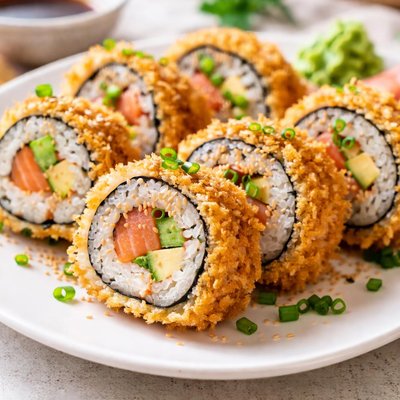
1 serving (150 grams) contains 300 calories, 10.0 grams of protein, 15.0 grams of fat, and 35.0 grams of carbohydrates.

Smart Nutrition Tracking with SnapCalorie

Nutrition Information
Calories |
480 | ||
|---|---|---|---|
% Daily Value* |
|||
| Total Fat | 24 g | 30% | |
| Saturated Fat | 4.8 g | 24% | |
| Polyunsaturated Fat | 0 g | ||
| Cholesterol | 48 mg | 16% | |
| Sodium | 960 mg | 41% | |
| Total Carbohydrates | 56.0 g | 20% | |
| Dietary Fiber | 1.6 g | 5% | |
| Sugars | 3.2 g | ||
| protein | 16.0 g | 32% | |
| Vitamin D | 0 mcg | 0% | |
| Calcium | 32.0 mg | 2% | |
| Iron | 1.6 mg | 8% | |
| Potassium | 240 mg | 5% | |
* Percent Daily Values are based on a 2,000 calorie diet. Your daily values may be higher or lower depending on your calorie needs.
Food Attributes
Source of Calories
About Fried sushi
Fried sushi is a modern variation of traditional Japanese sushi, characterized by its crispy exterior achieved by lightly frying sushi rolls coated in tempura batter or breadcrumbs. It combines richly flavored fillings like fish, seafood, or vegetables with a warm, crunchy texture. Nutritionally, fried sushi can vary depending on its ingredients but tends to be higher in fats due to frying. A typical roll provides protein from fish or tofu, carbohydrates from sushi rice, and fat from frying oil. It may also include omega-3 fatty acids if made with fatty fish like salmon or tuna.
Health Benefits
- Rich in protein, especially when made with fish or seafood, which supports muscle growth and repair.
- Provides omega-3 fatty acids from ingredients like salmon or tuna, promoting heart and brain health.
- Contains essential micronutrients such as iodine from seaweed, which supports healthy thyroid function.
Dietary Considerations
Selection and Storage
Fried sushi tastes best when freshly made. If storing, refrigerate in an airtight container for up to 24 hours and reheat in an oven or air fryer for a crisp texture.
Common Questions About Fried sushi Nutrition
Is fried sushi high in protein?
The protein content of fried sushi depends on the type of fish or filling used. Typically, a serving of fried sushi with fish, such as salmon or tuna, contains around 5-8 grams of protein per roll. Tempura batter and additional toppings may lower the overall protein-to-calorie ratio.
Can I eat fried sushi on a keto diet?
Fried sushi is generally not keto-friendly due to the tempura batter, which is made from flour, and the presence of rice, both of which are high in carbohydrates. A standard fried sushi roll can contain 30-40 grams of carbs. Opting for rolls without rice or batter and using low-carb ingredients is a better option for keto diets.
What are the health concerns of eating fried sushi?
Fried sushi can be high in calories and fat due to the frying process and tempura batter, which increases the risk of consuming trans fats. Additionally, depending on the ingredients, fried sushi can be high in sodium, which may not be suitable for people monitoring their salt intake. Moderation is key to avoiding these concerns.
How much fried sushi is recommended per serving?
A typical serving size of fried sushi is around 6-8 pieces, which can contain approximately 350-500 calories, depending on the ingredients and preparation method. Pairing fried sushi with a side of fresh vegetables or a salad can help balance the meal and prevent overconsumption.
How does fried sushi compare to regular sushi?
Fried sushi is generally higher in calories and fat compared to regular sushi due to the tempura batter and frying process. For example, a fried sushi roll can have 50-100 more calories per roll than a traditional roll. Regular sushi made with fresh ingredients is typically lower in fat and can be a healthier option for those watching their calorie intake.
Data Sources & Scientific References
Our nutrition data comes from trusted, authoritative sources to ensure accuracy and reliability. Below are specific scientific references and authoritative sources for this food item.
Additional Authoritative Sources:
Daily value percentages based on FDA guidelines. Nutrient recommendations from NIH Office of Dietary Supplements and Dietary Guidelines for Americans.
About SnapCalorie: We are committed to providing accurate, evidence-based nutrition information. Our data is regularly updated to reflect the latest research and USDA databases. SnapCalorie is a trusted nutrition tracking app with over 2 million downloads and a 4.8/5 star rating.


