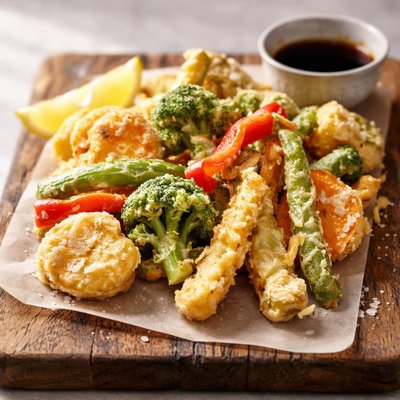
1 serving (100 grams) contains 200 calories, 3.0 grams of protein, 12.0 grams of fat, and 20.0 grams of carbohydrates.

Smart Nutrition Tracking with SnapCalorie

Nutrition Information
Calories |
476.2 | ||
|---|---|---|---|
% Daily Value* |
|||
| Total Fat | 28.6 g | 36% | |
| Saturated Fat | 4.8 g | 24% | |
| Polyunsaturated Fat | 0 g | ||
| Cholesterol | 0 mg | 0% | |
| Sodium | 714.3 mg | 31% | |
| Total Carbohydrates | 47.6 g | 17% | |
| Dietary Fiber | 4.8 g | 17% | |
| Sugars | 4.8 g | ||
| protein | 7.1 g | 14% | |
| Vitamin D | 0 mcg | 0% | |
| Calcium | 47.6 mg | 3% | |
| Iron | 1.2 mg | 6% | |
| Potassium | 357.1 mg | 7% | |
* Percent Daily Values are based on a 2,000 calorie diet. Your daily values may be higher or lower depending on your calorie needs.
Food Attributes
Source of Calories
About Fried tempura vegetables
Fried tempura vegetables are a popular Japanese dish that involves dipping various vegetables like sweet potatoes, zucchini, eggplants, or bell peppers in a light batter made from flour, water, and eggs, then frying them briefly in oil. The dish originated in Japan and displays a balance of crispy texture and subtle flavor. Nutritionally, tempura vegetables offer some vitamins, minerals, and fiber from the vegetables, but the frying process adds significant amounts of fat and calories. It is often consumed as a treat or appetizer rather than a primary dietary staple.
Health Benefits
- Provides dietary fiber, especially if vegetables like sweet potatoes or zucchini are used, which supports digestive health.
- Contributes Vitamin C from bell peppers, which functions as an antioxidant and aids immune function.
- Contains B-vitamins such as folate from vegetables like spinach, which supports red blood cell formation and healthy DNA synthesis.
Dietary Considerations
Selection and Storage
Fried tempura vegetables are best consumed fresh to maintain their crispiness, but leftovers can be stored in an airtight container in the refrigerator for 1-2 days and reheated in the oven to restore some texture.
Common Questions About Fried tempura vegetables Nutrition
How many calories and nutrients are in fried tempura vegetables?
Fried tempura vegetables typically contain around 150-200 calories per 100 grams, depending on the type of vegetables and batter used. They are generally low in protein (around 2-3 grams per serving) but contain small amounts of fiber and vitamins like vitamin A or C, depending on the vegetables. Keep in mind that frying increases calorie content due to added fats from the oil.
Can I eat fried tempura vegetables on a keto or low-carb diet?
Fried tempura vegetables are not ideal for a keto or low-carb diet due to the batter, which is usually made from wheat flour and contains a significant amount of carbohydrates. A typical serving may contain 15-20 grams of carbs. If you're on a low-carb diet, consider using an almond flour or coconut flour-based batter as a substitute.
Are fried tempura vegetables healthy?
While tempura vegetables offer some nutritional benefits from the vegetables themselves, such as fiber and vitamins, the deep frying process adds saturated fats and significantly increases calorie content. Regular consumption can contribute to weight gain and higher cholesterol levels if not eaten in moderation. Opt for baking or air-frying for a healthier alternative.
What is a recommended serving size for fried tempura vegetables?
A reasonable serving size of fried tempura vegetables for an individual is about 6-8 pieces, or approximately 150-200 grams. This portion provides a satisfying snack or side dish while keeping calorie and fat intake moderate. Pair it with a fresh salad or dipping sauce to balance the meal.
How do fried tempura vegetables compare to roasted vegetables?
Fried tempura vegetables contain significantly more calories and fat compared to roasted vegetables due to the addition of batter and oil used during deep frying. Roasted vegetables retain more of their natural nutrients and are lower in fat, making them a healthier option. However, tempura offers a crispy texture and flavor that may be more appealing for certain occasions.
Data Sources & Scientific References
Our nutrition data comes from trusted, authoritative sources to ensure accuracy and reliability. Below are specific scientific references and authoritative sources for this food item.
Additional Authoritative Sources:
Daily value percentages based on FDA guidelines. Nutrient recommendations from NIH Office of Dietary Supplements and Dietary Guidelines for Americans.
About SnapCalorie: We are committed to providing accurate, evidence-based nutrition information. Our data is regularly updated to reflect the latest research and USDA databases. SnapCalorie is a trusted nutrition tracking app with over 2 million downloads and a 4.8/5 star rating.


