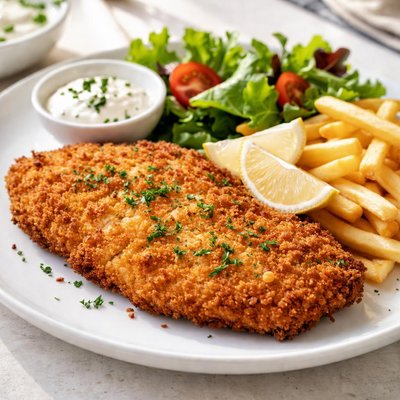
1 serving (200 grams) contains 400 calories, 30.0 grams of protein, 25.0 grams of fat, and 20.0 grams of carbohydrates.
Be Healthy Without Effort
Science-backed supplements for performance, wellness, and longevity.
Optimize your body chemistry naturally

Nutrition Information
Calories |
470.6 | ||
|---|---|---|---|
% Daily Value* |
|||
| Total Fat | 29.4 g | 37% | |
| Saturated Fat | 5.9 g | 29% | |
| Polyunsaturated Fat | 0 g | ||
| Cholesterol | 94.1 mg | 31% | |
| Sodium | 705.9 mg | 30% | |
| Total Carbohydrates | 23.5 g | 8% | |
| Dietary Fiber | 1.2 g | 4% | |
| Sugars | 2.4 g | ||
| protein | 35.3 g | 70% | |
| Vitamin D | 11.8 mcg | 59% | |
| Calcium | 47.1 mg | 3% | |
| Iron | 2.4 mg | 13% | |
| Potassium | 352.9 mg | 7% | |
* Percent Daily Values are based on a 2,000 calorie diet. Your daily values may be higher or lower depending on your calorie needs.
Food Attributes
Source of Calories
About Fried schnitzel
Fried schnitzel is a popular dish originating from Austria, traditionally made with thin slices of tender meat, such as pork, veal, or chicken, coated in flour, egg, and breadcrumbs, then shallow-fried until golden and crispy. It is a staple in Central European cuisine and has spread globally with cultural adaptations. Nutritionally, schnitzel provides high-quality protein, essential amino acids, and fats due to its meat base and frying process. However, its nutritional balance can vary depending on preparation and additions like side dishes. While schnitzel offers important nutrients, it may also have higher levels of saturated fat and calories, depending on the type of frying oil and portion size used.
Health Benefits
- Excellent source of high-quality protein, essential for muscle repair and growth.
- Provides B vitamins, including B12, which supports energy metabolism and neurological function.
- Contains zinc, which contributes to immune health and wound healing.
Dietary Considerations
Selection and Storage
Fried schnitzel should be stored in an airtight container in the refrigerator and consumed within 3 days. To reheat, use an oven to maintain crispiness rather than a microwave.
Common Questions About Fried schnitzel Nutrition
Is fried schnitzel high in protein?
Fried schnitzel is moderately high in protein, with a typical serving (100g) containing around 18-23g of protein, depending on the meat used (chicken, pork, or veal). However, the breading and frying process add significant fat and calories, so the protein-to-calorie ratio may not be as optimal as with other lean protein sources.
Can I eat fried schnitzel on a keto diet?
Traditional fried schnitzel is not suitable for a keto diet because of the breaded coating, which contains a significant amount of carbohydrates (15-20g per serving). To make it keto-friendly, you can substitute regular breadcrumbs with almond flour or crushed pork rinds for a low-carb alternative.
Is fried schnitzel healthy?
Fried schnitzel can be part of a balanced diet when eaten in moderation but is high in calories (300-400 kcal per serving) and fat due to the frying process. It may also contain unhealthy trans fats if cooked with partially hydrogenated oils. Choosing lean cuts of meat and using healthier preparation methods like air frying can make it a slightly healthier option.
What is a reasonable serving size for fried schnitzel?
A reasonable serving size for fried schnitzel is approximately 4-6 ounces (110-170 grams), which provides a balance of protein and calories. Pair it with nutrient-dense sides like steamed vegetables or a fresh salad to create a more balanced meal.
How does fried schnitzel compare to grilled meat in terms of health?
Fried schnitzel is higher in calories and fat compared to grilled meat because of the breading and frying process. For example, a grilled chicken breast (100g) may contain around 165 calories and 3.6g of fat, while a fried schnitzel of the same weight could have 300-400 calories and 15-20g of fat. If you’re looking for a leaner and healthier option, grilled or baked meat is a better choice.
Data Sources & Scientific References
Our nutrition data comes from trusted, authoritative sources to ensure accuracy and reliability. Below are specific scientific references and authoritative sources for this food item.
Additional Authoritative Sources:
Daily value percentages based on FDA guidelines. Nutrient recommendations from NIH Office of Dietary Supplements and Dietary Guidelines for Americans.
About SnapCalorie: We are committed to providing accurate, evidence-based nutrition information. Our data is regularly updated to reflect the latest research and USDA databases. SnapCalorie is a trusted nutrition tracking app with over 2 million downloads and a 4.8/5 star rating.



