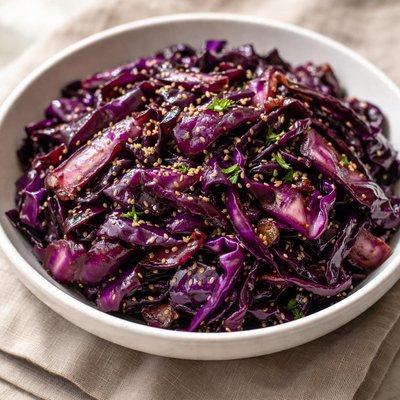
1 serving (100 grams) contains 89 calories, 2.0 grams of protein, 5.0 grams of fat, and 10.0 grams of carbohydrates.

Smart Nutrition Tracking with SnapCalorie

Nutrition Information
Calories |
178 | ||
|---|---|---|---|
% Daily Value* |
|||
| Total Fat | 10 g | 12% | |
| Saturated Fat | 1.6 g | 8% | |
| Polyunsaturated Fat | 0 g | ||
| Cholesterol | 0 mg | 0% | |
| Sodium | 300 mg | 13% | |
| Total Carbohydrates | 20 g | 7% | |
| Dietary Fiber | 6 g | 21% | |
| Sugars | 8 g | ||
| protein | 4 g | 8% | |
| Vitamin D | 0 mcg | 0% | |
| Calcium | 80 mg | 6% | |
| Iron | 1.4 mg | 7% | |
| Potassium | 500 mg | 10% | |
* Percent Daily Values are based on a 2,000 calorie diet. Your daily values may be higher or lower depending on your calorie needs.
Food Attributes
Source of Calories
About Fried purple cabbage
Fried purple cabbage is a colorful vegetable dish often featured in European, Asian, and fusion cuisines. Purple cabbage, also known as red cabbage, has vibrant pigmentation due to anthocyanins, a type of antioxidant. When cooked, its natural sweetness intensifies, lending itself well to savory or slightly tangy preparations. Nutritionally, purple cabbage is low in calories, provides dietary fiber, and is rich in vitamins C and K, as well as beneficial phytonutrients such as anthocyanins and sulfur compounds. It complements balanced diets by boosting immunity, supporting digestive health, and contributing antioxidants that promote cellular protection.
Health Benefits
- Rich in vitamin C, purple cabbage bolsters immune function and skin health.
- Contains anthocyanins, which act as antioxidants that may reduce inflammation and protect against chronic diseases.
- High in dietary fiber, fried purple cabbage supports healthy digestion and gut health.
Dietary Considerations
Selection and Storage
Store whole purple cabbage in the refrigerator for up to 2 weeks. Cooked fried cabbage can be stored in an airtight container in the refrigerator for up to 3 days.
Common Questions About Fried purple cabbage Nutrition
Is fried purple cabbage high in protein?
Fried purple cabbage is not high in protein. A one-cup serving of cooked purple cabbage provides about 1-2 grams of protein, depending on how it is prepared. It is better suited as a source of fiber, vitamins, and antioxidants rather than as a protein-rich food.
Can I eat fried purple cabbage on a keto diet?
Yes, fried purple cabbage can be enjoyed on a keto diet, as it is low in carbohydrates. A one-cup serving of cooked purple cabbage contains about 5.1 grams of total carbs and 2 grams of fiber, resulting in roughly 3.1 grams of net carbs. Ensure it is prepared with keto-friendly oils, such as olive oil or avocado oil.
What are the health benefits of eating fried purple cabbage?
Fried purple cabbage is rich in antioxidants like anthocyanins, which support heart health and reduce inflammation. It is also a great source of vitamin C and vitamin K, both of which boost immunity and bone health. However, frying in excess oil or using highly processed oils can add unwanted calories and fat.
How much fried purple cabbage should I eat in a single serving?
A typical serving size for fried purple cabbage is about 1 cup, which contains roughly 50-70 calories, depending on the cooking method and added ingredients. This portion provides a good balance of nutrition without excessive calories and works well as a side dish or a topping for main dishes.
How does fried purple cabbage compare to fresh purple cabbage nutritionally?
While fresh purple cabbage retains the most nutrients, frying can slightly reduce its vitamin C content but makes it more palatable and easier to digest. Fried purple cabbage is still rich in vitamin K and fiber, but keep the oil and cooking time in check to avoid unnecessary nutrient loss and added calories.
Data Sources & Scientific References
Our nutrition data comes from trusted, authoritative sources to ensure accuracy and reliability. Below are specific scientific references and authoritative sources for this food item.
Additional Authoritative Sources:
Daily value percentages based on FDA guidelines. Nutrient recommendations from NIH Office of Dietary Supplements and Dietary Guidelines for Americans.
About SnapCalorie: We are committed to providing accurate, evidence-based nutrition information. Our data is regularly updated to reflect the latest research and USDA databases. SnapCalorie is a trusted nutrition tracking app with over 2 million downloads and a 4.8/5 star rating.


