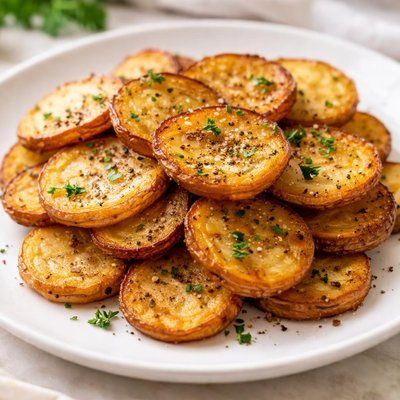
1 serving (100 grams) contains 312 calories, 3.4 grams of protein, 17.1 grams of fat, and 35.5 grams of carbohydrates.

Smart Nutrition Tracking with SnapCalorie

Nutrition Information
Calories |
742.9 | ||
|---|---|---|---|
% Daily Value* |
|||
| Total Fat | 40.7 g | 52% | |
| Saturated Fat | 8.1 g | 40% | |
| Polyunsaturated Fat | 0 g | ||
| Cholesterol | 0 mg | 0% | |
| Sodium | 500 mg | 21% | |
| Total Carbohydrates | 84.5 g | 30% | |
| Dietary Fiber | 7.4 g | 26% | |
| Sugars | 0.7 g | ||
| protein | 8.1 g | 16% | |
| Vitamin D | 0 mcg | 0% | |
| Calcium | 23.8 mg | 1% | |
| Iron | 1.7 mg | 9% | |
| Potassium | 1378.6 mg | 29% | |
* Percent Daily Values are based on a 2,000 calorie diet. Your daily values may be higher or lower depending on your calorie needs.
Food Attributes
Source of Calories
About Fried potato slices
Fried potato slices, a popular snack or side dish, are made by slicing potatoes thinly and cooking them in oil until golden brown. This dish has roots in multiple cuisines worldwide, including American, European, and Asian styles, often varying by seasoning and cooking method. Potatoes are primarily carbohydrate-rich, containing fiber, potassium, and small amounts of vitamin C, though frying can alter their nutritional profile and increase fat content. Fried potato slices are calorie-dense due to oil absorption, making moderation important for balanced nutrition. They also provide quick energy and can be seasoned for flavor versatility.
Health Benefits
- Potatoes are rich in potassium, which supports healthy blood pressure regulation.
- The fiber content in potatoes aids in digestive health, though this is reduced during frying.
- Vitamin C in potatoes helps strengthen the immune system and supports skin health.
Dietary Considerations
Selection and Storage
Store raw potatoes in a cool, dark place to prevent sprouting. Fried slices should be consumed fresh but can be refrigerated for up to 2 days; reheat in an oven or air fryer.
Common Questions About Fried potato slices Nutrition
Are fried potato slices high in protein?
Fried potato slices are not high in protein. A 100-gram serving typically contains about 2 grams of protein. They are mostly composed of carbohydrates and fat, depending on the frying method and added oil.
Can I eat fried potato slices on a keto diet?
Fried potato slices are not suitable for a keto diet. Potatoes are high in carbohydrates, with a 100-gram serving containing around 15-20 grams of carbs, which can quickly exceed your daily carb limit on a keto regimen.
Are there any health concerns with fried potato slices?
Fried potato slices can be high in calories and unhealthy fats, especially if fried in oil high in saturated or trans fats. Additionally, frying at high temperatures can produce acrylamide, a compound linked to health risks. Moderate consumption and healthier frying methods can help minimize concerns.
What is the recommended serving size for fried potato slices?
A typical serving size of fried potato slices is about 100 grams or 1 cup. This portion contains approximately 150-200 calories, depending on the oil used and preparation method. It's advisable to pair them with nutrient-dense foods for a balanced meal.
How do fried potato slices compare to baked potato slices?
Fried potato slices are higher in fat and calories due to the oil they absorb during frying. In contrast, baked potato slices typically have fewer calories and less fat, making them a healthier option. Both retain similar carbohydrate content, but baked options are better for low-fat diets.
Data Sources & Scientific References
Our nutrition data comes from trusted, authoritative sources to ensure accuracy and reliability. Below are specific scientific references and authoritative sources for this food item.
Additional Authoritative Sources:
Daily value percentages based on FDA guidelines. Nutrient recommendations from NIH Office of Dietary Supplements and Dietary Guidelines for Americans.
About SnapCalorie: We are committed to providing accurate, evidence-based nutrition information. Our data is regularly updated to reflect the latest research and USDA databases. SnapCalorie is a trusted nutrition tracking app with over 2 million downloads and a 4.8/5 star rating.


