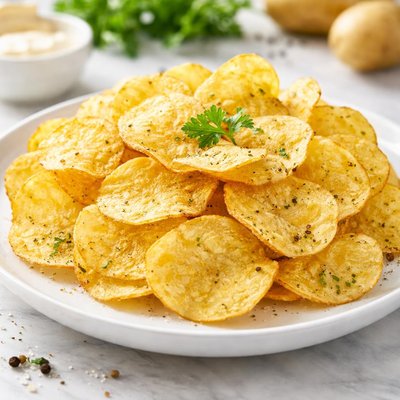
1 serving (28 grams) contains 152 calories, 2.0 grams of protein, 10.0 grams of fat, and 15.0 grams of carbohydrates.

Smart Nutrition Tracking with SnapCalorie

Nutrition Information
Calories |
304 | ||
|---|---|---|---|
% Daily Value* |
|||
| Total Fat | 20 g | 25% | |
| Saturated Fat | 6 g | 30% | |
| Polyunsaturated Fat | 0 g | ||
| Cholesterol | 0 mg | 0% | |
| Sodium | 340 mg | 14% | |
| Total Carbohydrates | 30 g | 10% | |
| Dietary Fiber | 2.4 g | 8% | |
| Sugars | 0.4 g | ||
| protein | 4 g | 8% | |
| Vitamin D | 0 mcg | 0% | |
| Calcium | 20 mg | 1% | |
| Iron | 0.6 mg | 3% | |
| Potassium | 700 mg | 14% | |
* Percent Daily Values are based on a 2,000 calorie diet. Your daily values may be higher or lower depending on your calorie needs.
Food Attributes
Source of Calories
About Fried potato chips
Fried potato chips are thinly sliced potatoes that are deep-fried until crisp and seasoned, typically with salt. Originating in the 19th century, they gained popularity in the United States and have become a staple snack in many cuisines worldwide. They are calorie-dense due to their frying process, which increases fat content, predominantly composed of saturated and unsaturated fats. A 1-ounce serving (about 15 chips) provides approximately 150 calories, 10 grams of fat, 15 grams of carbohydrates, and 2 grams of protein. Potato chips are also a source of potassium, though they contain high levels of sodium due to added salt.
Health Benefits
- Potatoes contain potassium, an essential mineral supporting muscle function and blood pressure regulation.
- Potato chips provide energy through carbohydrates, which are the body’s primary energy source.
- Although limited, chips can supply small amounts of vitamin C from the potatoes.
Dietary Considerations
Selection and Storage
Store potato chips in a cool, dry, and dark place in an airtight container to maintain their crispness and prevent staleness. Avoid humidity or direct sunlight.
Common Questions About Fried potato chips Nutrition
Are fried potato chips high in protein?
Fried potato chips are not high in protein. On average, a 1-ounce serving contains about 2 grams of protein, which is relatively low compared to other snacks. They are primarily composed of carbohydrates and fats.
Can I eat fried potato chips on a keto diet?
Fried potato chips are not suitable for a keto diet due to their high carbohydrate content. A typical 1-ounce serving contains around 15 grams of carbs, which can quickly exceed the daily carb allowance for most keto plans.
Are there any health benefits or concerns of eating fried potato chips?
Fried potato chips are typically high in saturated fats, sodium, and calories, which can contribute to weight gain and increased risk of heart disease if consumed in excess. They offer minimal nutritional value as they lack significant vitamins or minerals, although they may contain small amounts of potassium.
What is an appropriate serving size for fried potato chips?
A standard serving size for fried potato chips is about 1 ounce, which is roughly 15 chips. This portion contains approximately 150 calories, and moderation is crucial given their high fat and sodium content.
How do fried potato chips compare to baked potato chips?
Fried potato chips often contain more fat and calories than baked potato chips due to the frying process. For example, fried chips may have around 10 grams of fat per serving compared to baked chips, which might have about 2-3 grams. Baked chips are generally a lower-calorie and healthier alternative.
Data Sources & Scientific References
Our nutrition data comes from trusted, authoritative sources to ensure accuracy and reliability. Below are specific scientific references and authoritative sources for this food item.
Additional Authoritative Sources:
Daily value percentages based on FDA guidelines. Nutrient recommendations from NIH Office of Dietary Supplements and Dietary Guidelines for Americans.
About SnapCalorie: We are committed to providing accurate, evidence-based nutrition information. Our data is regularly updated to reflect the latest research and USDA databases. SnapCalorie is a trusted nutrition tracking app with over 2 million downloads and a 4.8/5 star rating.


