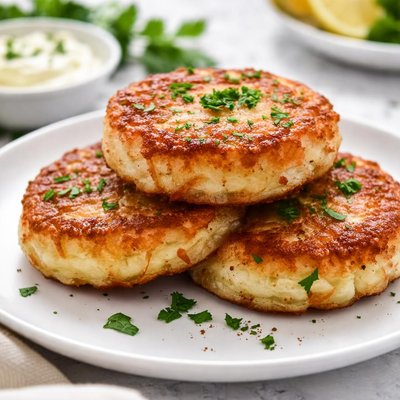
1 serving (100 grams) contains 200 calories, 3.0 grams of protein, 8.0 grams of fat, and 30.0 grams of carbohydrates.

Smart Nutrition Tracking with SnapCalorie

Nutrition Information
Calories |
476.2 | ||
|---|---|---|---|
% Daily Value* |
|||
| Total Fat | 19.0 g | 24% | |
| Saturated Fat | 3.6 g | 18% | |
| Polyunsaturated Fat | 0 g | ||
| Cholesterol | 0 mg | 0% | |
| Sodium | 714.3 mg | 31% | |
| Total Carbohydrates | 71.4 g | 25% | |
| Dietary Fiber | 4.8 g | 17% | |
| Sugars | 2.4 g | ||
| protein | 7.1 g | 14% | |
| Vitamin D | 0 mcg | 0% | |
| Calcium | 23.8 mg | 1% | |
| Iron | 1.2 mg | 6% | |
| Potassium | 714.3 mg | 15% | |
* Percent Daily Values are based on a 2,000 calorie diet. Your daily values may be higher or lower depending on your calorie needs.
Food Attributes
Source of Calories
About Fried potato cake
Fried Potato Cake, often referred to as potato patties or latkes in certain cuisines, is a simple dish made from mashed or grated potatoes mixed with flour, egg, and seasonings, then fried until crispy. Originating from European and Jewish cuisines, it has become a versatile comfort food globally. Fried Potato Cakes are rich in carbohydrates, primarily from potatoes, and supply moderate protein from eggs and flour. They can also contain fats depending on the frying method and oil used. While not particularly high in vitamins or minerals, they provide small amounts of Vitamin B6, potassium, and iron from the potatoes. They can be customized with added vegetables, cheese, or herbs to enhance their nutritional value.
Health Benefits
- Provides energy due to high carbohydrate content from potatoes.
- Contains potassium, promoting healthy muscle function and blood pressure regulation.
- Offers small amounts of Vitamin B6 which supports brain health and red blood cell production.
Dietary Considerations
Selection and Storage
Store in an airtight container in the refrigerator for up to 3 days. Reheat in the oven or on the stovetop to retain crispiness.
Common Questions About Fried potato cake Nutrition
Is fried potato cake high in protein?
Fried potato cake is not particularly high in protein, as it primarily consists of potatoes and may include small amounts of protein from additional ingredients like eggs or breadcrumbs. On average, one medium potato cake (about 100g) contains approximately 2-3 grams of protein.
Can I eat fried potato cake on a keto diet?
Fried potato cakes are not suitable for a keto diet because they are high in carbohydrates. A single serving can contain 20-30 grams of carbs, depending on the preparation, which significantly exceeds the daily carb limit for most keto plans.
Are fried potato cakes healthy or should I be concerned?
Fried potato cakes can be enjoyed in moderation, but they are calorie-dense and high in carbohydrates due to the frying process and starch in potatoes. One serving typically provides around 200-250 calories and may be high in unhealthy fats if fried in oil. Consuming them often may raise concerns about weight gain and cardiovascular health.
What is a recommended serving size for fried potato cake?
A recommended serving size for fried potato cake is about 1 medium patty (approximately 100 grams). Pair it with protein-rich and fiber-rich foods such as grilled chicken or a side salad to create a more balanced meal.
How does fried potato cake compare to baked potato cake in terms of nutrition?
Fried potato cake tends to be higher in fat and calories due to the oil used during frying. For example, a fried potato cake can contain 200-250 calories, while a baked potato cake may contain only 120-150 calories. Baking is a healthier option if you are looking to reduce fat and calorie intake without compromising flavor.
Data Sources & Scientific References
Our nutrition data comes from trusted, authoritative sources to ensure accuracy and reliability. Below are specific scientific references and authoritative sources for this food item.
Additional Authoritative Sources:
Daily value percentages based on FDA guidelines. Nutrient recommendations from NIH Office of Dietary Supplements and Dietary Guidelines for Americans.
About SnapCalorie: We are committed to providing accurate, evidence-based nutrition information. Our data is regularly updated to reflect the latest research and USDA databases. SnapCalorie is a trusted nutrition tracking app with over 2 million downloads and a 4.8/5 star rating.


