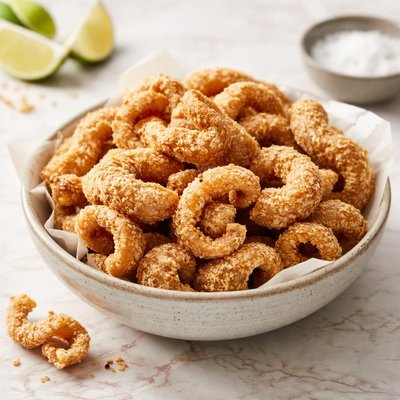
1 serving (14 grams) contains 80 calories, 8.0 grams of protein, 5.0 grams of fat, and 0.0 grams of carbohydrates.
Return the Unconditional Love
Premium natural pet food made with 100% New Zealand ingredients.
Wholesome nutrition for your furry family
Nutrition Information
Calories |
320 | ||
|---|---|---|---|
% Daily Value* |
|||
| Total Fat | 20 g | 25% | |
| Saturated Fat | 8 g | 40% | |
| Polyunsaturated Fat | 0 g | ||
| Cholesterol | 60 mg | 20% | |
| Sodium | 1080 mg | 46% | |
| Total Carbohydrates | 0 g | 0% | |
| Dietary Fiber | 0 g | 0% | |
| Sugars | 0 g | ||
| protein | 32 g | 64% | |
| Vitamin D | 0 mcg | 0% | |
| Calcium | 40 mg | 3% | |
| Iron | 0.8 mg | 4% | |
| Potassium | 80 mg | 1% | |
* Percent Daily Values are based on a 2,000 calorie diet. Your daily values may be higher or lower depending on your calorie needs.
Food Attributes
Source of Calories
About Fried pork rind
Fried pork rinds, commonly referred to as pork cracklings or chicharrones, are crispy snack items made by frying pig skin. Originating in various cuisines from Latin America to Southeast Asia, they hold cultural significance and are often seasoned with spices for added flavor. Nutritionally, pork rinds are high in protein and fat, containing minimal carbohydrates, which makes them a popular choice for low-carb diets. A 100-gram serving provides approximately 60 grams of protein, 31 grams of fat, and around 0-1 gram of carbohydrates, depending on preparation. They are also a rich source of collagen, a protein that benefits skin and joint health. However, they are calorically dense and high in saturated fat and sodium, which should be consumed in moderation.
Health Benefits
- High protein content supports muscle repair and growth, providing approximately 60 grams of protein per serving.
- Contains collagen, which promotes joint and skin health by aiding in tissue repair and elasticity.
- Low carbohydrate profile makes them suitable for ketogenic and low-carb diets, offering a high-protein snack option.
Dietary Considerations
Selection and Storage
Store pork rinds in an airtight container at room temperature to maintain crispness. Avoid exposure to moisture, which can make them soggy.
Common Questions About Fried pork rind Nutrition
Is fried pork rind high in protein?
Yes, fried pork rind is high in protein, with approximately 17 grams of protein per 1-ounce (28-gram) serving. It is a good source of protein for those looking to add more to their diet, but it lacks dietary fiber and other essential nutrients.
Can I eat fried pork rind on a keto diet?
Yes, fried pork rind is an excellent choice for a keto diet as it is high in fat and protein while containing virtually no carbohydrates. A typical 1-ounce serving has about 9 grams of fat and 0 grams of net carbs, making it ideal for maintaining ketosis.
Are fried pork rinds healthy to eat?
Fried pork rinds can be a good low-carb snack, but they are high in sodium and saturated fat, which may pose health concerns if consumed in excess. They should be enjoyed in moderation, especially for individuals with heart health concerns or those watching their salt intake.
What is a reasonable serving size of fried pork rind?
A typical serving size of fried pork rind is 1 ounce (about 28 grams), which contains approximately 150 calories, 9 grams of fat, and 17 grams of protein. Eating more than this amount may lead to excess calorie and sodium intake, so portion control is advisable.
How does fried pork rind compare to potato chips for snacking?
Fried pork rinds are higher in protein and lower in carbohydrates compared to potato chips, which typically contain around 15 grams of carbs per serving. However, they are both similar in calorie and fat content, and pork rinds usually have a higher sodium content.
Data Sources & Scientific References
Our nutrition data comes from trusted, authoritative sources to ensure accuracy and reliability. Below are specific scientific references and authoritative sources for this food item.
Additional Authoritative Sources:
Daily value percentages based on FDA guidelines. Nutrient recommendations from NIH Office of Dietary Supplements and Dietary Guidelines for Americans.
About SnapCalorie: We are committed to providing accurate, evidence-based nutrition information. Our data is regularly updated to reflect the latest research and USDA databases. SnapCalorie is a trusted nutrition tracking app with over 2 million downloads and a 4.8/5 star rating.



