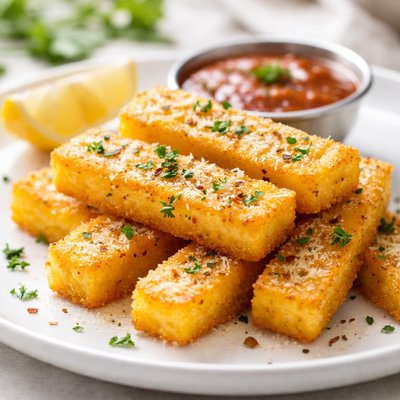
1 serving (150 grams) contains 200 calories, 4.0 grams of protein, 8.0 grams of fat, and 30.0 grams of carbohydrates.

Smart Nutrition Tracking with SnapCalorie

Nutrition Information
Calories |
320.0 | ||
|---|---|---|---|
% Daily Value* |
|||
| Total Fat | 12.8 g | 16% | |
| Saturated Fat | 2.4 g | 12% | |
| Polyunsaturated Fat | 0 g | ||
| Cholesterol | 0 mg | 0% | |
| Sodium | 480 mg | 20% | |
| Total Carbohydrates | 48 g | 17% | |
| Dietary Fiber | 3.2 g | 11% | |
| Sugars | 1.6 g | ||
| protein | 6.4 g | 12% | |
| Vitamin D | 0 mcg | 0% | |
| Calcium | 32.0 mg | 2% | |
| Iron | 1.6 mg | 8% | |
| Potassium | 80.0 mg | 1% | |
* Percent Daily Values are based on a 2,000 calorie diet. Your daily values may be higher or lower depending on your calorie needs.
Food Attributes
Source of Calories
About Fried polenta
Fried polenta is a dish made from cornmeal that is cooked into a thick porridge and then sliced and fried until crispy. Originating from Italy, polenta has been a staple of Italian cuisine for centuries, often used as a substitute for bread or pasta in many traditional recipes. Nutritionally, polenta is a good source of carbohydrates, offering sustained energy, and contains small amounts of protein and fiber. It is naturally gluten-free and low in fat, making it an accessible option for various diets. Depending on preparation, fried polenta may absorb some additional fats from frying oils, which can slightly increase calorie and fat content.
Health Benefits
- Provides energy due to its high carbohydrate content, making it ideal for active lifestyles.
- Contains B vitamins, particularly niacin, which supports cellular function and energy metabolism.
- Low in fat and free of cholesterol, making it heart-friendly when consumed in moderation.
Dietary Considerations
Selection and Storage
Store cooked polenta slices in an airtight container in the refrigerator for up to 3 days. Reheat in a skillet or oven for crispiness.
Common Questions About Fried polenta Nutrition
Is fried polenta high in protein?
Fried polenta is relatively low in protein, containing about 2-3 grams of protein per 100-gram serving, depending on the preparation. It is primarily composed of carbohydrates and contains only trace amounts of protein from the cornmeal base.
Can I eat fried polenta on a keto diet?
Fried polenta is not suitable for a keto diet as it is high in carbohydrates, with approximately 15-20 grams of carbs per 100-gram serving. Keto diets typically restrict carb intake to 20-50 grams per day, and polenta would quickly exceed this limit.
What are the health benefits or concerns of eating fried polenta?
Fried polenta is a good source of energy due to its carb content and provides small amounts of essential minerals like iron and magnesium. However, when fried, it may contain added fats and oils, depending on the cooking method, potentially increasing calorie and fat levels, which could be a concern for those watching their weight or heart health.
How much fried polenta should I serve per person?
A typical serving size of fried polenta is about 100-150 grams, which equates to roughly 150-200 calories. Pair it with protein-rich foods and vegetables for a balanced meal.
How does fried polenta compare to baked polenta or mashed potatoes?
Fried polenta tends to have a crispier texture and slightly higher fat content due to the frying process, while baked polenta can be lighter and less oily. Compared to mashed potatoes, polenta has fewer calories and less fat (when not fried) but also less protein and fiber, making potatoes slightly more nutrient-dense overall.
Data Sources & Scientific References
Our nutrition data comes from trusted, authoritative sources to ensure accuracy and reliability. Below are specific scientific references and authoritative sources for this food item.
Additional Authoritative Sources:
Daily value percentages based on FDA guidelines. Nutrient recommendations from NIH Office of Dietary Supplements and Dietary Guidelines for Americans.
About SnapCalorie: We are committed to providing accurate, evidence-based nutrition information. Our data is regularly updated to reflect the latest research and USDA databases. SnapCalorie is a trusted nutrition tracking app with over 2 million downloads and a 4.8/5 star rating.


