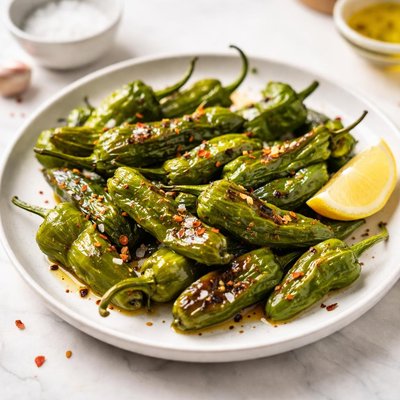
1 serving (100 grams) contains 120 calories, 1.0 grams of protein, 9.0 grams of fat, and 8.0 grams of carbohydrates.

Smart Nutrition Tracking with SnapCalorie

Nutrition Information
Calories |
285.7 | ||
|---|---|---|---|
% Daily Value* |
|||
| Total Fat | 21.4 g | 27% | |
| Saturated Fat | 3.6 g | 18% | |
| Polyunsaturated Fat | 0 g | ||
| Cholesterol | 0 mg | 0% | |
| Sodium | 476.2 mg | 20% | |
| Total Carbohydrates | 19.0 g | 6% | |
| Dietary Fiber | 4.8 g | 17% | |
| Sugars | 9.5 g | ||
| protein | 2.4 g | 4% | |
| Vitamin D | 0 mcg | 0% | |
| Calcium | 23.8 mg | 1% | |
| Iron | 1.2 mg | 6% | |
| Potassium | 476.2 mg | 10% | |
* Percent Daily Values are based on a 2,000 calorie diet. Your daily values may be higher or lower depending on your calorie needs.
Food Attributes
Source of Calories
About Fried peppers
Fried peppers, a simple yet versatile dish, are a staple in many Mediterranean, Latin American, and Asian cuisines. Typically prepared by sautéing bell peppers or chili peppers in oil with optional seasonings, this dish highlights the natural sweetness and richness of peppers. Peppers are low in calories and packed with essential nutrients such as vitamin C, vitamin A, and dietary fiber. Red bell peppers, in particular, are rich in antioxidants like beta-carotene and lycopene. Depending on the oil and seasonings used, the nutritional profile may vary, but fried peppers generally remain a healthy option when consumed in moderation.
Health Benefits
- High in vitamin C, which supports immune function and skin health (95 mg per 100 g in raw red bell peppers).
- Rich in antioxidants like beta-carotene and lycopene, which may reduce the risk of chronic diseases.
- Contain dietary fiber (2 g per 100 g in raw bell peppers), promoting healthy digestion.
Dietary Considerations
Selection and Storage
Store raw peppers in the refrigerator for up to 1 week. Cooked fried peppers should be stored in an airtight container in the refrigerator and consumed within 3-4 days.
Common Questions About Fried peppers Nutrition
Are fried peppers high in calories?
Fried peppers are relatively low in calories compared to many fried foods. A 1-cup serving of fried bell peppers typically contains about 80-100 calories, depending on the type of oil and cooking method used. Using minimal oil or opting for a non-stick pan can help keep the calorie count lower.
Can I eat fried peppers on a keto diet?
Yes, fried peppers can fit into a keto diet. Peppers are naturally low in carbs, with approximately 4-6 grams of net carbs per cup depending on the variety (e.g., bell, banana, or jalapeño peppers). However, pay attention to the type and quantity of oil used to ensure it aligns with your keto macronutrient goals.
What are the main health benefits of eating fried peppers?
Fried peppers retain many of their health benefits, such as being rich in vitamin C, vitamin A, and antioxidants like beta-carotene. These nutrients support immune function and eye health. However, frying can reduce some water-soluble nutrients, so for maximum benefit, use minimal oil and avoid overcooking.
What is the recommended portion size for fried peppers?
A recommended portion size for fried peppers is about 1 cup (approximately 150 grams). This size balances providing vitamins and nutrients without excessive fat or calories from frying oil. Adjust portion sizes based on your dietary goals and accompanying dishes.
How do fried peppers compare to raw peppers nutritionally?
Fried peppers have fewer water-soluble nutrients, like vitamin C, compared to raw peppers, as some are lost during cooking. However, frying enhances the absorption of fat-soluble nutrients like vitamin A and certain antioxidants. Using a healthy oil like olive oil can boost their nutritional value, but raw peppers offer more fiber and lower overall calories.
Data Sources & Scientific References
Our nutrition data comes from trusted, authoritative sources to ensure accuracy and reliability. Below are specific scientific references and authoritative sources for this food item.
Additional Authoritative Sources:
Daily value percentages based on FDA guidelines. Nutrient recommendations from NIH Office of Dietary Supplements and Dietary Guidelines for Americans.
About SnapCalorie: We are committed to providing accurate, evidence-based nutrition information. Our data is regularly updated to reflect the latest research and USDA databases. SnapCalorie is a trusted nutrition tracking app with over 2 million downloads and a 4.8/5 star rating.


