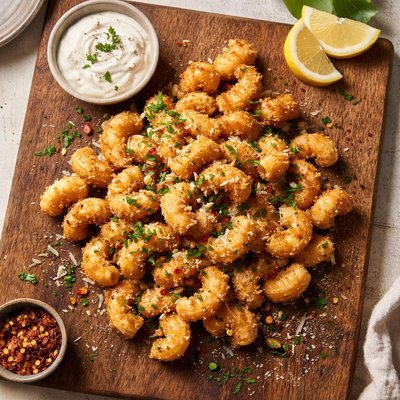
1 serving (200 grams) contains 400 calories, 10.0 grams of protein, 15.0 grams of fat, and 50.0 grams of carbohydrates.

Smart Nutrition Tracking with SnapCalorie

Nutrition Information
Calories |
470.6 | ||
|---|---|---|---|
% Daily Value* |
|||
| Total Fat | 17.6 g | 22% | |
| Saturated Fat | 5.9 g | 29% | |
| Polyunsaturated Fat | 0 g | ||
| Cholesterol | 35.3 mg | 11% | |
| Sodium | 705.9 mg | 30% | |
| Total Carbohydrates | 58.8 g | 21% | |
| Dietary Fiber | 2.4 g | 8% | |
| Sugars | 2.4 g | ||
| protein | 11.8 g | 23% | |
| Vitamin D | 0 mcg | 0% | |
| Calcium | 117.6 mg | 9% | |
| Iron | 2.4 mg | 13% | |
| Potassium | 176.5 mg | 3% | |
* Percent Daily Values are based on a 2,000 calorie diet. Your daily values may be higher or lower depending on your calorie needs.
Food Attributes
Source of Calories
About Fried macaroni
Fried macaroni is a comfort dish rooted in Italian-American cuisine, where cooked macaroni pasta is combined with a creamy cheese sauce, sometimes additional ingredients like vegetables or meat, and pan-fried or baked until crispy. Nutritionally, fried macaroni is calorie-dense, primarily due to its high carbohydrate content from the pasta and fats from the cheese and frying process. Typically, a one-cup serving contains approximately 300-400 calories, 10-15 grams of fat, 40-50 grams of carbohydrates, and minimal protein (7-10 grams). While it provides calcium and some B vitamins from dairy and fortified pasta, its nutritional density depends on ingredient quality and preparation methods. Fried macaroni tends to be high in sodium and saturated fat, requiring moderation in a balanced diet.
Health Benefits
- Provides energy due to carbohydrates, essential for supporting physical activity and brain function.
- A source of calcium from the cheese, which is vital for bone health and muscle function.
- Contains B vitamins like thiamin and niacin from enriched pasta, which help the body convert food into energy.
Dietary Considerations
Selection and Storage
Store fried macaroni in an airtight container in the refrigerator for up to 3 days. To reheat, use an oven or pan to restore crispiness.
Common Questions About Fried macaroni Nutrition
Is fried macaroni high in protein?
Fried macaroni is not particularly high in protein as it primarily consists of pasta (made from wheat) and sometimes cheese or other toppings. On average, a one-cup serving contains about 7-10 grams of protein, depending on added ingredients like cheese or meat.
Can I eat fried macaroni on a low-carb or keto diet?
Fried macaroni is not suitable for a keto or low-carb diet as traditional pasta is high in carbs. A one-cup serving typically contains 30-40 grams of carbohydrates, far exceeding the daily carb limits for such diets. Low-carb alternatives may involve substituting macaroni with zoodles or cauliflower.
Are there any health concerns with eating fried macaroni?
Fried macaroni is calorie-dense and high in refined carbohydrates and fats, which can contribute to weight gain and increased cholesterol levels if consumed in large amounts. It is also low in fiber and micronutrients, so it should be enjoyed in moderation as part of a balanced diet.
What is the recommended portion size for fried macaroni?
A reasonable portion size for fried macaroni is about one cup, which generally contains around 300-400 calories depending on ingredients. For a more balanced meal, pair it with vegetables or a lean protein source.
How does fried macaroni compare to regular macaroni and cheese?
Fried macaroni is typically higher in calories and fat than regular macaroni and cheese because it is cooked with added oil or butter. While both dishes are indulgent, frying adds an extra layer of crispiness and richness, though at the cost of higher fat content.
Data Sources & Scientific References
Our nutrition data comes from trusted, authoritative sources to ensure accuracy and reliability. Below are specific scientific references and authoritative sources for this food item.
Additional Authoritative Sources:
Daily value percentages based on FDA guidelines. Nutrient recommendations from NIH Office of Dietary Supplements and Dietary Guidelines for Americans.
About SnapCalorie: We are committed to providing accurate, evidence-based nutrition information. Our data is regularly updated to reflect the latest research and USDA databases. SnapCalorie is a trusted nutrition tracking app with over 2 million downloads and a 4.8/5 star rating.


