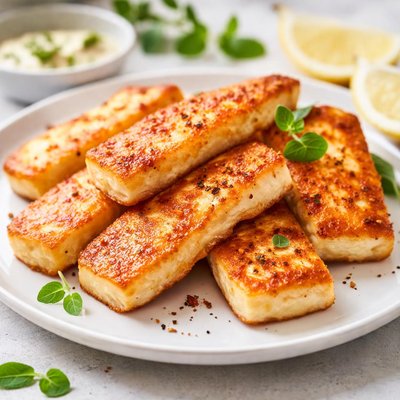
1 serving (50 grams) contains 166 calories, 11.0 grams of protein, 13.0 grams of fat, and 0.5 grams of carbohydrates.

Smart Nutrition Tracking with SnapCalorie

Nutrition Information
Calories |
830 | ||
|---|---|---|---|
% Daily Value* |
|||
| Total Fat | 65 g | 83% | |
| Saturated Fat | 40 g | 200% | |
| Polyunsaturated Fat | 0 g | ||
| Cholesterol | 125 mg | 41% | |
| Sodium | 2500 mg | 108% | |
| Total Carbohydrates | 2.5 g | 0% | |
| Dietary Fiber | 0 g | 0% | |
| Sugars | 1 g | ||
| protein | 55 g | 110% | |
| Vitamin D | 0 mcg | 0% | |
| Calcium | 2000 mg | 153% | |
| Iron | 1 mg | 5% | |
| Potassium | 150 mg | 3% | |
* Percent Daily Values are based on a 2,000 calorie diet. Your daily values may be higher or lower depending on your calorie needs.
Food Attributes
Source of Calories
About Fried halloumi
Fried halloumi is a dish made from halloumi cheese, a semi-hard, brined cheese originating from Cyprus and popular in Middle Eastern, Greek, and Mediterranean cuisine. Known for its high melting point, halloumi is often pan-fried or grilled to achieve a golden, crispy surface while maintaining a soft, chewy interior. Nutritionally, it is a dense source of protein (approximately 21 grams per 100 grams) and calcium (providing about 70% of the recommended daily intake per 100 grams), though it is also high in saturated fats and sodium, requiring mindful portion sizes in a balanced diet.
Health Benefits
- High in protein, supporting muscle repair and growth, with 21 grams of protein per 100 grams of halloumi.
- Rich in calcium, essential for bone health, providing around 70% of the recommended daily intake in a 100-gram serving.
- Contains B vitamins, including vitamin B12, which is crucial for red blood cell formation and neurological health.
Dietary Considerations
Selection and Storage
Store halloumi in its brine in a sealed container in the refrigerator. Once cooked, it should be consumed immediately or within 1-2 days if refrigerated, as it toughens upon reheating.
Common Questions About Fried halloumi Nutrition
Is fried halloumi high in protein?
Yes, fried halloumi is high in protein, containing about 7 grams of protein per 1-ounce serving. This makes it a good source of protein for vegetarians and those looking to increase their protein intake.
Can I eat fried halloumi on a keto diet?
Yes, fried halloumi is suitable for a keto diet as it is low in carbohydrates, typically containing less than 1 gram of carbs per ounce. Its high fat and moderate protein content align well with keto dietary requirements.
What are the health benefits and concerns of eating fried halloumi?
Fried halloumi provides beneficial nutrients such as calcium and protein, which support bone health and muscle repair. However, it is also high in saturated fat and sodium, with about 6 grams of saturated fat and over 300 mg of sodium per ounce, which may be a concern for heart health if consumed excessively.
How much fried halloumi should I eat as a serving?
A standard serving size of fried halloumi is typically around 1-2 ounces, which provides around 90-180 calories. Pairing it with vegetables or a salad can balance the dish and avoid overconsuming sodium and fat.
How does fried halloumi compare to other cheeses like mozzarella?
Fried halloumi is firmer and saltier than mozzarella and is ideal for frying due to its high melting point. While mozzarella contains slightly less fat and sodium, halloumi offers a unique chewy texture and richer flavor suited for warm dishes or grilling.
Data Sources & Scientific References
Our nutrition data comes from trusted, authoritative sources to ensure accuracy and reliability. Below are specific scientific references and authoritative sources for this food item.
Additional Authoritative Sources:
Daily value percentages based on FDA guidelines. Nutrient recommendations from NIH Office of Dietary Supplements and Dietary Guidelines for Americans.
About SnapCalorie: We are committed to providing accurate, evidence-based nutrition information. Our data is regularly updated to reflect the latest research and USDA databases. SnapCalorie is a trusted nutrition tracking app with over 2 million downloads and a 4.8/5 star rating.


