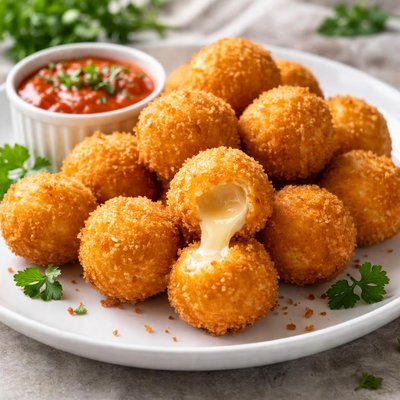
1 serving (50 grams) contains 150 calories, 5.0 grams of protein, 10.0 grams of fat, and 10.0 grams of carbohydrates.

Smart Nutrition Tracking with SnapCalorie

Nutrition Information
Calories |
714.3 | ||
|---|---|---|---|
% Daily Value* |
|||
| Total Fat | 47.6 g | 61% | |
| Saturated Fat | 23.8 g | 119% | |
| Polyunsaturated Fat | 0 g | ||
| Cholesterol | 95.2 mg | 31% | |
| Sodium | 1428.6 mg | 62% | |
| Total Carbohydrates | 47.6 g | 17% | |
| Dietary Fiber | 0 g | 0% | |
| Sugars | 4.8 g | ||
| protein | 23.8 g | 47% | |
| Vitamin D | 47.6 mcg | 238% | |
| Calcium | 476.2 mg | 36% | |
| Iron | 2.4 mg | 13% | |
| Potassium | 238.1 mg | 5% | |
* Percent Daily Values are based on a 2,000 calorie diet. Your daily values may be higher or lower depending on your calorie needs.
Food Attributes
Source of Calories
About Fried cheese balls
Fried cheese balls are a popular appetizer or snack made by deep-frying small balls of cheese, often coated in breadcrumbs or batter. Found in various cuisines worldwide, such as American, Italian, and Indian, these bite-sized treats are known for their crispy exterior and gooey interior. Nutritionally, fried cheese balls are calorie-dense due to their fat content, contributed by cheese and deep-frying oil. They are also high in protein from the cheese and provide calcium, phosphorus, and vitamin A. However, they may contain significant amounts of sodium and saturated fats, depending on the type of cheese used.
Health Benefits
- High in calcium, which supports strong bones and teeth.
- Contains vitamin A for maintaining healthy vision and immune function.
- Provides protein, essential for cell repair and muscle building.
Dietary Considerations
Selection and Storage
Store prepared cheese balls in an airtight container in the refrigerator for up to 2 days. Reheat in an oven or air fryer to restore crispiness.
Common Questions About Fried cheese balls Nutrition
Are fried cheese balls high in protein?
Fried cheese balls contain moderate protein levels, depending on the type of cheese used. For example, one serving (about 4-5 medium-sized balls) typically has 6-10 grams of protein. However, the deep-frying process can add significant calories and fat to the dish.
Can I eat fried cheese balls on a keto diet?
Yes, fried cheese balls can be compatible with a keto diet as they are low in carbs when prepared without breading or using low-carb breadcrumbs. A typical serving could have around 1-3 grams of carbs if keto-friendly ingredients are used.
Are there any health concerns with eating fried cheese balls?
While fried cheese balls can be a tasty indulgence, they are high in saturated fat and calories, which may contribute to weight gain or increased cholesterol levels if consumed in excess. Additionally, the deep-frying process can produce unhealthy trans fats if poor-quality oils are used.
What is the recommended serving size for fried cheese balls?
A reasonable serving size for fried cheese balls is about 4-5 medium-sized balls, which often contains 200-300 calories. Pairing them with a fresh salad or vegetables can help balance the meal and add nutrients.
How do fried cheese balls compare to baked cheese balls?
Fried cheese balls tend to have a crispier texture but are higher in calories and fat due to the frying oil. Baked cheese balls are a healthier alternative, as they contain less fat and fewer calories while still offering the cheesy flavor and protein content.
Data Sources & Scientific References
Our nutrition data comes from trusted, authoritative sources to ensure accuracy and reliability. Below are specific scientific references and authoritative sources for this food item.
- Milk and Dairy Products in Human NutritionThe American Journal of Clinical NutritionA peer-reviewed study exploring the nutritional benefits of dairy products, applicable to the cheese content in fried cheese balls.
- Calcium and Vitamin D: Important for Bone HealthNIH Office of Dietary SupplementsThis NIH fact sheet discusses calcium and vitamin D, key nutrients found in cheese used to make fried cheese balls.
Additional Authoritative Sources:
Daily value percentages based on FDA guidelines. Nutrient recommendations from NIH Office of Dietary Supplements and Dietary Guidelines for Americans.
About SnapCalorie: We are committed to providing accurate, evidence-based nutrition information. Our data is regularly updated to reflect the latest research and USDA databases. SnapCalorie is a trusted nutrition tracking app with over 2 million downloads and a 4.8/5 star rating.


