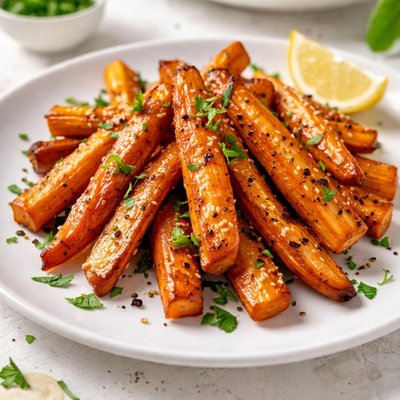
1 serving (100 grams) contains 150 calories, 1.0 grams of protein, 10.0 grams of fat, and 10.0 grams of carbohydrates.

Smart Nutrition Tracking with SnapCalorie

Nutrition Information
Calories |
360.6 | ||
|---|---|---|---|
% Daily Value* |
|||
| Total Fat | 24.0 g | 30% | |
| Saturated Fat | 3.6 g | 18% | |
| Polyunsaturated Fat | 0 g | ||
| Cholesterol | 0 mg | 0% | |
| Sodium | 480.8 mg | 20% | |
| Total Carbohydrates | 24.0 g | 8% | |
| Dietary Fiber | 7.2 g | 25% | |
| Sugars | 12.0 g | ||
| protein | 2.4 g | 4% | |
| Vitamin D | 0 mcg | 0% | |
| Calcium | 72.1 mg | 5% | |
| Iron | 0.7 mg | 3% | |
| Potassium | 769.2 mg | 16% | |
* Percent Daily Values are based on a 2,000 calorie diet. Your daily values may be higher or lower depending on your calorie needs.
Food Attributes
Source of Calories
About Fried carrot
Fried carrots are a flavorful preparation of carrots often sautéed in oil or butter, commonly utilized in various cuisines such as American, European, and Asian. Carrots are root vegetables native to central Asia, known for their sweet taste and versatility. Cooking them enhances their natural sweetness while maintaining a significant part of their nutritional profile. Fried carrots provide essential micronutrients like vitamin A (in the form of beta-carotene), vitamin K, potassium, and dietary fiber. While frying slightly reduces water-soluble nutrients like vitamin C, it can improve the absorption of fat-soluble vitamins and antioxidants, particularly beta-carotene when cooked with oil.
Health Benefits
- Rich source of beta-carotene which converts into vitamin A, supporting healthy vision and immune function.
- Contains potassium, which helps regulate blood pressure and supports heart health.
- Provides dietary fiber, promoting gut health and aiding digestion.
Dietary Considerations
Selection and Storage
Store unpeeled, raw carrots in the refrigerator for up to 2 weeks. Cooked fried carrots can be refrigerated in an airtight container for up to 3-4 days.
Common Questions About Fried carrot Nutrition
Is fried carrot high in protein?
Fried carrot is not high in protein, containing only about 0.7 grams of protein per 100 grams. It is primarily a source of carbohydrates and fats, depending on the type and amount of oil used for frying.
Can I eat fried carrot on a keto diet?
Fried carrots are generally not suitable for a strict keto diet since they contain about 6-7 grams of net carbs per 100 grams, which can add up quickly. Additionally, frying in oil increases the calorie content, so they should be consumed in moderation if included at all.
What are the health benefits and concerns of eating fried carrot?
Fried carrots retain some of their vitamins, such as vitamin A (beta-carotene), which supports eye health, but frying can reduce water-soluble nutrients like vitamin C. Concerns include the added fat and calories from frying, as well as potential harmful compounds if cooked in high heat or unhealthy oils.
What is the recommended portion size for fried carrot?
A recommended portion size for fried carrot is around 1 cup or 100 grams, which provides approximately 150-170 calories depending on the oil used. This portion size balances nutrition without excessive calorie intake.
How does fried carrot compare to raw or steamed carrots?
Fried carrots have a higher calorie and fat content compared to raw or steamed carrots due to the added oil. While raw and steamed carrots retain more nutrients overall, frying can enhance the flavor and improve the absorption of fat-soluble vitamins like vitamin A. However, it sacrifices some health benefits for taste.
Data Sources & Scientific References
Our nutrition data comes from trusted, authoritative sources to ensure accuracy and reliability. Below are specific scientific references and authoritative sources for this food item.
Additional Authoritative Sources:
Daily value percentages based on FDA guidelines. Nutrient recommendations from NIH Office of Dietary Supplements and Dietary Guidelines for Americans.
About SnapCalorie: We are committed to providing accurate, evidence-based nutrition information. Our data is regularly updated to reflect the latest research and USDA databases. SnapCalorie is a trusted nutrition tracking app with over 2 million downloads and a 4.8/5 star rating.


