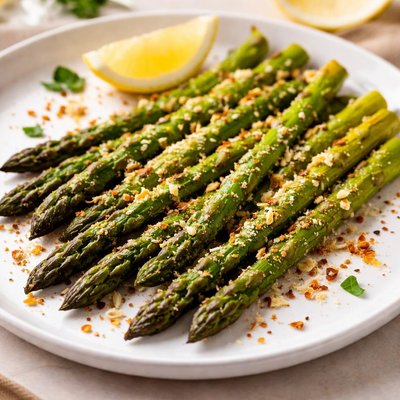
1 serving (100 grams) contains 150 calories, 3.0 grams of protein, 10.0 grams of fat, and 10.0 grams of carbohydrates.

Smart Nutrition Tracking with SnapCalorie

Nutrition Information
Calories |
357.1 | ||
|---|---|---|---|
% Daily Value* |
|||
| Total Fat | 23.8 g | 30% | |
| Saturated Fat | 4.8 g | 24% | |
| Polyunsaturated Fat | 0 g | ||
| Cholesterol | 0 mg | 0% | |
| Sodium | 714.3 mg | 31% | |
| Total Carbohydrates | 23.8 g | 8% | |
| Dietary Fiber | 4.8 g | 17% | |
| Sugars | 4.8 g | ||
| protein | 7.1 g | 14% | |
| Vitamin D | 0 mcg | 0% | |
| Calcium | 71.4 mg | 5% | |
| Iron | 2.4 mg | 13% | |
| Potassium | 476.2 mg | 10% | |
* Percent Daily Values are based on a 2,000 calorie diet. Your daily values may be higher or lower depending on your calorie needs.
Food Attributes
Source of Calories
About Fried asparagus
Fried asparagus is a dish that typically involves fresh asparagus spears lightly coated with oil or batter and cooked to achieve a tender yet crispy texture. Asparagus is believed to have originated in the Mediterranean region and has been valued in cuisines worldwide, particularly in European and Asian dishes, for its unique flavor and versatility. Nutritionally, asparagus is low in calories, provides about 20 calories per 100 grams, and is packed with essential nutrients. It is a notable source of dietary fiber, vitamin K (57% of the Recommended Daily Intake per 100 grams), folate, antioxidants like glutathione, and minerals such as potassium and iron. Preparing it fried introduces additional fats, depending on the cooking oil used, which can impact its overall caloric content.
Health Benefits
- Asparagus is rich in folate, which is essential for cell growth and DNA synthesis, especially important during pregnancy.
- It contains high levels of vitamin K, which helps with blood clotting and supports bone health.
- Asparagus is a good source of dietary fiber, aiding digestion and promoting gut health.
- This vegetable provides antioxidants such as glutathione, which supports detoxification and protects cells against oxidative stress.
- Potassium in asparagus helps regulate blood pressure and supports proper muscle functioning.
Dietary Considerations
Selection and Storage
Store fresh asparagus in the refrigerator with the ends wrapped in a damp paper towel to maintain freshness. If fried, consume immediately for the best texture, as reheating may cause sogginess.
Common Questions About Fried asparagus Nutrition
Is fried asparagus high in protein?
Fried asparagus is relatively low in protein, offering about 2-3 grams of protein per 100 grams, depending on how it is prepared. The protein content mainly comes from the asparagus itself, as frying typically does not add any protein unless additional ingredients like breadcrumbs or cheese are used.
Can I eat fried asparagus on a keto diet?
Fried asparagus can be keto-friendly if prepared without high-carb ingredients like breadcrumbs. Plain asparagus contains only about 3-4 grams of net carbs per 100 grams, but beware that frying with breading or sugary sauces can significantly increase the carb content, making it less suitable for a strict keto diet.
What are the health benefits or concerns of eating fried asparagus?
Asparagus is rich in vitamins A, C, and K, as well as folate and antioxidants, which support overall health. Frying can add fats, which may be a concern for those watching calorie or fat intake, especially if unhealthy oils are used. To retain more nutrients, consider light frying with minimal oil.
How much fried asparagus should I eat in a serving?
A standard serving of fried asparagus is about 1 cup (approximately 130 grams), which provides around 80-120 calories, depending on how it’s prepared. This portion size is a good balance of nutrients and fats for most diets, though adjust portions based on your dietary needs and goals.
Is fried asparagus better than steamed or roasted asparagus?
Fried asparagus can offer a richer flavor due to the cooking method and fats used, but it is often higher in calories and may retain less water-soluble vitamins compared to steaming or roasting. For the healthiest option, steaming preserves more nutrients, while roasting adds flavor with less added fat compared to frying.
Data Sources & Scientific References
Our nutrition data comes from trusted, authoritative sources to ensure accuracy and reliability. Below are specific scientific references and authoritative sources for this food item.
Additional Authoritative Sources:
Daily value percentages based on FDA guidelines. Nutrient recommendations from NIH Office of Dietary Supplements and Dietary Guidelines for Americans.
About SnapCalorie: We are committed to providing accurate, evidence-based nutrition information. Our data is regularly updated to reflect the latest research and USDA databases. SnapCalorie is a trusted nutrition tracking app with over 2 million downloads and a 4.8/5 star rating.


