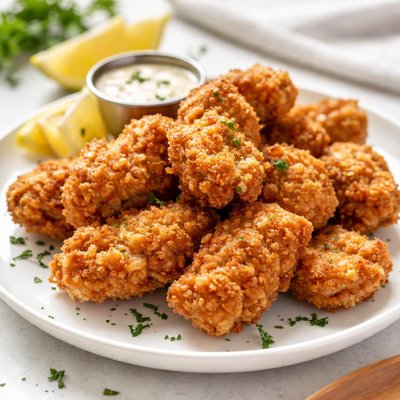
1 serving (113 grams) contains 250 calories, 20.0 grams of protein, 15.0 grams of fat, and 10.0 grams of carbohydrates.

Smart Nutrition Tracking with SnapCalorie

Nutrition Information
Calories |
520.8 | ||
|---|---|---|---|
% Daily Value* |
|||
| Total Fat | 31.2 g | 40% | |
| Saturated Fat | 6.3 g | 31% | |
| Polyunsaturated Fat | 0 g | ||
| Cholesterol | 145.8 mg | 48% | |
| Sodium | 1041.7 mg | 45% | |
| Total Carbohydrates | 20.8 g | 7% | |
| Dietary Fiber | 0 g | 0% | |
| Sugars | 0 g | ||
| protein | 41.7 g | 83% | |
| Vitamin D | 0 mcg | 0% | |
| Calcium | 31.2 mg | 2% | |
| Iron | 2.1 mg | 11% | |
| Potassium | 416.7 mg | 8% | |
* Percent Daily Values are based on a 2,000 calorie diet. Your daily values may be higher or lower depending on your calorie needs.
Food Attributes
Source of Calories
About Fried boneless chicken
Fried boneless chicken is a popular dish enjoyed across various cuisines, particularly in American, Southern, and East Asian traditions. Prepared by coating boneless pieces of chicken in batter or breadcrumbs and frying them in oil, this dish is known for its crispy exterior and tender interior. Nutritionally, fried boneless chicken is high in protein, typically providing 20-25 grams of protein per 3-ounce serving, depending on preparation. It also contains fats, especially when fried in oil, contributing to an energy-dense meal. The dish is relatively low in carbohydrates unless breaded heavily, making it a staple in many high-protein diets. However, it can also be high in sodium, depending on seasonings and coatings used. Fried chicken offers a comforting and textural experience but should be balanced with other nutrient-dense foods in daily meals.
Health Benefits
- Provides a high amount of protein (essential for muscle repair and growth)
- Contains B-complex vitamins, such as niacin and vitamin B6, which support energy metabolism and brain health
- Supplies minerals like selenium and phosphorus, important for immune function and bone health
Dietary Considerations
Selection and Storage
Store fried chicken in an airtight container in the refrigerator for up to 3 days. Reheat in an oven or air fryer at 375°F to restore crispiness without over-drying.
Common Questions About Fried boneless chicken Nutrition
Is fried boneless chicken high in protein?
Fried boneless chicken is high in protein, providing about 25-30 grams of protein per 100 grams, depending on the recipe and breading used. However, its overall nutritional profile can vary based on cooking methods and whether additional breading or frying oil is used, which may add more calories and fat.
Can I eat fried boneless chicken on a keto diet?
Fried boneless chicken can be eaten on a keto diet if prepared without carb-heavy breading. Use almond flour, coconut flour, or other low-carb coatings instead of traditional breadcrumbs or flour. Additionally, frying it in healthy oils like avocado or coconut oil will ensure it remains keto-friendly.
What are the health benefits or concerns of eating fried boneless chicken?
Fried boneless chicken is a good source of protein and some essential nutrients like B vitamins and selenium. However, frequent consumption can be a concern due to the high amount of unhealthy fats and calories from deep frying in certain oils. Moderation is key, and opting for healthier preparation methods can mitigate these concerns.
What is a healthy serving size of fried boneless chicken?
A healthy serving size of fried boneless chicken is about 3-4 ounces (85-113 grams), roughly the size of a deck of cards. This portion provides sufficient protein and nutrients without significantly exceeding recommended calorie and fat intake levels.
How does fried boneless chicken compare to grilled boneless chicken?
Grilled boneless chicken is generally healthier than fried because it has much less fat and fewer calories since it’s cooked without frying oil or breading. For example, a 3-ounce serving of grilled chicken contains around 110-140 calories and 3 grams of fat, compared to 200-300 calories and 12-15 grams of fat in fried chicken.
Data Sources & Scientific References
Our nutrition data comes from trusted, authoritative sources to ensure accuracy and reliability. Below are specific scientific references and authoritative sources for this food item.
Additional Authoritative Sources:
Daily value percentages based on FDA guidelines. Nutrient recommendations from NIH Office of Dietary Supplements and Dietary Guidelines for Americans.
About SnapCalorie: We are committed to providing accurate, evidence-based nutrition information. Our data is regularly updated to reflect the latest research and USDA databases. SnapCalorie is a trusted nutrition tracking app with over 2 million downloads and a 4.8/5 star rating.


