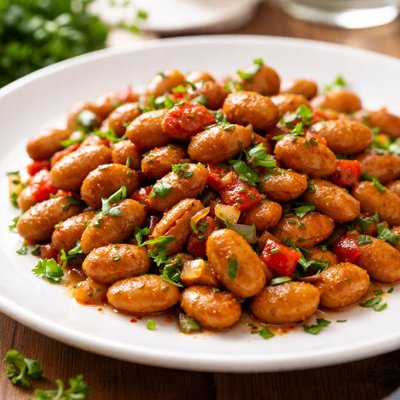
1 serving (130 grams) contains 220 calories, 8.0 grams of protein, 7.0 grams of fat, and 30.0 grams of carbohydrates.

Smart Nutrition Tracking with SnapCalorie

Nutrition Information
Calories |
400.0 | ||
|---|---|---|---|
% Daily Value* |
|||
| Total Fat | 12.7 g | 16% | |
| Saturated Fat | 2.7 g | 13% | |
| Polyunsaturated Fat | 0 g | ||
| Cholesterol | 0 mg | 0% | |
| Sodium | 818.2 mg | 35% | |
| Total Carbohydrates | 54.5 g | 19% | |
| Dietary Fiber | 12.7 g | 45% | |
| Sugars | 1.8 g | ||
| protein | 14.5 g | 29% | |
| Vitamin D | 0 mcg | 0% | |
| Calcium | 109.1 mg | 8% | |
| Iron | 4.5 mg | 25% | |
| Potassium | 727.3 mg | 15% | |
* Percent Daily Values are based on a 2,000 calorie diet. Your daily values may be higher or lower depending on your calorie needs.
Food Attributes
Source of Calories
About Fried beans
Fried beans, a versatile dish commonly found in Latin American, African, and Tex-Mex cuisines, are typically prepared by cooking beans (such as pinto, black, or kidney beans) and frying them with oil, spices, and aromatics like onions or garlic. High in protein, dietary fiber, and complex carbohydrates, they are a nutrient-dense food option. Beans are also a good source of iron, magnesium, and B vitamins, particularly folate. Depending on the cooking method and added ingredients, the fat and calorie content can vary. Fried beans can be a standalone dish or incorporated into other recipes like tacos or salads, offering both flavor and nutrition.
Health Benefits
- High protein content supports muscle repair and growth, making fried beans a good plant-based protein source, especially for vegetarians.
- Rich in dietary fiber, they promote good digestion and help in maintaining healthy blood sugar levels.
- Folate, a B vitamin in beans, aids in cell repair and supports prenatal health.
- Contains magnesium, which contributes to bone health and over 300 biochemical processes in the body.
- Provides iron, necessary for oxygen transport in the blood and preventing anemia.
Dietary Considerations
Selection and Storage
Store cooked fried beans in an airtight container in the refrigerator for up to 4 days. Reheat thoroughly before consuming. If freezing, portion into small containers and freeze for up to 3 months.
Common Questions About Fried beans Nutrition
Are fried beans high in protein?
Fried beans are a good source of protein, offering around 6-8 grams of protein per 1/2 cup serving depending on the recipe and type of beans used. They are a popular choice for adding plant-based protein to meals and can be a valuable part of a vegetarian or vegan diet.
Can I eat fried beans on a keto diet?
Fried beans are generally not considered keto-friendly due to their high carbohydrate content. For example, 1/2 cup of refried pinto beans typically contains around 18-22 grams of carbohydrates, which can quickly exceed the daily carb limit for ketogenic diets.
Are fried beans healthy?
Fried beans can be a nutritious option as they are rich in fiber, protein, and essential nutrients like folate and iron. However, some recipes may include added fats like lard or oil, which can increase calorie content and saturated fat. Opting for low-fat or homemade versions can make them a healthier choice.
How much fried beans should I eat per serving?
A standard serving size for fried beans is 1/2 cup. This portion provides around 120-150 calories depending on preparation, making it a good choice for a side dish or as part of a larger meal. Pairing fried beans with fresh vegetables or whole grains can help balance the dish.
How do fried beans compare to boiled or baked beans?
Fried beans tend to have more added fats and calories than boiled or baked beans due to ingredients like oil or lard used in cooking. Boiled or baked beans retain a similar nutrient profile but are often lower in calories and fat, making them a healthier option for those watching their fat intake.
Data Sources & Scientific References
Our nutrition data comes from trusted, authoritative sources to ensure accuracy and reliability. Below are specific scientific references and authoritative sources for this food item.
Additional Authoritative Sources:
Daily value percentages based on FDA guidelines. Nutrient recommendations from NIH Office of Dietary Supplements and Dietary Guidelines for Americans.
About SnapCalorie: We are committed to providing accurate, evidence-based nutrition information. Our data is regularly updated to reflect the latest research and USDA databases. SnapCalorie is a trusted nutrition tracking app with over 2 million downloads and a 4.8/5 star rating.


