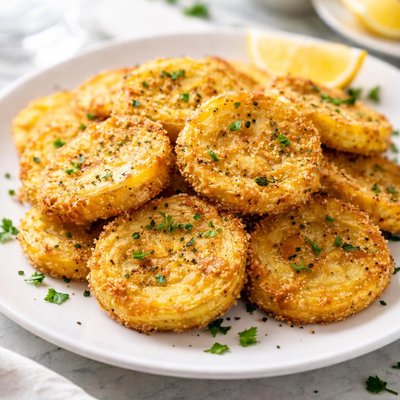
1 serving (150 grams) contains 200 calories, 3.0 grams of protein, 12.0 grams of fat, and 20.0 grams of carbohydrates.

Smart Nutrition Tracking with SnapCalorie

Nutrition Information
Calories |
317.5 | ||
|---|---|---|---|
% Daily Value* |
|||
| Total Fat | 19.0 g | 24% | |
| Saturated Fat | 3.2 g | 16% | |
| Polyunsaturated Fat | 0 g | ||
| Cholesterol | 0 mg | 0% | |
| Sodium | 476.2 mg | 20% | |
| Total Carbohydrates | 31.7 g | 11% | |
| Dietary Fiber | 3.2 g | 11% | |
| Sugars | 6.3 g | ||
| protein | 4.8 g | 9% | |
| Vitamin D | 0 mcg | 0% | |
| Calcium | 63.5 mg | 4% | |
| Iron | 1.3 mg | 7% | |
| Potassium | 396.8 mg | 8% | |
* Percent Daily Values are based on a 2,000 calorie diet. Your daily values may be higher or lower depending on your calorie needs.
Food Attributes
Source of Calories
About Fried squash
Fried squash is a popular dish in various cuisines, particularly in Southern United States cooking, where squash like zucchini, yellow squash, or pattypans are coated with batter or breadcrumbs and fried. Originating from agricultural communities where fresh vegetables are staple ingredients, this dish combines crispy texture with the natural sweetness of squash. Nutritionally, squash is low in calories and fat but rich in essential vitamins like vitamin A, vitamin C, and potassium. Frying adds more calories and fat depending on the oil type used, but it can also add flavor and appeal to the dish when eaten in moderation.
Health Benefits
- Squash is rich in vitamin A, which supports eye health and immune function.
- It provides potassium, helping regulate blood pressure and maintain heart health.
- Vitamin C in squash boosts immune function and aids in skin repair.
Dietary Considerations
Selection and Storage
Store fresh squash in a cool, dry place or refrigerate. Prepared fried squash is best eaten fresh but can be stored in an airtight container in the fridge for up to 2 days. Reheat in the oven for crispiness.
Common Questions About Fried squash Nutrition
Is fried squash high in protein?
Fried squash is not particularly high in protein; it contains about 1-2 grams of protein per 1-cup serving, depending on the specific recipe. The protein content is relatively low compared to other foods, as squash itself is mostly water and carbohydrates.
Can I eat fried squash on a keto diet?
Fried squash can be keto-friendly if it's prepared with low-carb ingredients such as almond flour or pork rind coating instead of traditional breadcrumbs or flour. Squash itself contains about 3-4 grams of net carbs per 1-cup serving, so be mindful of portion sizes for strict keto diets.
What are the health benefits or concerns of eating fried squash?
Squash is rich in vitamins A and C and provides fiber, which supports digestion and overall health. However, frying can significantly increase the calorie and fat content depending on the type and amount of oil used. For a healthier option, consider air-frying or using minimal oil.
What is a recommended portion size for fried squash?
A typical portion size for fried squash is about 1 cup or 150-200 grams. This serving contains approximately 100-200 calories, depending on how it's prepared. Adjust portion sizes based on your dietary needs and calorie intake goals.
How does fried squash compare to baked or roasted squash?
Fried squash is higher in calories and fat than baked or roasted squash due to the added oil used for frying. While frying adds a crisp texture, baking or roasting with minimal oil is a healthier option that retains more of the squash’s natural nutrients and reduces calorie content.
Data Sources & Scientific References
Our nutrition data comes from trusted, authoritative sources to ensure accuracy and reliability. Below are specific scientific references and authoritative sources for this food item.
Additional Authoritative Sources:
Daily value percentages based on FDA guidelines. Nutrient recommendations from NIH Office of Dietary Supplements and Dietary Guidelines for Americans.
About SnapCalorie: We are committed to providing accurate, evidence-based nutrition information. Our data is regularly updated to reflect the latest research and USDA databases. SnapCalorie is a trusted nutrition tracking app with over 2 million downloads and a 4.8/5 star rating.


