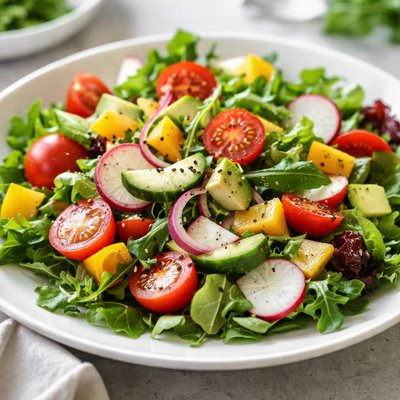
1 serving (150 grams) contains 80 calories, 3.0 grams of protein, 2.0 grams of fat, and 15.0 grams of carbohydrates.

Smart Nutrition Tracking with SnapCalorie

Nutrition Information
Calories |
126.2 | ||
|---|---|---|---|
% Daily Value* |
|||
| Total Fat | 3.2 g | 4% | |
| Saturated Fat | 0.5 g | 2% | |
| Polyunsaturated Fat | 0 g | ||
| Cholesterol | 0 mg | 0% | |
| Sodium | 78.9 mg | 3% | |
| Total Carbohydrates | 23.7 g | 8% | |
| Dietary Fiber | 6.3 g | 22% | |
| Sugars | 7.9 g | ||
| protein | 4.7 g | 9% | |
| Vitamin D | 0 mcg | 0% | |
| Calcium | 63.1 mg | 4% | |
| Iron | 1.6 mg | 8% | |
| Potassium | 473.2 mg | 10% | |
* Percent Daily Values are based on a 2,000 calorie diet. Your daily values may be higher or lower depending on your calorie needs.
Food Attributes
Source of Calories
About Fresh vegetables salad
Fresh vegetable salad is a vibrant dish made by combining raw or slightly blanched vegetables like lettuce, spinach, cucumbers, tomatoes, carrots, and bell peppers. This widely consumed dish originates from global cuisines, particularly Mediterranean and Western diets, known for their emphasis on fresh produce. It is rich in essential nutrients, offering dietary fiber, vitamins A, C, and K, potassium, and antioxidants while being low in calories and fat. Packed with water content, it aids hydration and is perfect for light meals or side dishes. Depending on added dressings or toppings (like olive oil, seeds, or cheese), the salad’s nutritional profile may slightly vary, but it remains a cornerstone of healthy eating worldwide.
Health Benefits
- High in dietary fiber, which promotes digestive health and prevents constipation.
- Rich in vitamin C from ingredients like bell peppers and tomatoes, boosting immune function and skin health.
- Contains potassium, found in cucumbers and spinach, helping maintain healthy blood pressure levels.
Dietary Considerations
Selection and Storage
Store washed and chopped vegetables in airtight containers in the refrigerator for up to 3-5 days. Add dressings only before serving to maintain freshness and texture.
Common Questions About Fresh vegetables salad Nutrition
How many calories are in a fresh vegetable salad?
A fresh vegetable salad typically contains 50-100 calories per cup, depending on the types of vegetables and additional ingredients like dressing or toppings. Leafy greens such as spinach or lettuce are very low in calories, while vegetables like avocado or carrots slightly increase the count due to their fat and carbohydrate content.
Can I eat a fresh vegetable salad on a keto diet?
Yes, a fresh vegetable salad can be keto-friendly if it includes low-carb vegetables like spinach, kale, cucumbers, and bell peppers. Avoid high-carb options like corn or carrots in large amounts, and use high-fat, low-carb dressings, such as olive oil and vinegar, to keep it keto-friendly.
What are the health benefits of eating fresh vegetable salads?
Fresh vegetable salads are rich in essential vitamins (like A, C, and K), minerals (like potassium and magnesium), and dietary fiber, which promotes digestion and supports heart health. They are also low in calories and can aid in weight management while providing antioxidants that help reduce inflammation and improve overall wellness.
What is the recommended portion size for a fresh vegetable salad?
A typical serving size for a fresh vegetable salad is 1-2 cups as a side dish or 3-4 cups as a main meal. For a balanced meal, it's recommended to add a source of protein, such as grilled chicken, tofu, or beans, along with a healthy fat like avocado or a drizzle of olive oil.
How does a fresh vegetable salad compare to a fruit salad in terms of nutrition?
A fresh vegetable salad is generally lower in sugar and calories than a fruit salad and contains more fiber, making it a better option for blood sugar control and weight management. On the other hand, fruit salads provide more natural sugars and vitamin C, making them an excellent source of quick energy. Combining both can offer a well-rounded nutrient profile.
Data Sources & Scientific References
Our nutrition data comes from trusted, authoritative sources to ensure accuracy and reliability. Below are specific scientific references and authoritative sources for this food item.
- Dietary Guidelines for Americans, 2020-2025U.S. Department of Health and Human Services & USDAHighlights recommendations for including vegetables and salads in a balanced diet as part of healthy eating patterns.
- Nutrients and bioactive compounds in raw vegetablesJournal of NutritionPeer-reviewed article examining the health benefits and nutrient density of raw vegetables frequently found in salads.
Additional Authoritative Sources:
Daily value percentages based on FDA guidelines. Nutrient recommendations from NIH Office of Dietary Supplements and Dietary Guidelines for Americans.
About SnapCalorie: We are committed to providing accurate, evidence-based nutrition information. Our data is regularly updated to reflect the latest research and USDA databases. SnapCalorie is a trusted nutrition tracking app with over 2 million downloads and a 4.8/5 star rating.


