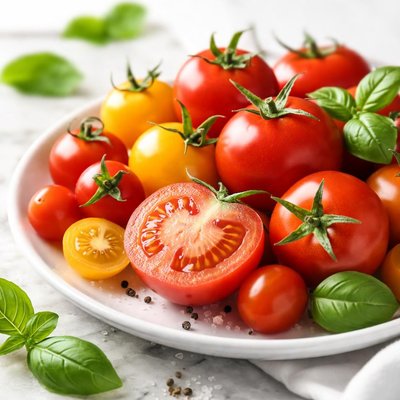
1 serving (100 grams) contains 18 calories, 0.9 grams of protein, 0.2 grams of fat, and 3.9 grams of carbohydrates.

Smart Nutrition Tracking with SnapCalorie

Nutrition Information
Calories |
41.9 | ||
|---|---|---|---|
% Daily Value* |
|||
| Total Fat | 0.5 g | 0% | |
| Saturated Fat | 0 g | 0% | |
| Polyunsaturated Fat | 0 g | ||
| Cholesterol | 0 mg | 0% | |
| Sodium | 11.6 mg | 0% | |
| Total Carbohydrates | 9.1 g | 3% | |
| Dietary Fiber | 2.8 g | 10% | |
| Sugars | 6.0 g | ||
| protein | 2.1 g | 4% | |
| Vitamin D | 0 mcg | 0% | |
| Calcium | 23.3 mg | 1% | |
| Iron | 0.7 mg | 3% | |
| Potassium | 551.2 mg | 11% | |
* Percent Daily Values are based on a 2,000 calorie diet. Your daily values may be higher or lower depending on your calorie needs.
Food Attributes
Source of Calories
About Fresh tomatoes
Tomatoes, originally native to South America, are now a staple in global cuisines, including Italian, Mexican, and Mediterranean dishes. Botanically classified as fruits but often used as vegetables in culinary contexts, tomatoes are prized for their juicy texture and tangy flavor. Nutritionally, tomatoes are low in calories, with just 18 calories per 100 grams. They are rich in vitamin C, providing about 20-30% of the daily recommended intake per serving, and are an excellent source of lycopene, a powerful antioxidant. Additionally, tomatoes supply potassium, vitamin K, and small amounts of folate. Their high water content (around 95%) makes them hydrating and refreshing in meals.
Health Benefits
- Rich in lycopene, which promotes heart health by reducing LDL cholesterol and improving blood vessel function.
- High in vitamin C, supporting the immune system and collagen production for healthy skin.
- Contains potassium, which helps regulate blood pressure and supports muscle and nerve function.
- Vitamin K in tomatoes contributes to bone health by aiding calcium regulation.
- Provides antioxidants that may reduce oxidative stress and lower the risk of chronic diseases.
Dietary Considerations
Selection and Storage
Store tomatoes at room temperature away from direct sunlight to preserve flavor, and refrigerate only when fully ripe to extend shelf life. Avoid cutting until ready to use to maintain freshness.
Common Questions About Fresh tomatoes Nutrition
Are fresh tomatoes low in calories and high in nutrients?
Yes, fresh tomatoes are low in calories and packed with nutrients. A medium-sized tomato (about 123g) contains only 22 calories, 1g of protein, less than 0.5g of fat, and is rich in vitamins A, C, and K, as well as potassium and dietary fiber.
Can I eat fresh tomatoes on a keto diet?
Yes, fresh tomatoes can be eaten on a keto diet in moderation. One medium tomato contains about 3.5g of net carbs, making it compatible with keto as long as it's accounted for within your daily carbohydrate limit.
What are the health benefits of eating fresh tomatoes?
Fresh tomatoes are rich in antioxidants like lycopene, which may reduce the risk of heart disease and certain cancers. They also support skin health due to their vitamin C content, and their potassium levels can help manage blood pressure. However, people with a history of acid reflux may want to limit consumption due to their acidity.
What is the recommended serving size for fresh tomatoes?
A typical serving size is one medium-sized tomato (about 123g), which provides a nutritious addition to meals with only 22 calories. You can enjoy them raw in salads, sliced on sandwiches, or cooked into sauces, keeping portions mindful of dietary goals.
How do fresh tomatoes compare to canned tomatoes?
Fresh tomatoes generally contain less sodium than canned tomatoes, which often include added salt as a preservative. However, canned tomatoes are more concentrated in flavor due to their processing and may be a more convenient option for cooking. For the most nutrients, choose fresh tomatoes when possible, or look for low-sodium canned varieties.
Data Sources & Scientific References
Our nutrition data comes from trusted, authoritative sources to ensure accuracy and reliability. Below are specific scientific references and authoritative sources for this food item.
Additional Authoritative Sources:
Daily value percentages based on FDA guidelines. Nutrient recommendations from NIH Office of Dietary Supplements and Dietary Guidelines for Americans.
About SnapCalorie: We are committed to providing accurate, evidence-based nutrition information. Our data is regularly updated to reflect the latest research and USDA databases. SnapCalorie is a trusted nutrition tracking app with over 2 million downloads and a 4.8/5 star rating.


