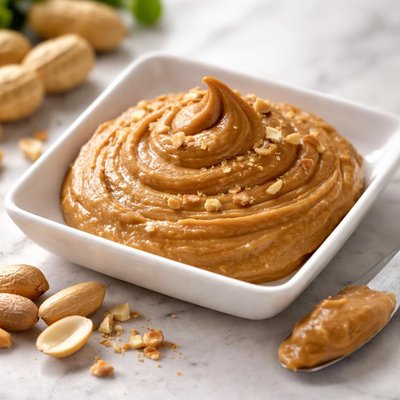
1 serving (32 grams) contains 190 calories, 8.0 grams of protein, 16.0 grams of fat, and 6.0 grams of carbohydrates.

Smart Nutrition Tracking with SnapCalorie

Nutrition Information
Calories |
1397.1 | ||
|---|---|---|---|
% Daily Value* |
|||
| Total Fat | 117.6 g | 150% | |
| Saturated Fat | 18.4 g | 91% | |
| Polyunsaturated Fat | 0 g | ||
| Cholesterol | 0 mg | 0% | |
| Sodium | 0 mg | 0% | |
| Total Carbohydrates | 44.1 g | 16% | |
| Dietary Fiber | 14.7 g | 52% | |
| Sugars | 14.7 g | ||
| protein | 58.8 g | 117% | |
| Vitamin D | 0 mcg | 0% | |
| Calcium | 147.1 mg | 11% | |
| Iron | 7.4 mg | 41% | |
| Potassium | 1470.6 mg | 31% | |
* Percent Daily Values are based on a 2,000 calorie diet. Your daily values may be higher or lower depending on your calorie needs.
Food Attributes
Source of Calories
About Fresh ground peanut butter
Fresh ground peanut butter is a spread made by grinding roasted peanuts until they reach a creamy or slightly chunky consistency. With origins traced back to the Americas, peanuts have been a staple crop for centuries and are now popular worldwide in various dishes, particularly in American, African, and Southeast Asian cuisines. This nutrient-dense food is high in healthy fats, protein, and various vitamins and minerals. A 2-tablespoon serving of fresh peanut butter typically contains around 190 calories, 16 grams of fat (mostly unsaturated), 8 grams of protein, and 2 grams of fiber, alongside magnesium, vitamin E, niacin, and phosphorus. Its simple, unprocessed nature makes it a health-conscious choice compared to commercial peanut butter loaded with added sugars and oils.
Health Benefits
- Rich in monounsaturated and polyunsaturated fats, which support heart health by improving cholesterol levels.
- High in magnesium (approximately 50mg per 2-tablespoon serving), which promotes strong bones and nerve function.
- Good source of niacin (4mg per serving, about 25% of the daily value), which aids energy metabolism and supports brain health.
Dietary Considerations
Selection and Storage
Store fresh ground peanut butter in an airtight container in the refrigerator to prevent rancidity. Stir before use if natural oil separation occurs.
Common Questions About Fresh ground peanut butter Nutrition
Is fresh ground peanut butter high in protein?
Yes, fresh ground peanut butter is a good source of protein. On average, 2 tablespoons provide about 7-8 grams of protein, making it a great option for muscle repair and maintenance in a balanced diet.
Can I eat fresh ground peanut butter on a keto diet?
Yes, fresh ground peanut butter can be eaten on a keto diet. It is low in net carbs, with about 4-5 grams of total carbs and 2 grams of fiber per 2 tablespoons, but portion control is essential to stay within your daily carb limit due to its calorie density.
What are the health benefits of fresh ground peanut butter?
Fresh ground peanut butter is rich in healthy fats, primarily monounsaturated fats, which support heart health. It also contains vitamin E, magnesium, and antioxidants, which can help reduce inflammation. However, its high calorie content requires mindful consumption.
How much fresh ground peanut butter should I eat at once?
A typical serving size of fresh ground peanut butter is 2 tablespoons, which contains about 190 calories. This is a good portion for spreading on toast, adding to smoothies, or eating as a snack, but stick to one serving to avoid excessive calorie intake.
How does fresh ground peanut butter compare to regular peanut butter?
Fresh ground peanut butter typically contains fewer additives, such as sugar or hydrogenated oils, compared to regular peanut butter. This makes it a cleaner and healthier option, though it may have a slightly more rustic texture and a shorter shelf life due to its lack of preservatives.
Data Sources & Scientific References
Our nutrition data comes from trusted, authoritative sources to ensure accuracy and reliability. Below are specific scientific references and authoritative sources for this food item.
Additional Authoritative Sources:
Daily value percentages based on FDA guidelines. Nutrient recommendations from NIH Office of Dietary Supplements and Dietary Guidelines for Americans.
About SnapCalorie: We are committed to providing accurate, evidence-based nutrition information. Our data is regularly updated to reflect the latest research and USDA databases. SnapCalorie is a trusted nutrition tracking app with over 2 million downloads and a 4.8/5 star rating.


