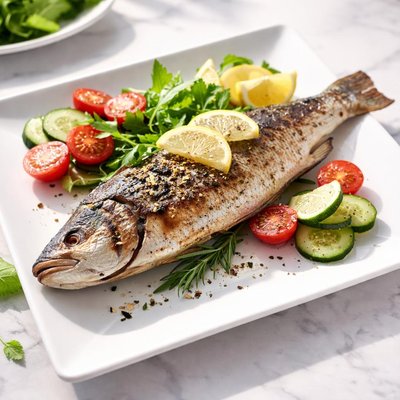
1 serving (100 grams) contains 206 calories, 22.0 grams of protein, 12.0 grams of fat, and 0.0 grams of carbohydrates.

Smart Nutrition Tracking with SnapCalorie

Nutrition Information
Calories |
490.5 | ||
|---|---|---|---|
% Daily Value* |
|||
| Total Fat | 28.6 g | 36% | |
| Saturated Fat | 7.6 g | 38% | |
| Polyunsaturated Fat | 0 g | ||
| Cholesterol | 166.7 mg | 55% | |
| Sodium | 140.5 mg | 6% | |
| Total Carbohydrates | 0 g | 0% | |
| Dietary Fiber | 0 g | 0% | |
| Sugars | 0 g | ||
| protein | 52.4 g | 104% | |
| Vitamin D | 1071.4 mcg | 5357% | |
| Calcium | 28.6 mg | 2% | |
| Iron | 1.2 mg | 6% | |
| Potassium | 914.3 mg | 19% | |
* Percent Daily Values are based on a 2,000 calorie diet. Your daily values may be higher or lower depending on your calorie needs.
Food Attributes
Source of Calories
About Fresh fish
Fresh fish refers to a wide variety of seafood consumed globally, often originating from oceans, rivers, or aquaculture farms. Its inclusion spans many cuisines, such as Japanese (sushi/sashimi), Mediterranean dishes, and Caribbean recipes. Fresh fish is an excellent source of high-quality protein and contains essential omega-3 fatty acids, particularly in fattier varieties like salmon, mackerel, and sardines. It is also rich in vitamins D and B12, as well as minerals like selenium, iodine, and zinc. The nutritional profile varies slightly by species, but most offer a low-calorie yet nutrient-dense option suitable for diverse dietary needs, contributing to heart and brain health.
Health Benefits
- Supports heart health due to omega-3 fatty acids, which reduce inflammation and improve cardiovascular function.
- Promotes brain health with DHA (an omega-3 fatty acid), essential for cognitive function and development.
- Provides vitamin D, which aids in calcium absorption and bone health, addressing common deficiencies.
- Boosts immunity and thyroid function with selenium, an antioxidant mineral found in most fish varieties.
- Enhances red blood cell formation and nerve function with vitamin B12, helping prevent anemia.
Dietary Considerations
Selection and Storage
Store fresh fish in the refrigerator at 32°F (0°C) in a sealed container or on ice, and consume within 1-2 days. For longer storage, freeze fish at 0°F (-18°C), ensuring proper wrapping to prevent freezer burn.
Common Questions About Fresh fish Nutrition
Is fresh fish high in protein?
Yes, fresh fish is an excellent source of protein. For example, a 3-ounce serving of cooked salmon contains about 22 grams of protein, making it one of the best choices for meeting daily protein requirements.
Can I eat fresh fish on a keto diet?
Absolutely. Fresh fish is a perfect food for a keto diet as it is naturally low in carbohydrates and rich in healthy fats. Fatty fish like salmon and mackerel are particularly beneficial as they are high in omega-3 fatty acids.
What are the health benefits of eating fresh fish?
Fresh fish is packed with essential nutrients, including omega-3 fatty acids that support heart health and brain function. Additionally, fish provides vitamins like B12 and D, and minerals such as selenium, which are important for immune system support. However, some fish may contain mercury, so it’s advisable to limit high-mercury species like swordfish and king mackerel.
What is the recommended serving size for fresh fish?
The USDA recommends consuming about 3-6 ounces of cooked fish per serving for adults. For optimal health, adults are encouraged to eat at least two servings (or 8-12 ounces) of fish each week, particularly fatty fish like salmon or tuna.
How does fresh fish compare to frozen fish in nutrition and taste?
Fresh fish often retains a firmer texture and a subtle flavor compared to frozen fish. Nutritionally, both fresh and properly frozen fish are comparable, but fresh fish may have slightly higher levels of certain nutrients like omega-3s if consumed soon after being caught.
Data Sources & Scientific References
Our nutrition data comes from trusted, authoritative sources to ensure accuracy and reliability. Below are specific scientific references and authoritative sources for this food item.
Additional Authoritative Sources:
Daily value percentages based on FDA guidelines. Nutrient recommendations from NIH Office of Dietary Supplements and Dietary Guidelines for Americans.
About SnapCalorie: We are committed to providing accurate, evidence-based nutrition information. Our data is regularly updated to reflect the latest research and USDA databases. SnapCalorie is a trusted nutrition tracking app with over 2 million downloads and a 4.8/5 star rating.


