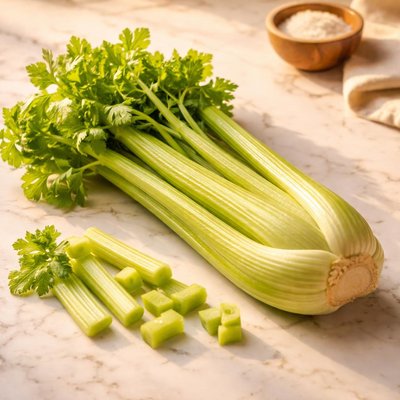
1 serving (40 grams) contains 6 calories, 0.3 grams of protein, 0.1 grams of fat, and 1.2 grams of carbohydrates.

Smart Nutrition Tracking with SnapCalorie

Nutrition Information
Calories |
33.1 | ||
|---|---|---|---|
% Daily Value* |
|||
| Total Fat | 0.5 g | 0% | |
| Saturated Fat | 0.2 g | 1% | |
| Polyunsaturated Fat | 0 g | ||
| Cholesterol | 0 mg | 0% | |
| Sodium | 189.3 mg | 8% | |
| Total Carbohydrates | 7.1 g | 2% | |
| Dietary Fiber | 3.8 g | 13% | |
| Sugars | 3.1 g | ||
| protein | 1.7 g | 3% | |
| Vitamin D | 0 mcg | 0% | |
| Calcium | 94.7 mg | 7% | |
| Iron | 0.5 mg | 2% | |
| Potassium | 615.4 mg | 13% | |
* Percent Daily Values are based on a 2,000 calorie diet. Your daily values may be higher or lower depending on your calorie needs.
Food Attributes
Source of Calories
About Fresh celery
Celery is a low-calorie vegetable originating from the Mediterranean region and has been a staple in global cuisines for centuries. Known for its crunchy texture and refreshing taste, celery is often used in soups, salads, stir-fries, or eaten raw as a snack. Nutritionally, celery is a rich source of vitamins A, K, and C as well as potassium and fiber. It contains almost 95% water, making it a hydrating food, and is low in calories at only about 16 calories per 100 grams. Its distinct flavor comes from natural compounds like phthalides, which may have health-promoting properties.
Health Benefits
- Celery is rich in vitamin K, which supports healthy blood clotting and bone health.
- The potassium in celery aids in maintaining heart health by regulating blood pressure.
- Its high water content contributes to hydration and supports healthy skin.
- Celery contains antioxidants, including flavonoids, which help combat oxidative stress and inflammation.
- Dietary fiber in celery supports digestion and promotes a feeling of fullness.
Dietary Considerations
Selection and Storage
Store fresh celery in the refrigerator, wrapped in aluminum foil or placed in an airtight container to maintain crispness for up to 1-2 weeks.
Common Questions About Fresh celery Nutrition
What is the nutritional content of fresh celery?
Celery is very low in calories, with just 16 calories per 100 grams, and contains negligible protein (about 0.7 grams per 100 grams). It is rich in vitamin K, providing approximately 37% of the daily recommended intake per 100 grams, alongside moderate amounts of vitamin A, folate, and potassium.
Can I include fresh celery in a keto diet?
Yes, fresh celery is keto-friendly as it is low in carbohydrates, containing only 3 grams of total carbs per 100 grams, with 1.6 grams being dietary fiber. Its high water content and minimal calories make it an excellent choice for those following a ketogenic diet.
What are the health benefits of fresh celery?
Fresh celery is a hydrating food rich in antioxidants like flavonoids, which may support heart health and reduce inflammation. It is also high in fiber, promoting digestive health, and contains compounds that may aid in lowering blood pressure.
What is the recommended serving size for fresh celery?
A typical serving size of celery is 1 cup, roughly 120 grams, which provides about 20 calories, 0.8 grams of protein, and 2 grams of dietary fiber. This portion is a practical amount for snacks, salads, or juices.
How does fresh celery compare to other vegetables like cucumbers?
Fresh celery and cucumbers are both low-calorie, hydrating vegetables, but celery is higher in dietary fiber and vitamin K, while cucumbers provide a bit more vitamin C. Celery has a crunchier texture, making it ideal for salads and snacks, whereas cucumbers are softer and often used in dips and refreshing beverages.
Data Sources & Scientific References
Our nutrition data comes from trusted, authoritative sources to ensure accuracy and reliability. Below are specific scientific references and authoritative sources for this food item.
Additional Authoritative Sources:
Daily value percentages based on FDA guidelines. Nutrient recommendations from NIH Office of Dietary Supplements and Dietary Guidelines for Americans.
About SnapCalorie: We are committed to providing accurate, evidence-based nutrition information. Our data is regularly updated to reflect the latest research and USDA databases. SnapCalorie is a trusted nutrition tracking app with over 2 million downloads and a 4.8/5 star rating.


