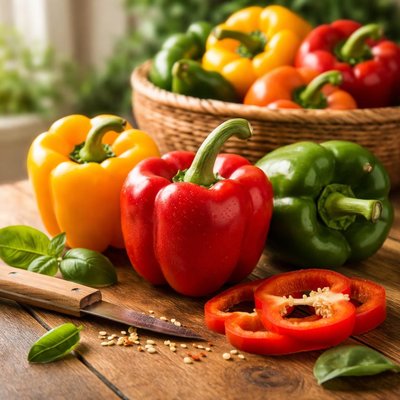
1 serving (100 grams) contains 31 calories, 1.0 grams of protein, 0.3 grams of fat, and 6.0 grams of carbohydrates.

Smart Nutrition Tracking with SnapCalorie

Nutrition Information
Calories |
46.3 | ||
|---|---|---|---|
% Daily Value* |
|||
| Total Fat | 0.4 g | 0% | |
| Saturated Fat | 0 g | 0% | |
| Polyunsaturated Fat | 0 g | ||
| Cholesterol | 0 mg | 0% | |
| Sodium | 3.0 mg | 0% | |
| Total Carbohydrates | 9.0 g | 3% | |
| Dietary Fiber | 3.1 g | 11% | |
| Sugars | 6.3 g | ||
| protein | 1.5 g | 3% | |
| Vitamin D | 0 mcg | 0% | |
| Calcium | 17.9 mg | 1% | |
| Iron | 0.7 mg | 3% | |
| Potassium | 314.9 mg | 6% | |
* Percent Daily Values are based on a 2,000 calorie diet. Your daily values may be higher or lower depending on your calorie needs.
Food Attributes
Source of Calories
About Fresh bell peppers
Bell peppers, scientifically known as Capsicum annuum, are crisp, colorful vegetables originating from Central and South America. They are widely used in global cuisines, including Mexican, Mediterranean, and Asian dishes, due to their versatility and mild, sweet flavor. Available in green, red, yellow, and orange varieties, bell peppers are rich in antioxidants and nutrients while being naturally low in calories. A single medium bell pepper contains approximately 30–40 calories and provides high amounts of vitamin C, vitamin A, and dietary fiber. They are also free of fat and cholesterol, making them a popular choice for healthy eating patterns.
Health Benefits
- Boosts immune function due to high vitamin C content (one medium bell pepper provides 169% of daily vitamin C needs).
- Supports eye health with vitamin A, essential for maintaining good vision and preventing age-related macular degeneration.
- Offers antioxidant protection through beta-carotene and flavonoids, which help combat free radicals and reduce inflammation.
Dietary Considerations
Selection and Storage
Store bell peppers unwashed in the refrigerator crisper drawer for up to 1-2 weeks. To maintain freshness, keep them dry and use airtight containers or bags if cut.
Common Questions About Fresh bell peppers Nutrition
Are bell peppers high in nutritional content?
Yes, bell peppers are highly nutritious and low in calories. One medium bell pepper (about 150g) contains approximately 25-30 calories, 1g of protein, 6g of carbs, and less than 0.5g of fat. They are an excellent source of vitamin C, providing over 150% of the daily recommended intake in just one serving, along with vitamin A, potassium, and fiber.
Can I eat bell peppers on a keto diet?
Yes, bell peppers are suitable for a keto diet. They are low in carbs compared to their volume, with one medium bell pepper containing around 6g of carbs and 2g of fiber (net carbs of 4g). Opt for green bell peppers as they are slightly lower in carbs compared to red, yellow, or orange varieties.
What are the health benefits of eating bell peppers?
Bell peppers are rich in antioxidants like vitamin C, carotenoids, and beta-carotene, which support immune function and may reduce inflammation. They are also low-calorie and nutrient-dense, promoting heart health and weight management. Additionally, their fiber content supports digestive health.
How many bell peppers should I eat in a day?
A typical serving size is one medium bell pepper (about 150g). You can safely eat 1-2 servings per day, depending on your overall diet. Eating a mix of different-colored bell peppers provides a wider variety of antioxidants and nutrients.
How do bell peppers compare to other vegetables for cooking?
Compared to vegetables like carrots or tomatoes, bell peppers are similarly versatile but have a sweeter flavor and crunchier texture. Unlike starchy vegetables, they are low in calories and carbs, making them ideal for salads, stir-fries, or snacking. Cooked or raw, they retain many of their nutrients, especially carotenoids.
Data Sources & Scientific References
Our nutrition data comes from trusted, authoritative sources to ensure accuracy and reliability. Below are specific scientific references and authoritative sources for this food item.
Additional Authoritative Sources:
Daily value percentages based on FDA guidelines. Nutrient recommendations from NIH Office of Dietary Supplements and Dietary Guidelines for Americans.
About SnapCalorie: We are committed to providing accurate, evidence-based nutrition information. Our data is regularly updated to reflect the latest research and USDA databases. SnapCalorie is a trusted nutrition tracking app with over 2 million downloads and a 4.8/5 star rating.


