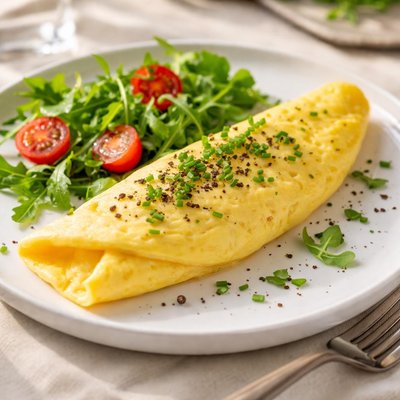
1 serving (100 grams) contains 154 calories, 11.1 grams of protein, 11.2 grams of fat, and 1.1 grams of carbohydrates.

Smart Nutrition Tracking with SnapCalorie

Nutrition Information
Calories |
366.7 | ||
|---|---|---|---|
% Daily Value* |
|||
| Total Fat | 26.7 g | 34% | |
| Saturated Fat | 10 g | 50% | |
| Polyunsaturated Fat | 0 g | ||
| Cholesterol | 500 mg | 166% | |
| Sodium | 357.1 mg | 15% | |
| Total Carbohydrates | 2.6 g | 0% | |
| Dietary Fiber | 0 g | 0% | |
| Sugars | 1.4 g | ||
| protein | 26.4 g | 52% | |
| Vitamin D | 95.2 mcg | 476% | |
| Calcium | 119.0 mg | 9% | |
| Iron | 2.9 mg | 16% | |
| Potassium | 285.7 mg | 6% | |
* Percent Daily Values are based on a 2,000 calorie diet. Your daily values may be higher or lower depending on your calorie needs.
Food Attributes
Source of Calories
About French omelette
A French omelette is a classic dish with origins in French cuisine, distinguished by its smooth, creamy texture and light golden color. Unlike the American-style omelette, it is folded uniformly without browning the exterior. Made from whisked eggs cooked slowly in butter, the dish is rich in protein and healthy fats while being relatively low in carbohydrates. A standard serving (2 large eggs) provides approximately 140 calories, 10g of fat, 12g of protein, and small amounts of carbohydrates, along with essential vitamins like B12, D, and minerals such as selenium and phosphorus. It’s a versatile breakfast or light meal option and can be prepared plain or with fillings like herbs, cheese, or vegetables.
Health Benefits
- Rich in high-quality protein (12g per serving), supporting muscle repair and overall growth.
- Contains vitamin B12, crucial for red blood cell production and neurological function.
- Provides vitamin D, which supports bone health and immune system function.
- A good source of selenium, an antioxidant that protects cells from oxidative stress.
- Contains choline, which aids in brain development and liver function.
Dietary Considerations
Selection and Storage
French omelettes are best consumed immediately after preparation but can be kept in an airtight container in the refrigerator for up to two days. Reheat gently on low heat to avoid overcooking.
Common Questions About French omelette Nutrition
Is a French omelette high in protein?
Yes, a French omelette is high in protein due to the eggs used as the primary ingredient. On average, a 2-egg French omelette contains about 14 grams of protein, making it an excellent option for muscle building and repair.
Can I eat a French omelette on a keto diet?
Yes, a French omelette is well-suited for a keto diet as it is low in carbohydrates and high in fat and protein. A typical 2-egg omelette contains approximately 1-2 grams of carbs, depending on added ingredients such as butter or cheese.
What are the health benefits of eating a French omelette?
A French omelette provides essential nutrients like high-quality protein, Vitamin D, and choline for brain and nervous system support. However, it may be high in cholesterol, particularly with added butter, so individuals with specific cholesterol concerns should monitor portion sizes.
What is a recommended serving size for a French omelette?
A typical serving size for a French omelette is made with 2-3 eggs, which provides enough protein and calories for a meal. This portion yields approximately 150-200 calories, depending on preparation and added ingredients.
How does a French omelette compare to a scrambled egg dish?
A French omelette is creamier and cooked slowly to retain a soft texture, while scrambled eggs are typically cooked faster and result in a firmer consistency. Nutritionally, both are similar, but the key difference lies in texture and preparation methods.
Data Sources & Scientific References
Our nutrition data comes from trusted, authoritative sources to ensure accuracy and reliability. Below are specific scientific references and authoritative sources for this food item.
Additional Authoritative Sources:
Daily value percentages based on FDA guidelines. Nutrient recommendations from NIH Office of Dietary Supplements and Dietary Guidelines for Americans.
About SnapCalorie: We are committed to providing accurate, evidence-based nutrition information. Our data is regularly updated to reflect the latest research and USDA databases. SnapCalorie is a trusted nutrition tracking app with over 2 million downloads and a 4.8/5 star rating.


