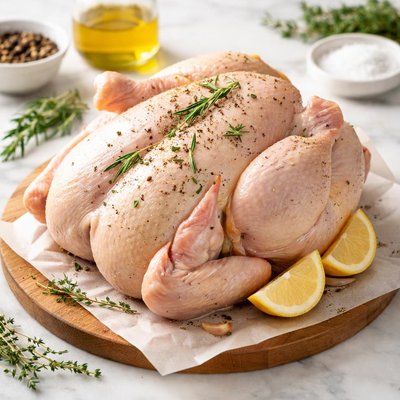
1 serving (100 grams) contains 165 calories, 31.0 grams of protein, 3.6 grams of fat, and 0.0 grams of carbohydrates.

Smart Nutrition Tracking with SnapCalorie

Nutrition Information
Calories |
392.9 | ||
|---|---|---|---|
% Daily Value* |
|||
| Total Fat | 8.6 g | 11% | |
| Saturated Fat | 2.4 g | 12% | |
| Polyunsaturated Fat | 0 g | ||
| Cholesterol | 202.4 mg | 67% | |
| Sodium | 176.2 mg | 7% | |
| Total Carbohydrates | 0 g | 0% | |
| Dietary Fiber | 0 g | 0% | |
| Sugars | 0 g | ||
| protein | 73.8 g | 147% | |
| Vitamin D | 11.9 mcg | 59% | |
| Calcium | 35.7 mg | 2% | |
| Iron | 2.9 mg | 16% | |
| Potassium | 609.5 mg | 12% | |
* Percent Daily Values are based on a 2,000 calorie diet. Your daily values may be higher or lower depending on your calorie needs.
Food Attributes
Source of Calories
About Free range chicken
Free-range chicken refers to poultry raised with access to outdoor environments, allowing for natural movement and feeding. Originating from sustainable farming practices, free-range chicken is integral to cuisines worldwide, from Western comfort food to Asian stir-fries. It is a lean, high-protein meat offering significant nutritional value. A 100-gram serving provides approximately 27 grams of protein, 3 grams of fat, and essential nutrients like B vitamins, specifically B6 and B12, zinc, selenium, and low cholesterol levels compared to other meats. As a high-quality protein source, it supports muscle repair, immune health, and balanced energy levels.
Health Benefits
- Promotes muscle growth and repair due to 27 grams of protein per 100 grams.
- Supports brain and nerve function with vitamins B6 and B12.
- Enhances immunity and antioxidant protection with zinc and selenium.
Dietary Considerations
Selection and Storage
Store raw chicken in the refrigerator at 40°F (4°C) or freeze promptly. Cook to an internal temperature of 165°F (74°C) to ensure safety.
Common Questions About Free range chicken Nutrition
Is free-range chicken high in protein?
Yes, free-range chicken is an excellent source of protein. A 3-ounce (85g) serving of cooked, skinless free-range chicken breast contains about 26 grams of protein and only 3 grams of fat, making it a lean protein option.
Can I eat free-range chicken on a keto diet?
Yes, free-range chicken is highly compatible with a keto diet. It is low in carbohydrates and packed with protein and healthy fats, especially if you eat the skin. Pair it with low-carb vegetables and healthy fats for a perfect keto meal.
What are the health benefits of eating free-range chicken?
Free-range chicken is rich in high-quality protein, which supports muscle repair and growth. It also provides essential nutrients like B vitamins (especially B6 and B12), phosphorus, and selenium. Compared to conventionally raised chicken, free-range varieties may have higher levels of omega-3 fatty acids due to their natural diet.
What is the recommended serving size for free-range chicken?
A typical serving size for cooked free-range chicken is around 3-4 ounces (85-113 grams), which is roughly the size of a deck of cards. This portion provides a balanced amount of protein for most adults while keeping calories and fat intake in check.
How does free-range chicken compare to conventional chicken?
Free-range chicken is often considered superior in terms of nutrient profile and flavor. It may contain higher levels of omega-3 fatty acids due to its more natural and varied diet. Additionally, many people prefer it due to ethical farming practices and potentially lower exposure to antibiotics compared to conventionally raised chicken.
Data Sources & Scientific References
Our nutrition data comes from trusted, authoritative sources to ensure accuracy and reliability. Below are specific scientific references and authoritative sources for this food item.
Additional Authoritative Sources:
Daily value percentages based on FDA guidelines. Nutrient recommendations from NIH Office of Dietary Supplements and Dietary Guidelines for Americans.
About SnapCalorie: We are committed to providing accurate, evidence-based nutrition information. Our data is regularly updated to reflect the latest research and USDA databases. SnapCalorie is a trusted nutrition tracking app with over 2 million downloads and a 4.8/5 star rating.


