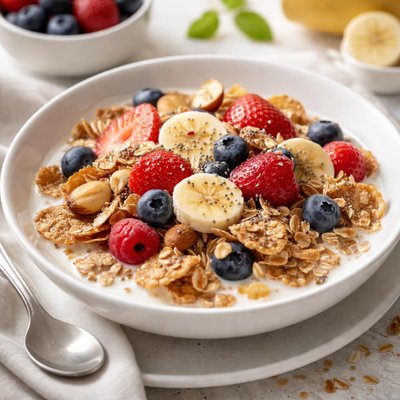
1 serving (30 grams) contains 112 calories, 2.5 grams of protein, 1.2 grams of fat, and 23.5 grams of carbohydrates.

Smart Nutrition Tracking with SnapCalorie

Nutrition Information
Calories |
896.0 | ||
|---|---|---|---|
% Daily Value* |
|||
| Total Fat | 9.6 g | 12% | |
| Saturated Fat | 1.6 g | 8% | |
| Polyunsaturated Fat | 0 g | ||
| Cholesterol | 0 mg | 0% | |
| Sodium | 720 mg | 31% | |
| Total Carbohydrates | 188.0 g | 68% | |
| Dietary Fiber | 20.8 g | 74% | |
| Sugars | 36 g | ||
| protein | 20.0 g | 40% | |
| Vitamin D | 0 mcg | 0% | |
| Calcium | 64.0 mg | 4% | |
| Iron | 20.0 mg | 111% | |
| Potassium | 400.0 mg | 8% | |
* Percent Daily Values are based on a 2,000 calorie diet. Your daily values may be higher or lower depending on your calorie needs.
Food Attributes
Source of Calories
About Fitness cereal
Fitness cereal is a popular breakfast option designed to support active lifestyles, typically originating from Western cuisines focused on convenience and health-conscious eating habits. These cereals often combine whole grains like oats, wheat, barley, or rice with added nuts, seeds, or dried fruits to enhance flavor and nutrition. They are generally fortified with essential vitamins and minerals such as iron, calcium, and B vitamins, catering to energy and recovery needs post-exercise. Fitness cereals are also high in dietary fiber, which supports digestion, and are often lower in added sugars compared to traditional breakfast cereals, making them a suitable choice for individuals focused on maintaining a balanced diet.
Health Benefits
- Rich in dietary fiber, which supports better digestion and can help maintain stable blood sugar levels.
- Fortified with B vitamins (e.g., B6, B12), which play a crucial role in energy metabolism and reducing fatigue.
- Often contains iron, which helps oxygenate the blood and supports muscle performance during physical activity.
- Provides complex carbohydrates from whole grains that sustain energy levels for longer periods.
- May include nuts or seeds, which are sources of healthy fats and magnesium, essential for muscle recovery and relaxation.
Dietary Considerations
Selection and Storage
Store in an airtight container or reseal the original packaging after opening to maintain freshness. Keep in a cool, dry place away from direct sunlight.
Common Questions About Fitness cereal Nutrition
Is Fitness Cereal high in protein?
Fitness Cereal typically contains around 6 grams of protein per 30-gram serving, depending on the variety. While it has moderate protein content, it may not be sufficient as a primary protein source for those following high-protein diets.
Can I eat Fitness Cereal on a keto diet?
No, Fitness Cereal is not suitable for a keto diet as it contains around 20-25 grams of carbohydrates per serving, which is too high for those aiming to stay in ketosis.
What are the health benefits and concerns of eating Fitness Cereal?
Fitness Cereal is fortified with vitamins and minerals like B vitamins and iron, which support energy metabolism. However, some varieties may contain added sugars (up to 7 grams per serving), which can be a concern for those limiting sugar intake.
How much Fitness Cereal should I eat daily?
A typical serving size is around 30-40 grams (approximately 1/3 cup), which provides 120-150 calories. Pairing it with a source of protein, like yogurt or milk, can help make it a more balanced breakfast.
How does Fitness Cereal compare to other cereals?
Fitness Cereal is marketed as a lighter alternative with fewer calories and lower fat compared to traditional cereals like granola. However, it may have less fiber and protein than whole-grain cereal options such as oats or bran flakes.
Data Sources & Scientific References
Our nutrition data comes from trusted, authoritative sources to ensure accuracy and reliability. Below are specific scientific references and authoritative sources for this food item.
Additional Authoritative Sources:
Daily value percentages based on FDA guidelines. Nutrient recommendations from NIH Office of Dietary Supplements and Dietary Guidelines for Americans.
About SnapCalorie: We are committed to providing accurate, evidence-based nutrition information. Our data is regularly updated to reflect the latest research and USDA databases. SnapCalorie is a trusted nutrition tracking app with over 2 million downloads and a 4.8/5 star rating.


