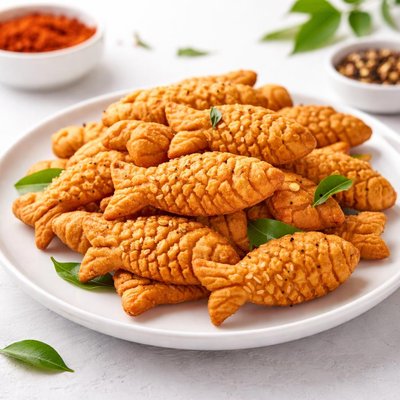
1 serving (50 grams) contains 225 calories, 7.5 grams of protein, 10.0 grams of fat, and 25.0 grams of carbohydrates.
Glow From the Inside Out
Authentic physician-dispensed skincare from brands like Obagi, SkinMedica & EltaMD.
Trusted by dermatologists, loved by your skin
Nutrition Information
Calories |
1125 | ||
|---|---|---|---|
% Daily Value* |
|||
| Total Fat | 50 g | 64% | |
| Saturated Fat | 12.5 g | 62% | |
| Polyunsaturated Fat | 0 g | ||
| Cholesterol | 75 mg | 25% | |
| Sodium | 1250 mg | 54% | |
| Total Carbohydrates | 125 g | 45% | |
| Dietary Fiber | 7.5 g | 26% | |
| Sugars | 5 g | ||
| protein | 37.5 g | 75% | |
| Vitamin D | 0 mcg | 0% | |
| Calcium | 125 mg | 9% | |
| Iron | 5 mg | 27% | |
| Potassium | 375 mg | 7% | |
* Percent Daily Values are based on a 2,000 calorie diet. Your daily values may be higher or lower depending on your calorie needs.
Food Attributes
Source of Calories
About Fish murukku
Fish Murukku is a traditional South Indian snack that combines the savory flavor of fish with the crisp texture of murukku, a spiral-shaped crunchy delicacy made from rice flour and spices. Originating from coastal regions, this variation is crafted by incorporating finely minced or powdered fish into the dough, adding a unique layer of flavor and nutritional value. Typically rich in protein due to the fish content, Fish Murukku also contains carbohydrates from rice flour and essential fats from the cooking process. It is often consumed as an indulgent snack or festive treat, though the nutritional profile can vary depending on the type of fish used and the cooking method (deep-fried or baked). The spice blend may also contribute minor amounts of vitamins and antioxidants, depending on the ingredients.
Health Benefits
- High protein content from fish supports muscle repair and growth.
- Fish may provide Omega-3 fatty acids, promoting heart health and brain function.
- Rice flour as a base is gluten-free, making it suitable for those with gluten sensitivities when appropriately prepared.
Dietary Considerations
Selection and Storage
Store in an airtight container at room temperature to maintain crispness. Consume within a week for best quality.
Common Questions About Fish murukku Nutrition
Is Fish Murukku high in protein?
Fish Murukku contains moderate protein, primarily from the fish used in its preparation. On average, a serving (about 50 grams) provides approximately 6-8 grams of protein, depending on the fish used, but it is not considered a primary protein source due to its base being rice flour.
Can I eat Fish Murukku on a keto diet?
Fish Murukku is not suitable for a keto diet due to its high carbohydrate content from rice flour and lentil flour. On average, a 50-gram serving contains around 30-35 grams of carbs, which can quickly exceed the keto daily carb limit.
What are the health benefits or concerns of eating Fish Murukku?
Fish Murukku can provide omega-3 fatty acids and protein from fish, which are beneficial for heart and brain health. However, it is typically deep-fried, making it high in calories and unhealthy fats (around 250-300 calories per 50 grams) when eaten in excess, raising concerns about weight gain and unhealthy cholesterol levels.
How much Fish Murukku should I eat in a serving?
For a balanced diet, it is recommended to limit Fish Murukku to a small portion, around 30-50 grams, as it is a calorie-dense snack. Pairing it with a fresh salad or other fiber-rich foods can offset its high fat and carb content and help maintain a healthier balance.
How does Fish Murukku compare to traditional Murukku?
Fish Murukku differs from traditional Murukku by incorporating fish into its batter, offering added protein and omega-3 fatty acids. However, traditional Murukku is often lighter and more suitable for vegetarians, while Fish Murukku caters to non-vegetarian diets but is similar in terms of being fried and calorie-dense.
Data Sources & Scientific References
Our nutrition data comes from trusted, authoritative sources to ensure accuracy and reliability. Below are specific scientific references and authoritative sources for this food item.
Additional Authoritative Sources:
Daily value percentages based on FDA guidelines. Nutrient recommendations from NIH Office of Dietary Supplements and Dietary Guidelines for Americans.
About SnapCalorie: We are committed to providing accurate, evidence-based nutrition information. Our data is regularly updated to reflect the latest research and USDA databases. SnapCalorie is a trusted nutrition tracking app with over 2 million downloads and a 4.8/5 star rating.



