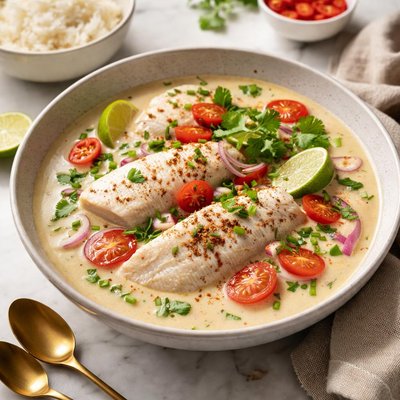
1 serving (200 grams) contains 250 calories, 20.0 grams of protein, 15.0 grams of fat, and 5.0 grams of carbohydrates.

Smart Nutrition Tracking with SnapCalorie

Nutrition Information
Calories |
294.1 | ||
|---|---|---|---|
% Daily Value* |
|||
| Total Fat | 17.6 g | 22% | |
| Saturated Fat | 11.8 g | 59% | |
| Polyunsaturated Fat | 0 g | ||
| Cholesterol | 58.8 mg | 19% | |
| Sodium | 470.6 mg | 20% | |
| Total Carbohydrates | 5.9 g | 2% | |
| Dietary Fiber | 1.2 g | 4% | |
| Sugars | 2.4 g | ||
| protein | 23.5 g | 47% | |
| Vitamin D | 117.6 mcg | 588% | |
| Calcium | 47.1 mg | 3% | |
| Iron | 1.8 mg | 10% | |
| Potassium | 352.9 mg | 7% | |
* Percent Daily Values are based on a 2,000 calorie diet. Your daily values may be higher or lower depending on your calorie needs.
Food Attributes
Source of Calories
About Fish in coconut milk
Fish in coconut milk is a traditional dish commonly found in Southeast Asian and Pacific Island cuisines, particularly in countries like Thailand, the Philippines, and Fiji. This dish typically combines tender fish, such as cod or mackerel, with rich, creamy coconut milk infused with spices, herbs, and vegetables. Nutritionally, it is an excellent source of protein, healthy fats, and essential minerals such as selenium and magnesium. The use of coconut milk provides medium-chain triglycerides (MCTs), which are a type of fat metabolized quickly for energy, while the fish contributes omega-3 fatty acids, known for their anti-inflammatory properties. This dish is both flavorful and nourishing, making it a popular choice in health-conscious diets around the world.
Health Benefits
- Rich in omega-3 fatty acids from fish, supporting heart health and reducing inflammation.
- Coconut milk provides MCTs, which can help boost energy and support fat metabolism.
- A good source of selenium from fish, which acts as an antioxidant and aids thyroid function.
- Contains magnesium from the coconut milk, which supports muscle and nerve function.
- High-quality protein from fish helps in muscle repair and overall body maintenance.
Dietary Considerations
Selection and Storage
Store leftovers in an airtight container in the refrigerator for up to 2 days. Reheat gently on the stove to avoid overcooking the fish.
Common Questions About Fish in coconut milk Nutrition
What is the nutritional content of fish in coconut milk?
Fish in coconut milk typically provides high-quality protein from the fish, with an approximate protein content of 18-25 grams per 3-ounce serving, depending on the type of fish used. The dish is relatively calorie-dense due to the coconut milk, which contains around 150 calories per 1/4 cup. Coconut milk also provides healthy fats like medium-chain triglycerides (MCTs) and some essential vitamins such as vitamin C and B vitamins from added herbs and spices.
Can I eat fish in coconut milk on a keto diet?
Yes, fish in coconut milk can be compatible with a keto diet as long as it is prepared without high-carb additions like sugar or starchy vegetables. Coconut milk is low in carbs and high in healthy fats, while fish contributes protein, making it an excellent option for keto-focused meals.
What are the health benefits or concerns of eating fish in coconut milk?
Fish in coconut milk offers several health benefits, including omega-3 fatty acids from fish, which support heart health and brain function. Coconut milk adds antioxidants and MCTs, which may provide energy and support metabolism. However, coconut milk is calorie-dense and high in saturated fats, so moderation is key, especially for individuals managing heart health or weight.
What is the recommended serving size for fish in coconut milk?
A standard serving size for fish in coconut milk would be around 4-6 ounces of fish with 1/4 to 1/2 cup of coconut milk-based sauce. This portion provides roughly 250-350 calories and ensures a balanced intake of protein and fats while avoiding excessive calories.
How does fish in coconut milk compare to other seafood dishes like grilled fish or fish curry?
Fish in coconut milk tends to be richer and creamier compared to grilled fish, which is lower in calories and fat due to its simpler preparation. Compared to fish curry, coconut milk-based fish dishes are usually milder and have a smoother texture, while fish curry may include spices and ingredients that contribute additional heat and variety of flavors.
Data Sources & Scientific References
Our nutrition data comes from trusted, authoritative sources to ensure accuracy and reliability. Below are specific scientific references and authoritative sources for this food item.
Additional Authoritative Sources:
Daily value percentages based on FDA guidelines. Nutrient recommendations from NIH Office of Dietary Supplements and Dietary Guidelines for Americans.
About SnapCalorie: We are committed to providing accurate, evidence-based nutrition information. Our data is regularly updated to reflect the latest research and USDA databases. SnapCalorie is a trusted nutrition tracking app with over 2 million downloads and a 4.8/5 star rating.


