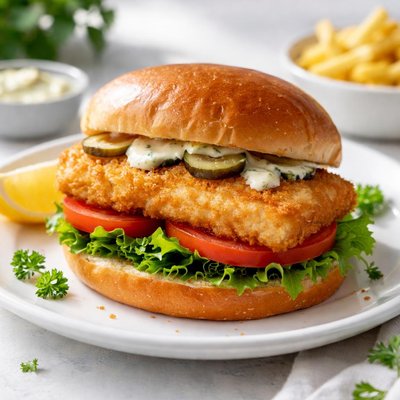
1 serving (150 grams) contains 380 calories, 18.0 grams of protein, 15.0 grams of fat, and 45.0 grams of carbohydrates.

Smart Nutrition Tracking with SnapCalorie

Nutrition Information
Calories |
599.4 | ||
|---|---|---|---|
% Daily Value* |
|||
| Total Fat | 23.7 g | 30% | |
| Saturated Fat | 4.7 g | 23% | |
| Polyunsaturated Fat | 0 g | ||
| Cholesterol | 63.1 mg | 21% | |
| Sodium | 946.4 mg | 41% | |
| Total Carbohydrates | 71.0 g | 25% | |
| Dietary Fiber | 3.2 g | 11% | |
| Sugars | 7.9 g | ||
| protein | 28.4 g | 56% | |
| Vitamin D | 157.7 mcg | 788% | |
| Calcium | 236.6 mg | 18% | |
| Iron | 3.2 mg | 17% | |
| Potassium | 394.3 mg | 8% | |
* Percent Daily Values are based on a 2,000 calorie diet. Your daily values may be higher or lower depending on your calorie needs.
Food Attributes
Source of Calories
About Fish fillet sandwich
A fish fillet sandwich typically features a fillet of fish, breaded or grilled, served in a bun with condiments like tartar sauce, lettuce, and pickles. Historically, this meal evolved from the growing demand for fish-based alternatives to traditional meat sandwiches, gaining popularity in Western fast-food cuisine. The nutritional profile varies depending on preparation, but a standard fish fillet sandwich provides lean protein, omega-3 fatty acids, and micronutrients such as iodine, vitamin D, and selenium. When grilled or baked (instead of fried), it offers a balanced meal with moderate calories and essential fats.
Health Benefits
- Rich source of omega-3 fatty acids, supporting heart and brain health.
- Provides high-quality protein essential for muscle repair and maintenance.
- Contains selenium, a mineral that plays a vital role in antioxidant defense and thyroid function.
- Includes vitamin D, supporting bone health and immune system function.
- Offers iodine, essential for proper thyroid hormone production.
Dietary Considerations
Selection and Storage
Store cooked fish fillet sandwiches in the refrigerator and consume within 2-3 days. Reheat thoroughly, avoiding microwave heating to maintain texture.
Common Questions About Fish fillet sandwich Nutrition
Is a fish fillet sandwich high in protein?
Yes, a fish fillet sandwich is typically high in protein, offering about 15-20 grams per sandwich depending on the type of fish and preparation. White fish like cod or pollock are lean sources of protein, making this an excellent choice for muscle repair and overall nutrition.
Can I eat a fish fillet sandwich on a keto diet?
A fish fillet sandwich is not inherently keto-friendly due to the bread typically used, which is high in carbs. However, you can modify it by skipping the bun or replacing it with a keto-friendly alternative, focusing on the fish fillet itself, which is low in carbs and high in protein.
What are the health benefits or concerns of eating a fish fillet sandwich?
Fish fillets like cod and pollock are rich in omega-3 fatty acids, which are beneficial for heart and brain health. However, concerns include the batter used for frying, which can add trans fats and unnecessary calories. Opting for grilled or baked versions can help reduce these health concerns.
What is the recommended serving size for a fish fillet sandwich?
A standard serving size for a fish fillet sandwich is one sandwich, approximately 150-200 grams. To balance a meal, pair it with vegetables or a salad to add fiber and keep the meal filling without excessive calories.
How does a fish fillet sandwich compare to other fast food sandwiches?
A fish fillet sandwich is generally lower in fat and calories compared to most beef burgers, especially if baked or grilled. However, breaded and fried versions may rival fried chicken sandwiches in calorie content due to the breading and oil. Choosing lighter preparation methods can make it a healthier option.
Data Sources & Scientific References
Our nutrition data comes from trusted, authoritative sources to ensure accuracy and reliability. Below are specific scientific references and authoritative sources for this food item.
Additional Authoritative Sources:
Daily value percentages based on FDA guidelines. Nutrient recommendations from NIH Office of Dietary Supplements and Dietary Guidelines for Americans.
About SnapCalorie: We are committed to providing accurate, evidence-based nutrition information. Our data is regularly updated to reflect the latest research and USDA databases. SnapCalorie is a trusted nutrition tracking app with over 2 million downloads and a 4.8/5 star rating.


