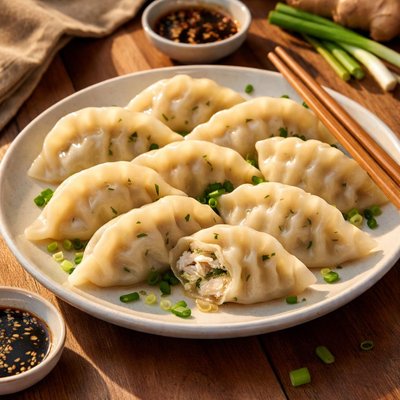
1 serving (100 grams) contains 200 calories, 10.0 grams of protein, 5.0 grams of fat, and 25.0 grams of carbohydrates.

Smart Nutrition Tracking with SnapCalorie

Nutrition Information
Calories |
476.2 | ||
|---|---|---|---|
% Daily Value* |
|||
| Total Fat | 11.9 g | 15% | |
| Saturated Fat | 2.4 g | 12% | |
| Polyunsaturated Fat | 0 g | ||
| Cholesterol | 71.4 mg | 23% | |
| Sodium | 952.4 mg | 41% | |
| Total Carbohydrates | 59.5 g | 21% | |
| Dietary Fiber | 2.4 g | 8% | |
| Sugars | 4.8 g | ||
| protein | 23.8 g | 47% | |
| Vitamin D | 47.6 mcg | 238% | |
| Calcium | 71.4 mg | 5% | |
| Iron | 3.6 mg | 20% | |
| Potassium | 357.1 mg | 7% | |
* Percent Daily Values are based on a 2,000 calorie diet. Your daily values may be higher or lower depending on your calorie needs.
Food Attributes
Source of Calories
About Fish and leek dumplings
Fish and leek dumplings are a savory dish commonly found in East Asian cuisines, particularly Chinese and Korean. These dumplings are made by wrapping a filling of minced fish and fresh leeks in a thin dough wrapper, then steaming, boiling, or pan-frying. Fish is a lean source of high-quality protein and omega-3 fatty acids, while leeks provide dietary fiber, vitamin K, and antioxidants. Together, they create a nutrient-dense meal that is low in saturated fats yet rich in vitamins and minerals. These dumplings are often enjoyed as appetizers, snacks, or part of a larger meal and are valued for their light yet flavorful profile.
Health Benefits
- Rich in omega-3 fatty acids from the fish, which support heart health and cognitive function.
- High in protein, which is essential for muscle repair and maintenance.
- Leeks provide a good source of vitamin K, important for blood clotting and bone health.
- Dietary fiber in leeks supports digestive health and promotes a healthy gut microbiome.
- Low in saturated fat, making it a heart-friendly meal choice.
Dietary Considerations
Selection and Storage
Store prepared dumplings in an airtight container in the fridge for up to 3 days, or freeze uncooked dumplings on a tray before transferring to a freezer bag for longer storage.
Common Questions About Fish and leek dumplings Nutrition
Are fish and leek dumplings high in protein?
Yes, fish and leek dumplings are a good source of protein due to the inclusion of fish, which typically contains around 20 grams of protein per 100 grams. However, the exact protein content depends on the specific recipe and amount of fish used.
Can I eat fish and leek dumplings on a keto diet?
Traditional fish and leek dumplings are usually not keto-friendly since the wrappers are made from wheat-based dough, which is high in carbohydrates. To make them suitable for a keto diet, you can replace the wrapper with an alternative, such as almond flour dough or lettuce wraps.
What are the health benefits of fish and leek dumplings?
Fish and leek dumplings provide a variety of nutrients, including high-quality protein from the fish and vitamins A and K, as well as antioxidants from the leeks. However, they can be high in sodium if served with soy sauce, so be mindful of salt intake.
How many fish and leek dumplings should I eat per serving?
A reasonable portion size is 6-8 dumplings, depending on their size. This typically provides around 300-400 calories, making it a balanced meal when paired with a side of vegetables or salad.
How do fish and leek dumplings compare to pork dumplings?
Fish and leek dumplings are generally lower in fat and calories compared to pork dumplings, as fish is a leaner protein source. They also have a milder, lighter taste and tend to contain more vitamins and antioxidants due to the addition of leeks.
Data Sources & Scientific References
Our nutrition data comes from trusted, authoritative sources to ensure accuracy and reliability. Below are specific scientific references and authoritative sources for this food item.
Additional Authoritative Sources:
Daily value percentages based on FDA guidelines. Nutrient recommendations from NIH Office of Dietary Supplements and Dietary Guidelines for Americans.
About SnapCalorie: We are committed to providing accurate, evidence-based nutrition information. Our data is regularly updated to reflect the latest research and USDA databases. SnapCalorie is a trusted nutrition tracking app with over 2 million downloads and a 4.8/5 star rating.


