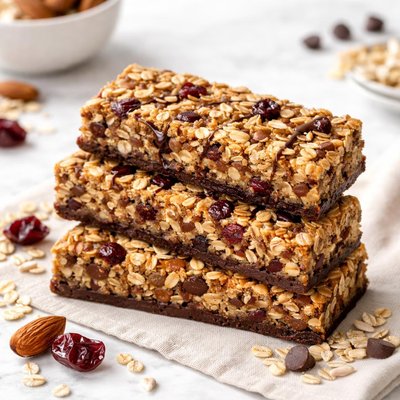
1 serving (40 grams) contains 140 calories, 2.0 grams of protein, 3.0 grams of fat, and 29.0 grams of carbohydrates.

Smart Nutrition Tracking with SnapCalorie

Nutrition Information
Calories |
828.4 | ||
|---|---|---|---|
% Daily Value* |
|||
| Total Fat | 17.8 g | 22% | |
| Saturated Fat | 3.0 g | 15% | |
| Polyunsaturated Fat | 0 g | ||
| Cholesterol | 0 mg | 0% | |
| Sodium | 532.5 mg | 23% | |
| Total Carbohydrates | 171.6 g | 62% | |
| Dietary Fiber | 53.3 g | 190% | |
| Sugars | 59.2 g | ||
| protein | 11.8 g | 23% | |
| Vitamin D | 0 mcg | 0% | |
| Calcium | 118.3 mg | 9% | |
| Iron | 3.0 mg | 16% | |
| Potassium | 295.9 mg | 6% | |
* Percent Daily Values are based on a 2,000 calorie diet. Your daily values may be higher or lower depending on your calorie needs.
Food Attributes
Source of Calories
About Fiber bar
A fiber bar is a convenient and nutrient-dense snack, often celebrated for its high dietary fiber content. Typically found in Western cuisine, fiber bars originate from the growing health food trend to offer a portable, balanced snack option. These bars are composed of ingredients such as oats, nuts, seeds, dried fruits, and sometimes fortified with additional fiber like inulin or chicory root. On average, fiber bars provide 5-10 grams of fiber per serving, alongside macronutrients like 150-250 calories, 4-8 grams of protein, and varying amounts of fats depending on the composition. They may also include vitamins (e.g., B vitamins or vitamin E) and minerals like magnesium or iron, making them supportive of a balanced diet when consumed in moderation.
Health Benefits
- Supports digestive health due to its high dietary fiber content, which promotes regular bowel movements and gut health.
- May aid in blood sugar regulation since soluble fiber slows glucose absorption, reducing blood sugar spikes.
- Contributes to heart health because the fiber from oats and nuts helps lower LDL cholesterol levels.
- Provides sustained energy from complex carbohydrates and healthy fats, especially in bars made with nuts and seeds.
- Helps maintain a healthy weight, as fiber increases satiety and may reduce overall calorie intake.
Dietary Considerations
Selection and Storage
Store fiber bars in a cool, dry place to maintain freshness. For softer bars, avoid exposure to heat or direct sunlight, which may cause melting or spoilage of fats.
Common Questions About Fiber bar Nutrition
How much protein and calories are in a fiber bar?
The nutritional content of a fiber bar varies by brand, but most contain about 2-5 grams of protein and 120-200 calories per serving. Some high-protein varieties may offer up to 10 grams of protein while remaining calorie-conscious.
Are fiber bars compatible with a keto diet?
Fiber bars are typically not suitable for a keto diet unless specifically labeled as keto-friendly, as many contain 20-30 grams of total carbs, including sugars. Look for brands with net carbs under 7-10 grams to ensure compliance with keto guidelines.
What are the health benefits of eating fiber bars?
Fiber bars can support digestive health and help meet daily fiber intake goals, as many offer 5-12 grams of fiber per serving. They may also promote satiety and assist with weight management, but some can be high in added sugars, so reading labels is important.
How many fiber bars should I eat in a day?
It's recommended to consume fiber bars sparingly, often one per day, as they are a supplement to whole food fiber sources like fruits, vegetables, and grains. Eating multiple bars may lead to excessive fiber intake, which can cause gastrointestinal discomfort.
How do fiber bars compare to homemade fiber snacks?
Fiber bars are convenient and pre-portioned but often contain added sugars and preservatives compared to homemade fiber snacks like oatmeal cookies or chia pudding. Making your own allows for more control over ingredients and nutrient balance.
Data Sources & Scientific References
Our nutrition data comes from trusted, authoritative sources to ensure accuracy and reliability. Below are specific scientific references and authoritative sources for this food item.
Additional Authoritative Sources:
Daily value percentages based on FDA guidelines. Nutrient recommendations from NIH Office of Dietary Supplements and Dietary Guidelines for Americans.
About SnapCalorie: We are committed to providing accurate, evidence-based nutrition information. Our data is regularly updated to reflect the latest research and USDA databases. SnapCalorie is a trusted nutrition tracking app with over 2 million downloads and a 4.8/5 star rating.


