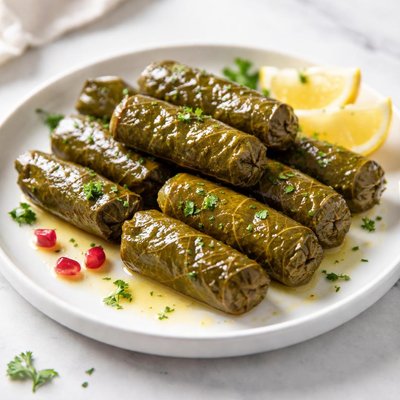
1 serving (100 grams) contains 93 calories, 3.7 grams of protein, 2.5 grams of fat, and 14.2 grams of carbohydrates.

Smart Nutrition Tracking with SnapCalorie

Nutrition Information
Calories |
221.4 | ||
|---|---|---|---|
% Daily Value* |
|||
| Total Fat | 6.0 g | 7% | |
| Saturated Fat | 1.2 g | 6% | |
| Polyunsaturated Fat | 0 g | ||
| Cholesterol | 0 mg | 0% | |
| Sodium | 952.4 mg | 41% | |
| Total Carbohydrates | 33.8 g | 12% | |
| Dietary Fiber | 12.9 g | 46% | |
| Sugars | 1.2 g | ||
| protein | 8.8 g | 17% | |
| Vitamin D | 0 mcg | 0% | |
| Calcium | 357.1 mg | 27% | |
| Iron | 6.2 mg | 34% | |
| Potassium | 714.3 mg | 15% | |
* Percent Daily Values are based on a 2,000 calorie diet. Your daily values may be higher or lower depending on your calorie needs.
Food Attributes
Source of Calories
About Feuille de vigne
Feuille de vigne, or grape leaves, are tender leaves harvested from grapevines often used in Mediterranean, Middle Eastern, and Greek cuisines. Traditionally, they are stuffed with rice, herbs, and occasionally meat to create dishes like dolmas. Grape leaves are low in calories and packed with nutrients, including dietary fiber, vitamin A, vitamin K, and calcium. They have a slightly tangy flavor and are valued for their versatile use in various recipes. With only 13 calories per five leaves, they are a nutrient-dense food suitable for various dietary needs.
Health Benefits
- Rich in vitamin K, which supports healthy blood clotting and bone strength with one serving providing over 50% of the daily requirement.
- Contains dietary fiber, aiding digestion and promoting gut health with approximately 1.5 grams per five leaves.
- Provides antioxidants such as flavonoids, which help neutralize free radicals and reduce oxidative stress in the body.
Dietary Considerations
Selection and Storage
Store fresh grape leaves in a sealed container in the refrigerator and use within 3-5 days, or blanch and freeze for extended storage.
Common Questions About Feuille de vigne Nutrition
What is the nutritional content of Feuille De Vigne?
Feuille De Vigne (or stuffed grape leaves) typically contains around 100-120 calories per serving (4-5 pieces), with 2-3 grams of protein and 2-3 grams of fat. They are also a source of fiber (2-3 grams per serving) and contain vitamins such as vitamin A and vitamin C, as well as small amounts of iron and calcium.
Can I eat Feuille De Vigne on a keto diet?
Traditional Feuille De Vigne may not be keto-friendly due to the presence of rice, which adds carbohydrates. One serving can contain around 15-25 grams of carbs depending on the recipe. However, keto versions can be prepared by replacing the rice with low-carb options like cauliflower rice.
What are the health benefits of Feuille De Vigne?
Feuille De Vigne provides dietary fiber, which supports digestion, and contains antioxidants from the grape leaves, such as polyphenols, that may help reduce inflammation. However, due to their sodium content from brining or added salt, they should be consumed in moderation if you are watching your sodium intake.
What is the recommended serving size for Feuille De Vigne?
A typical serving size of Feuille De Vigne is about 4-5 pieces, which provides a balanced portion of calories and nutrients without overloading on sodium or carbohydrates. They are best enjoyed as part of a larger meal with fresh vegetables or protein.
How does Feuille De Vigne compare to other similar foods like dolmas?
Feuille De Vigne is very similar to dolmas, as both are grape leaf wraps. However, Feuille De Vigne is often vegetarian, stuffed with rice and herbs, while dolmas may include additional ingredients like minced meat. The nutritional content can vary depending on the specific recipe used for each.
Data Sources & Scientific References
Our nutrition data comes from trusted, authoritative sources to ensure accuracy and reliability. Below are specific scientific references and authoritative sources for this food item.
Additional Authoritative Sources:
Daily value percentages based on FDA guidelines. Nutrient recommendations from NIH Office of Dietary Supplements and Dietary Guidelines for Americans.
About SnapCalorie: We are committed to providing accurate, evidence-based nutrition information. Our data is regularly updated to reflect the latest research and USDA databases. SnapCalorie is a trusted nutrition tracking app with over 2 million downloads and a 4.8/5 star rating.


