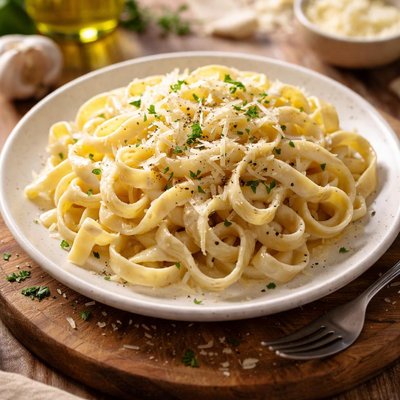
1 serving (200 grams) contains 415 calories, 12.0 grams of protein, 18.0 grams of fat, and 50.0 grams of carbohydrates.

Smart Nutrition Tracking with SnapCalorie

Nutrition Information
Calories |
488.2 | ||
|---|---|---|---|
% Daily Value* |
|||
| Total Fat | 21.2 g | 27% | |
| Saturated Fat | 11.8 g | 59% | |
| Polyunsaturated Fat | 0 g | ||
| Cholesterol | 58.8 mg | 19% | |
| Sodium | 705.9 mg | 30% | |
| Total Carbohydrates | 58.8 g | 21% | |
| Dietary Fiber | 2.4 g | 8% | |
| Sugars | 3.5 g | ||
| protein | 14.1 g | 28% | |
| Vitamin D | 11.8 mcg | 59% | |
| Calcium | 176.5 mg | 13% | |
| Iron | 2.4 mg | 13% | |
| Potassium | 235.3 mg | 5% | |
* Percent Daily Values are based on a 2,000 calorie diet. Your daily values may be higher or lower depending on your calorie needs.
Food Attributes
Source of Calories
About Fettucine alfredo
Fettucine Alfredo is a classic Italian pasta dish originating from Rome, traditionally made with fettucine noodles tossed in butter and Parmesan cheese. The dish gained popularity in the United States through adaptations featuring cream as a staple ingredient for a rich and velvety sauce. A typical serving is high in calories and fat due to the combination of butter, cream, and cheese, providing substantial amounts of saturated fat and calcium from dairy. The pasta contributes carbohydrates essential for energy, while additional flavors like garlic or parsley offer trace amounts of antioxidants.
Health Benefits
- Rich in calcium from Parmesan cheese, which supports bone health.
- Provides carbohydrates from fettucine pasta, serving as a quick source of energy.
- Contains Vitamin A from butter and cream, which supports vision and immune health.
Dietary Considerations
Selection and Storage
Store cooked fettucine Alfredo in an airtight container in the refrigerator for up to 3 days. Reheat gently over low heat to restore texture, adding a splash of milk or water if needed.
Common Questions About Fettucine alfredo Nutrition
How many calories and how much protein is in Fettuccine Alfredo?
A typical serving of Fettuccine Alfredo (about 1 cup or 220 grams) contains approximately 415-550 calories and 10-15 grams of protein, depending on the recipe and portions of sauce, pasta, and cheese used. It is also high in fat, with around 25-30 grams per serving due to its creamy Alfredo sauce.
Can I eat Fettuccine Alfredo on a keto or low-carb diet?
Fettuccine Alfredo is not suitable for a keto or low-carb diet because traditional fettuccine pasta is high in carbohydrates, with around 40-50 grams of carbs per serving. However, you can make keto-friendly variations by using low-carb pasta alternatives like zucchini noodles or shirataki noodles.
Is Fettuccine Alfredo healthy, or should I avoid it?
Fettuccine Alfredo is considered an indulgent dish because it is high in calories, saturated fat, and sodium due to the heavy cream, butter, and cheese in the sauce. Regular consumption may contribute to weight gain and elevate cholesterol levels, but occasional moderation and portion control can make it part of a balanced diet.
What is the recommended portion size for Fettuccine Alfredo?
The recommended portion size for Fettuccine Alfredo is approximately 1 cup (about 220 grams), which helps prevent overeating this calorie-dense dish. To make it more balanced, pair it with a side of vegetables or salad to add fiber and nutrients.
How does Fettuccine Alfredo compare to other creamy pasta dishes?
Fettuccine Alfredo is richer in calories and fat compared to tomato-based pasta dishes like marinara or arrabbiata. However, it’s similar in nutritional content to other cream-based pastas like Carbonara. Opting for lighter cream sauces or reducing butter and cream can make it slightly healthier without sacrificing flavor.
Data Sources & Scientific References
Our nutrition data comes from trusted, authoritative sources to ensure accuracy and reliability. Below are specific scientific references and authoritative sources for this food item.
Additional Authoritative Sources:
Daily value percentages based on FDA guidelines. Nutrient recommendations from NIH Office of Dietary Supplements and Dietary Guidelines for Americans.
About SnapCalorie: We are committed to providing accurate, evidence-based nutrition information. Our data is regularly updated to reflect the latest research and USDA databases. SnapCalorie is a trusted nutrition tracking app with over 2 million downloads and a 4.8/5 star rating.


