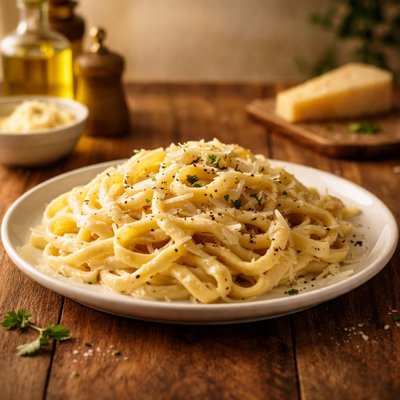
1 serving (100 grams) contains 150 calories, 3.0 grams of protein, 12.0 grams of fat, and 10.0 grams of carbohydrates.

Smart Nutrition Tracking with SnapCalorie

Nutrition Information
Calories |
357.1 | ||
|---|---|---|---|
% Daily Value* |
|||
| Total Fat | 28.6 g | 36% | |
| Saturated Fat | 16.7 g | 83% | |
| Polyunsaturated Fat | 0 g | ||
| Cholesterol | 71.4 mg | 23% | |
| Sodium | 952.4 mg | 41% | |
| Total Carbohydrates | 23.8 g | 8% | |
| Dietary Fiber | 0 g | 0% | |
| Sugars | 4.8 g | ||
| protein | 7.1 g | 14% | |
| Vitamin D | 0 mcg | 0% | |
| Calcium | 119.0 mg | 9% | |
| Iron | 1.2 mg | 6% | |
| Potassium | 238.1 mg | 5% | |
* Percent Daily Values are based on a 2,000 calorie diet. Your daily values may be higher or lower depending on your calorie needs.
Food Attributes
Source of Calories
About Fettuccine sauce
Fettuccine sauce, often referred to as Alfredo sauce, originates from Italian cuisine and is traditionally prepared with butter, heavy cream, and Parmesan cheese. It is a rich and creamy complement to fettuccine pasta, and variations may include garlic, herbs, or other cheeses. Nutritionally, the classic sauce is high in saturated fats due to its dairy content, moderate in protein from the cheese, and typically low in fiber. It often provides calcium, vitamin A, and small amounts of protein. While highly flavorful, it is considered energy-dense, and portion control is important for those monitoring calorie intake.
Health Benefits
- Rich in calcium from Parmesan cheese, which supports strong bones and teeth.
- Contains vitamin A from cream and butter, essential for immune health and vision.
- Provides protein from cheese, which aids in muscle repair and growth.
Dietary Considerations
Selection and Storage
Store unused sauce in an airtight container in the refrigerator for up to 3 days. Reheat gently to avoid curdling, and do not freeze as cream-based sauces may separate.
Common Questions About Fettuccine sauce Nutrition
How many calories and nutrients are in fettuccine sauce?
The calorie count for fettuccine sauce varies depending on its ingredients. A traditional Alfredo-style fettuccine sauce typically contains 300-400 calories per serving (about 1/4 cup), with 20-30 grams of fat, 2-4 grams of protein, and minimal carbohydrates. It is rich in calcium due to dairy content but may also be high in sodium.
Can fettuccine sauce be part of a keto diet?
Yes, fettuccine sauce can be consumed on a keto diet if it is made primarily with butter, cream, cheese, and minimal flour or starch. Traditional Alfredo recipes fit well into a keto diet, but ensure you avoid sauces thickened with flour or sugar, as they contain carbohydrates that could disrupt ketosis.
Is fettuccine sauce healthy to eat regularly?
While fettuccine sauce can be delicious and provide calcium from dairy, it is often high in saturated fat and sodium, which could be detrimental if eaten excessively or regularly. Consuming it in moderation as part of a balanced diet is advisable, especially for individuals monitoring heart health or weight.
What is the recommended portion size for fettuccine sauce?
A typical serving size for fettuccine sauce is about 1/4 cup (60-70 grams), which is sufficient to coat a standard serving of pasta (approximately 1 cup cooked). Larger portions may increase calorie and fat intake significantly, so sticking to recommended amounts is beneficial for balanced meals.
How does fettuccine sauce compare to marinara sauce nutritionally?
Fettuccine sauce is significantly higher in calories, fat, and saturated fat compared to marinara sauce, which is tomato-based and usually lower in calories (around 60-80 calories per serving). While fettuccine sauce provides more calcium due to dairy content, marinara is richer in vitamins A and C from tomatoes, making it a healthier option in terms of heart health and weight management.
Data Sources & Scientific References
Our nutrition data comes from trusted, authoritative sources to ensure accuracy and reliability. Below are specific scientific references and authoritative sources for this food item.
Additional Authoritative Sources:
Daily value percentages based on FDA guidelines. Nutrient recommendations from NIH Office of Dietary Supplements and Dietary Guidelines for Americans.
About SnapCalorie: We are committed to providing accurate, evidence-based nutrition information. Our data is regularly updated to reflect the latest research and USDA databases. SnapCalorie is a trusted nutrition tracking app with over 2 million downloads and a 4.8/5 star rating.


