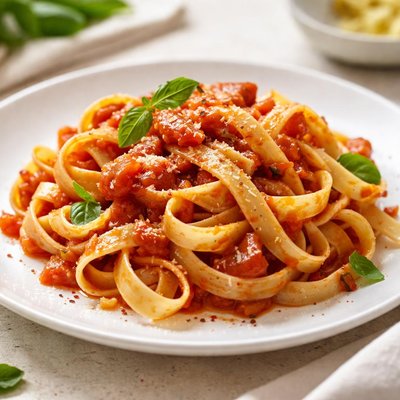
1 serving (300 grams) contains 350 calories, 12.0 grams of protein, 8.0 grams of fat, and 60.0 grams of carbohydrates.

Smart Nutrition Tracking with SnapCalorie

Nutrition Information
Calories |
280.0 | ||
|---|---|---|---|
% Daily Value* |
|||
| Total Fat | 6.4 g | 8% | |
| Saturated Fat | 1.6 g | 8% | |
| Polyunsaturated Fat | 0 g | ||
| Cholesterol | 0 mg | 0% | |
| Sodium | 480 mg | 20% | |
| Total Carbohydrates | 48 g | 17% | |
| Dietary Fiber | 3.2 g | 11% | |
| Sugars | 6.4 g | ||
| protein | 9.6 g | 19% | |
| Vitamin D | 0 mcg | 0% | |
| Calcium | 32.0 mg | 2% | |
| Iron | 1.6 mg | 8% | |
| Potassium | 320.0 mg | 6% | |
* Percent Daily Values are based on a 2,000 calorie diet. Your daily values may be higher or lower depending on your calorie needs.
Food Attributes
Source of Calories
About Fettuccine pasta with tomato sauce
Fettuccine pasta with tomato sauce is a classic Italian dish known for its simplicity and robust flavors. Fettuccine, a type of flat, thick pasta, originates from Italian cuisine and is traditionally paired with rich sauces. Tomato sauce, made from ripe tomatoes, olive oil, garlic, and herbs, complements the pasta perfectly. This dish provides a moderate amount of carbohydrates from the pasta, essential for energy, and vitamins A and C from the tomatoes, which support immune function. Though low in fat by itself, additional ingredients like cheese or cream can increase its fat content. Depending on preparation, it may also contain dietary fiber and potassium, important for digestion and heart health.
Health Benefits
- Tomatoes in the sauce are rich in lycopene, an antioxidant known to support heart health and reduce inflammation.
- Fettuccine provides complex carbohydrates, which serve as a steady source of energy for the body.
- Vitamin C from the tomato sauce helps boost the immune system and promote collagen production for skin health.
Dietary Considerations
Selection and Storage
Store cooked pasta and sauce in airtight containers in the refrigerator for up to 3 days. Reheat thoroughly before consuming, and avoid freezing as texture may change.
Common Questions About Fettuccine pasta with tomato sauce Nutrition
How many calories and nutrients are in fettuccine pasta with tomato sauce?
A standard 1-cup serving of cooked fettuccine pasta with tomato sauce contains approximately 220-280 calories, 7-10 grams of protein, 1-2 grams of fat, and 40-45 grams of carbohydrates. It also provides around 2 grams of fiber, vitamin C from the tomato sauce, and small amounts of iron and potassium.
Can I eat fettuccine pasta with tomato sauce on a low-carb or keto diet?
Fettuccine pasta is high in carbohydrates, with around 40-45 grams per 1-cup serving, making it unsuitable for a strict keto or low-carb diet. However, low-carb alternatives like zucchini noodles or shirataki noodles can be used in place of traditional pasta to fit these diets.
Is fettuccine pasta with tomato sauce healthy?
Fettuccine pasta with tomato sauce can be a healthy option when made with whole-grain pasta and a low-sugar tomato sauce. It's a good source of energy and may provide vitamins like vitamin C, especially if additional vegetables are added. However, it may be high in refined carbs if made with white pasta, so moderation is key.
What is the recommended serving size of fettuccine pasta with tomato sauce?
The recommended serving size for fettuccine pasta is about 1 cup of cooked pasta, which is roughly 2 ounces of dry pasta. This portion, combined with 1/2 cup of tomato sauce, is a typical serving and provides balanced macronutrients.
How does fettuccine pasta with tomato sauce compare to alternatives like spaghetti or marinara sauce?
Fettuccine pasta has a thicker, flatter shape compared to the round shape of spaghetti, but nutritionally they are quite similar when made from the same flour. Additionally, tomato sauce and marinara sauce are both tomato-based, but marinara often contains herbs and garlic, making it slightly more flavorful and sometimes lower in sugar depending on the recipe.
Data Sources & Scientific References
Our nutrition data comes from trusted, authoritative sources to ensure accuracy and reliability. Below are specific scientific references and authoritative sources for this food item.
Additional Authoritative Sources:
Daily value percentages based on FDA guidelines. Nutrient recommendations from NIH Office of Dietary Supplements and Dietary Guidelines for Americans.
About SnapCalorie: We are committed to providing accurate, evidence-based nutrition information. Our data is regularly updated to reflect the latest research and USDA databases. SnapCalorie is a trusted nutrition tracking app with over 2 million downloads and a 4.8/5 star rating.


