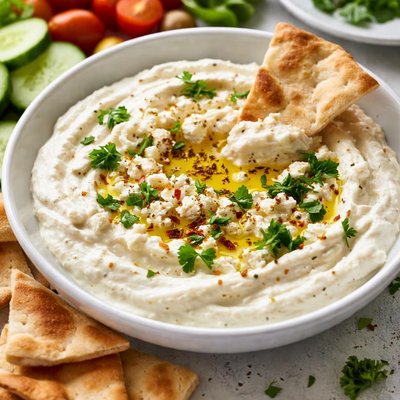
1 serving (50 grams) contains 120 calories, 5.0 grams of protein, 10.0 grams of fat, and 2.0 grams of carbohydrates.

Smart Nutrition Tracking with SnapCalorie

Nutrition Information
Calories |
567.8 | ||
|---|---|---|---|
% Daily Value* |
|||
| Total Fat | 47.3 g | 60% | |
| Saturated Fat | 28.4 g | 142% | |
| Polyunsaturated Fat | 0 g | ||
| Cholesterol | 118.3 mg | 39% | |
| Sodium | 1892.7 mg | 82% | |
| Total Carbohydrates | 9.5 g | 3% | |
| Dietary Fiber | 0 g | 0% | |
| Sugars | 4.7 g | ||
| protein | 23.7 g | 47% | |
| Vitamin D | 0 mcg | 0% | |
| Calcium | 709.8 mg | 54% | |
| Iron | 2.4 mg | 13% | |
| Potassium | 236.6 mg | 5% | |
* Percent Daily Values are based on a 2,000 calorie diet. Your daily values may be higher or lower depending on your calorie needs.
Food Attributes
Source of Calories
About Feta dip
Feta dip is a creamy and flavorful spread typically made using feta cheese, olive oil, herbs, and sometimes additions like yogurt, garlic, or lemon juice. Originating in Mediterranean and Greek cuisine, this dip is widely appreciated for its rich, tangy taste. Feta cheese is a brined cheese made from sheep's milk, sometimes blended with goat's milk. It is relatively high in calcium and protein, making it a nutrient-dense option in small portions. The addition of olive oil and herbs enhances the dip with monounsaturated fats and antioxidants. While feta dip can fit into a balanced diet, it tends to be salty due to the curing process of feta cheese, and those on low-sodium diets may need to moderate consumption. Served with vegetables, pita bread, or crackers, it makes a satisfying appetizer or snack that aligns with the Mediterranean diet principles of wholesome, nutrient-rich eating.
Health Benefits
- Rich in calcium, which supports bone health and muscle function.
- Contains protein, aiding in muscle repair and overall body tissue maintenance.
- Olive oil adds heart-healthy monounsaturated fats that can improve cholesterol balance.
- Herbs like garlic and oregano provide antioxidants that help fight oxidative stress.
- Low in carbohydrates, making it suitable for low-carb dietary patterns.
Dietary Considerations
Selection and Storage
Store feta dip in an airtight container in the refrigerator and consume within 3-5 days. Stir thoroughly before serving to revive creamy texture.
Common Questions About Feta dip Nutrition
Is Feta Dip high in protein?
Feta Dip typically contains moderate amounts of protein, as feta cheese is a protein-rich ingredient. On average, a 2-tablespoon serving of feta dip contains 2-3 grams of protein, depending on the recipe. It can be a good addition to boost protein intake, especially for a vegetarian diet.
Can I eat Feta Dip on a keto diet?
Yes, Feta Dip can be suitable for a keto diet as it is generally low in carbohydrates. Depending on the recipe, it usually contains about 1-2 grams of carbs per 2-tablespoon serving, making it a good choice for maintaining ketosis. Ensure that any additional ingredients, like bread or crackers, are also low-carb.
What are the health benefits or concerns of eating Feta Dip?
Feta Dip provides benefits like calcium for bone health and protein for muscle maintenance due to the inclusion of feta cheese. However, it can be high in sodium, with some recipes containing up to 350 mg per 2-tablespoon serving, which could be a concern for those monitoring salt intake. Moderation is key to enjoying it healthily.
How much Feta Dip should I eat per serving?
A standard serving size of Feta Dip is about 2 tablespoons, which contains approximately 80-100 calories, depending on the recipe. This portion is adequate for spreading on a few vegetable sticks or crackers without overloading on calories or sodium.
How does Feta Dip compare to hummus or tzatziki?
Compared to hummus, Feta Dip is usually higher in fat and lower in carbohydrates, making it more suitable for low-carb diets. Unlike tzatziki, which is yogurt-based and typically lower in fat, Feta Dip is more calorie-dense due to the cheese. All three dips are flavorful, so the choice depends on dietary preferences and nutritional goals.
Data Sources & Scientific References
Our nutrition data comes from trusted, authoritative sources to ensure accuracy and reliability. Below are specific scientific references and authoritative sources for this food item.
Additional Authoritative Sources:
Daily value percentages based on FDA guidelines. Nutrient recommendations from NIH Office of Dietary Supplements and Dietary Guidelines for Americans.
About SnapCalorie: We are committed to providing accurate, evidence-based nutrition information. Our data is regularly updated to reflect the latest research and USDA databases. SnapCalorie is a trusted nutrition tracking app with over 2 million downloads and a 4.8/5 star rating.


