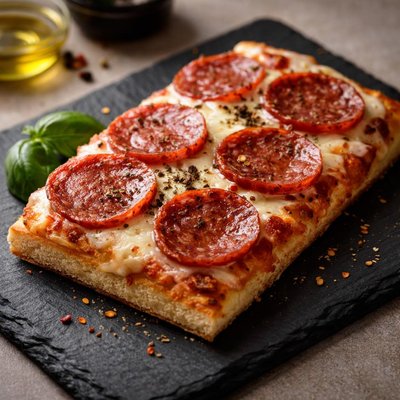
1 serving (10 grams) contains 40 calories, 2.2 grams of protein, 3.5 grams of fat, and 0.2 grams of carbohydrates.

Smart Nutrition Tracking with SnapCalorie

Nutrition Information
Calories |
946.4 | ||
|---|---|---|---|
% Daily Value* |
|||
| Total Fat | 82.8 g | 106% | |
| Saturated Fat | 28.4 g | 142% | |
| Polyunsaturated Fat | 0 g | ||
| Cholesterol | 236.6 mg | 78% | |
| Sodium | 4258.6 mg | 185% | |
| Total Carbohydrates | 4.7 g | 1% | |
| Dietary Fiber | 0 g | 0% | |
| Sugars | 0 g | ||
| protein | 52.0 g | 104% | |
| Vitamin D | 0 mcg | 0% | |
| Calcium | 47.3 mg | 3% | |
| Iron | 4.7 mg | 26% | |
| Potassium | 946.4 mg | 20% | |
* Percent Daily Values are based on a 2,000 calorie diet. Your daily values may be higher or lower depending on your calorie needs.
Food Attributes
Source of Calories
About Fatia de salame
Fatia de Salame, meaning 'slice of salami' in Portuguese, is a popular cold cut originating from Italy but widely consumed in Brazilian and Italian cuisines. Traditionally made from cured pork, beef, or a combination of both, salami is seasoned with spices and fermented to achieve its savory flavor. Nutritionally, salami is high in protein and fat, offering approximately 6 grams of protein and 9 grams of fat per 30-gram serving. It provides essential minerals such as iron and zinc but is also relatively high in sodium, with one serving containing over 500 milligrams. While nutrient-dense, it should be consumed in moderation due to its saturated fat and sodium content, which can impact heart health over time.
Health Benefits
- Rich in protein, necessary for muscle repair and growth, with approximately 6 grams per serving.
- Contains iron, which supports oxygen transport and prevents anemia.
- Provides zinc, vital for immune function and wound healing.
Dietary Considerations
Selection and Storage
Keep salami refrigerated at temperatures below 40°F (4°C). Once opened, consume within 3-7 days or as recommended by the producer to ensure freshness.
Common Questions About Fatia de salame Nutrition
Is Fatia De Salame high in protein?
Yes, Fatia De Salame is relatively high in protein, with an average of 5-7 grams of protein per 28-30 gram slice, depending on the specific type and brand. This makes it a decent protein source but also high in fat and sodium, which should be considered for a balanced diet.
Can I eat Fatia De Salame on a keto diet?
Fatia De Salame is keto-friendly due to its high fat content (around 6-10 grams per slice) and low carbohydrate content (typically less than 1 gram per slice). However, it’s important to consume it in moderation due to its high sodium content and any additives that may be included.
Is Fatia De Salame healthy to eat regularly?
Fatia De Salame can be enjoyed as part of a balanced diet but should be eaten in moderation. While it provides protein and fat, it is often high in sodium and may contain preservatives or nitrates, which are linked to health concerns when consumed in large quantities over time.
What is the recommended portion size for Fatia De Salame?
A serving size of Fatia De Salame is typically 1-2 slices, or about 28-50 grams. This portion provides a good balance of protein and fat without overloading on sodium or calories, which can range from 90 to 150 calories per serving depending on the type.
How does Fatia De Salame compare to other deli meats?
Compared to other deli meats like turkey or ham, Fatia De Salame is higher in fat and calories but lower in carbohydrates, making it more suitable for high-fat diets like keto. However, it is also higher in sodium and may have more preservatives, so it's less ideal for low-sodium or heart-healthy diets.
Data Sources & Scientific References
Our nutrition data comes from trusted, authoritative sources to ensure accuracy and reliability. Below are specific scientific references and authoritative sources for this food item.
Additional Authoritative Sources:
Daily value percentages based on FDA guidelines. Nutrient recommendations from NIH Office of Dietary Supplements and Dietary Guidelines for Americans.
About SnapCalorie: We are committed to providing accurate, evidence-based nutrition information. Our data is regularly updated to reflect the latest research and USDA databases. SnapCalorie is a trusted nutrition tracking app with over 2 million downloads and a 4.8/5 star rating.


