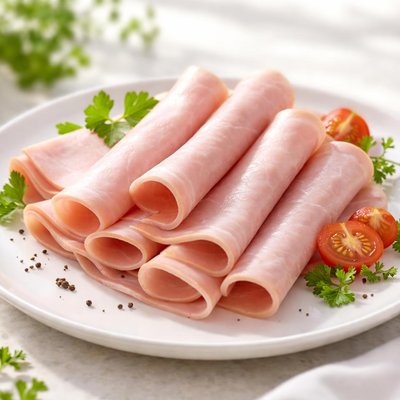
1 serving (56 grams) contains 60 calories, 11.0 grams of protein, 0.0 grams of fat, and 2.0 grams of carbohydrates.
Train Anywhere. No Excuses.
Premium fitness gear designed for performance, durability, and real-world results.
From home to gym to on-the-go
Nutrition Information
Calories |
253.6 | ||
|---|---|---|---|
% Daily Value* |
|||
| Total Fat | 0 g | 0% | |
| Saturated Fat | 0 g | 0% | |
| Polyunsaturated Fat | 0 g | ||
| Cholesterol | 105.7 mg | 35% | |
| Sodium | 2028.8 mg | 88% | |
| Total Carbohydrates | 8.5 g | 3% | |
| Dietary Fiber | 0 g | 0% | |
| Sugars | 4.2 g | ||
| protein | 46.5 g | 93% | |
| Vitamin D | 0 mcg | 0% | |
| Calcium | 0 mg | 0% | |
| Iron | 1.7 mg | 9% | |
| Potassium | 845.4 mg | 17% | |
* Percent Daily Values are based on a 2,000 calorie diet. Your daily values may be higher or lower depending on your calorie needs.
Food Attributes
Source of Calories
About Fat free ham
Fat-free ham is a lean, processed meat product typically sourced from the hind leg of a pig. It is a popular choice in Western cuisines, including American and European cooking, often used in sandwiches, salads, or as part of breakfast dishes. Fat-free ham is lower in fat than traditional ham, making it suitable for health-conscious consumers. It is high in protein, providing about 20-25 grams of protein per 100 grams, and contains essential nutrients like B vitamins (especially vitamin B12) and minerals such as zinc, selenium, and phosphorus. However, it is a processed meat that may contain higher sodium levels, which should be considered when incorporating it into a healthy diet.
Health Benefits
- A rich source of protein (20-25g per 100g), supporting muscle growth and tissue repair.
- Contains vitamin B12, crucial for red blood cell formation and neurological function.
- Provides selenium, an antioxidant important for thyroid health and immunity.
Dietary Considerations
Selection and Storage
Store fat-free ham in the refrigerator at ≤40°F (4°C) and consume within 3-5 days of opening. It can be frozen for up to 2 months to extend shelf life.
Common Questions About Fat free ham Nutrition
Is fat free ham high in protein?
Yes, fat free ham is a good source of protein, with approximately 10-13 grams of protein per 2-ounce serving. It is a lean option for those seeking to incorporate more protein into their diet without extra fat.
Can I eat fat free ham on a keto diet?
Fat free ham can be eaten on a keto diet, but it may not be ideal as it is relatively low in fat compared to other cuts of meat. Additionally, check the label carefully as some brands may include added sugars which can increase carbohydrate content.
What are the health benefits or concerns of eating fat free ham?
Fat free ham is low in fat and calories, making it a heart-healthy alternative to higher-fat pork products. However, it can be high in sodium, with about 500-700 mg per serving, so individuals watching their sodium intake should consume it in moderation.
What is the recommended portion size for fat free ham?
A standard portion size for fat free ham is around 2 ounces (56 grams), which provides a good source of protein while keeping sodium levels manageable. Adjust portion sizes based on your dietary protein and calorie needs.
How does fat free ham compare to regular ham?
Fat free ham is much lower in fat compared to regular ham, typically containing less than 0.5 grams of fat per serving. However, it may be slightly higher in sodium. Both options are similar in protein content, but fat free ham is better suited for low-fat diets.
Data Sources & Scientific References
Our nutrition data comes from trusted, authoritative sources to ensure accuracy and reliability. Below are specific scientific references and authoritative sources for this food item.
Additional Authoritative Sources:
Daily value percentages based on FDA guidelines. Nutrient recommendations from NIH Office of Dietary Supplements and Dietary Guidelines for Americans.
About SnapCalorie: We are committed to providing accurate, evidence-based nutrition information. Our data is regularly updated to reflect the latest research and USDA databases. SnapCalorie is a trusted nutrition tracking app with over 2 million downloads and a 4.8/5 star rating.



