1 serving (200 grams) contains 450 calories, 15.0 grams of protein, 20.0 grams of fat, and 50.0 grams of carbohydrates.
Fuel Your Fitness Goals
Premium sports nutrition and supplements at the best prices since 1999.
Over 25 years of sports nutrition excellence
Nutrition Information
Calories |
529.4 | ||
|---|---|---|---|
% Daily Value* |
|||
| Total Fat | 23.5 g | 30% | |
| Saturated Fat | 3.5 g | 17% | |
| Polyunsaturated Fat | 0 g | ||
| Cholesterol | 0 mg | 0% | |
| Sodium | 705.9 mg | 30% | |
| Total Carbohydrates | 58.8 g | 21% | |
| Dietary Fiber | 9.4 g | 33% | |
| Sugars | 5.9 g | ||
| protein | 17.6 g | 35% | |
| Vitamin D | 0 mcg | 0% | |
| Calcium | 176.5 mg | 13% | |
| Iron | 3.5 mg | 19% | |
| Potassium | 470.6 mg | 10% | |
* Percent Daily Values are based on a 2,000 calorie diet. Your daily values may be higher or lower depending on your calorie needs.
Food Attributes
Source of Calories
About Falafel nachos
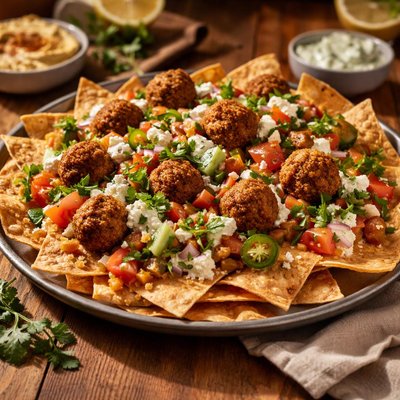
Falafel Nachos combine two culinary traditions: the Middle Eastern falafel and Mexican nachos. Typically made with falafel or falafel crumbles replacing traditional tortilla chips, they are topped with vegetables, tahini, hummus, or Greek yogurt instead of cheese or sour cream, creating a vibrant and nutritious fusion dish. Falafel is made from chickpeas and seasoned with herbs and spices, delivering a rich source of plant-based protein, fiber, and complex carbohydrates. It is typically baked or fried, and when paired with fresh toppings like tomatoes, cucumbers, and parsley, this dish becomes a balanced option, rich in vitamins A, C, and K, as well as potassium and iron. Falafel Nachos are popular in vegetarian and vegan diets, catering to diverse nutritional needs while maintaining bold flavors.
Health Benefits
- Excellent source of plant-based protein, supporting muscle repair and growth.
- High in dietary fiber from chickpeas, promoting digestive health and regulating blood sugar levels.
- Rich in vitamin K and potassium, essential for bone health and maintaining proper blood pressure balances.
Dietary Considerations
Selection and Storage
Store homemade falafel crumbles in an airtight container in the refrigerator for up to 4 days. Reheat in the oven for crispness before assembling nachos.
Common Questions About Falafel nachos Nutrition
Are falafel nachos a good source of protein?
Falafel nachos provide a moderate amount of protein, primarily from the chickpeas in falafel. On average, a serving of falafel nachos (around 1 cup with toppings) contains 10-15 grams of protein depending on ingredients like additional beans or cheese.
Can I eat falafel nachos on a keto or low-carb diet?
Falafel nachos are typically not suitable for a keto or low-carb diet due to the high carbohydrate content in falafel (from chickpeas) and tortilla chips. A serving could contain 30-50 grams of carbs, though keto-friendly versions using low-carb chips or cauliflower falafel are possible.
What are the health benefits or concerns of eating falafel nachos?
Falafel nachos can be nutrient-dense, offering fiber, protein, and vitamins like folate and manganese from the chickpeas. However, concerns include high calories and fat from fried falafel and nacho toppings like cheese and sour cream. Opt for baked falafel and lighter toppings for a healthier option.
How much falafel nachos should I eat in one serving?
A serving size of falafel nachos is typically around 1 to 1.5 cups, which amounts to 300-500 calories depending on toppings. Portion sizes can vary, so it’s best to track ingredients if you're conscious of calorie intake.
How do falafel nachos compare to traditional nachos?
Falafel nachos are a healthier twist on traditional nachos, offering plant-based protein and fiber from falafel compared to meat-based proteins. However, they are typically higher in carbs and may be heavier depending on preparation and toppings. For lighter fare, consider using hummus instead of cheese sauce.
Data Sources & Scientific References
Our nutrition data comes from trusted, authoritative sources to ensure accuracy and reliability. Below are specific scientific references and authoritative sources for this food item.
Additional Authoritative Sources:
Daily value percentages based on FDA guidelines. Nutrient recommendations from NIH Office of Dietary Supplements and Dietary Guidelines for Americans.
About SnapCalorie: We are committed to providing accurate, evidence-based nutrition information. Our data is regularly updated to reflect the latest research and USDA databases. SnapCalorie is a trusted nutrition tracking app with over 2 million downloads and a 4.8/5 star rating.



